
U.S. High Schooler Finds 3,300-Year-Old Scarab Amulet at Tel Gezer
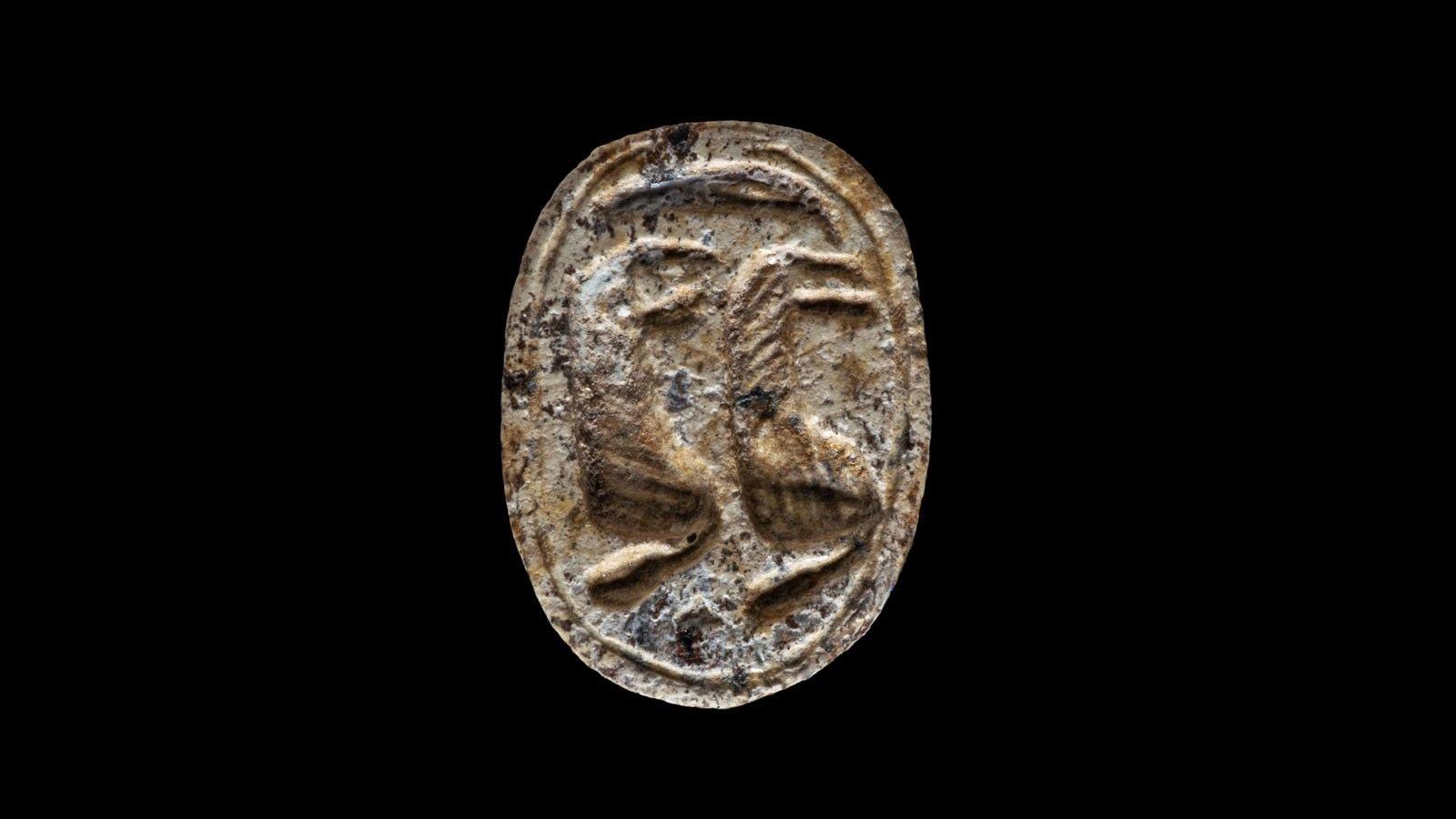
Two days into his first Israel trip, an American high schooler picked a 3,300-year-old scarab amulet off the ground at Tel Gezer – and earned a certificate from the Antiquities Authority • Full Story


A high school student from the United States on his first trip to Eretz Yisroel spotted a 3,300-year-old scarab amulet lying on the ground at Tel Gezer National Park in the Judean Lowlands – and handed it over to the National Treasures of Israel.
Shiloh Attoun, 17, a student at Jewish National Fund-USA’s Alexander Muss High School in Israel, noticed the small ancient object during his group’s first tiyul, just two days after landing. He showed it to his guide, and together with Benji Hain, the school’s Dean of Students, reported the find to the Israel Antiquities Authority.
“As we were learning about Tel Gezer’s history and archaeology, I noticed a small, interesting object on the ground. It looked ancient,” Shiloh recalled. “I couldn’t believe it – a moment ago we were talking about the slim chances of ever discovering such a find, and here was one right in my hand!”
IAA archaeologist Adam William Asper came to the school to collect the amulet for the National Treasures Department and presented Shiloh with a certificate of appreciation for good citizenship.

Prof. Ido Koch of Tel Aviv University dated the seal to the Late Bronze Age, when ancient Egypt ruled the region. The scarab shows two cobras – the Egyptian “Uraeus,” a royal protective symbol – above a semi-ellipse representing the hieroglyph for “lord.” A similar scarab with three snakes was found in the Tel Megiddo excavations.
Scarabs, shaped like the beetle the Egyptians considered sacred, attest to Egypt’s cultural influence in Eretz Yisroel some 3,500 years ago. Gezer, where the amulet surfaced, was one of the most important Canaanite cities, guarding a strategic crossroads in the Shephelah.
“Shiloh and the program instructors deserve praise for showing responsibility and immediately handing over the find to our national repository,” said Amit Melman, the IAA’s Central Region Educational Director.
The IAA reminds the public that an archaeological find should be left in place and reported immediately, so archaeologists can document its context.
Photos: Assaf Peretz, Israel Antiquities Authority
23
Join ChabadInfo's News Roundup and alerts for the HOTTEST Chabad news and updates!

Related Posts:




Most Popular




New Videos

Editor's Picks