



The Fire of Faith – Chaim Shmuel Amar’s Triumph Over the Fire That Nearly Claimed His Life
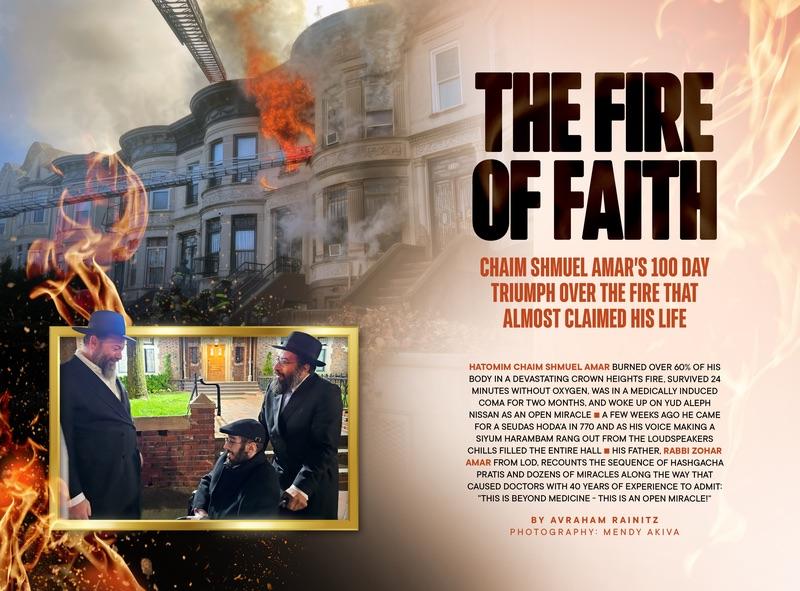
From Beis Moshiach Magazine: Hatomim Chaim Shmuel Amar burned over 60% of his body in a devastating Crown Heights fire, survived 24 minutes without oxygen, was in a medically induced coma for and two months, woke up on Yud Aleph Nissan as an open miracle • A few weeks later, he came for a seudas hoda’a in Beis Chayeinu and as his voice making a Siyum Harambam rang out from the loudspeakers, chills filled the entire hall • His father, Rabbi Zohar Amar recounts the sequence of hashgacha pratis and dozens of miracles along the way that caused doctors with 40 years of experience to admit: “This is beyond medicine – this is an open miracle!” • Full Article


By Avraham Rainetz, Beis Moshiach Magazine
11th of Nissan, 5785. The monitors in the intensive care unit of Jacobi Medical Center in the Bronx hummed with the monotonous rhythm that was so familiar to the medical staff. Dr. Mike Winter routinely checked the stats on the screens – blood pressure, oxygen, pulse. Everything stable.
Chaim Shmuel Amar lay in bed with his parents and the medical team standing around him, focusing their gaze on his face. A few hours earlier, the doctors had stopped the flow of the chemical cocktail that had kept him in a medical coma for two full months. Now, everyone was waiting for the moment when he would wake up.
On one side stood his parents, Rabbi Zohar and Mrs. Meirav Amar, filled with faith and complete trust in the Hashem and in the brachos of the Rebbe MH’M, which had accompanied them throughout the past two months. There was no doubt in their hearts that their dear son would return to life healthy and whole.
On the other side stood the medical team, and in their professional medical eyes was deep anxiety. They knew the statistics. The medical picture was severe: 60% body surface burns, two months of medical coma, possibility of severe brain damage from lack of oxygen that lasted 24 full minutes during the fire. According to medical research, after just 4-6 minutes of oxygen deprivation to the brain, irreversible damage begins to occur.
Suddenly, a subtle change. The eyelids trembled.
The experienced nurse looked up from the chart. “Doctor Winter,” she called in a half-whisper. “Look at this.” The brain electrical activity monitor began showing complex patterns characteristic of an awake brain.
The eyes opened slowly. First just a small slit, then more. Not the partial, confused opening expected in brain injury patients. Full, conscious, focused opening.
And then Chaim Shmuel began to speak. The first words came out almost as a whisper. The voice was hoarse, strange after two months of silence.
Dr. Winter felt his pulse racing. As a doctor, he had seen medical surprises. But what happened now was beyond everything he had learned in medical school. He quickly checked the basic neurological responses: facial expressions – normal. Eye movements – synchronized. Short-term memory, long-term memory – everything normal.
This didn’t fit any known medical model. Two months of coma, extensive damage from oxygen deprivation, severe brain swelling – and he not only woke up, but woke up with a brain active in every respect.
Later, when Dr. Sheldon Harvey Teperman – the medical director of the trauma department at Jacobi Medical Center – came to see the miracle, he stood there for long minutes in front of the charts. “In forty years that I’ve been in the trauma department,” he finally said, “I’ve never seen such a recovery. This is beyond medicine. This is a miracle!”
From his bed in the center of the room, Chaim Shmuel asked his parents: “What’s today’s date?” When they told him it was Yud-Alef Nissan, he smiled a weak smile: “The Rebbe’s birthday.”
He didn’t yet know it was also his new birthday.
24 Minutes in Flames
Friday, 16th of Shevat. In a residential building on Eastern Parkway, Shmuel Amar, one of the talmidim on Kevutza, remembered that he hadn’t yet spoken with his parents before Shabbos as he did weekly. In Eretz Yisrael it was Shabbos already and he settled for sending a voice message with Shabbat Shalom greetings. The time was 10:10. He didn’t know this would be the last message he would send for two long months.
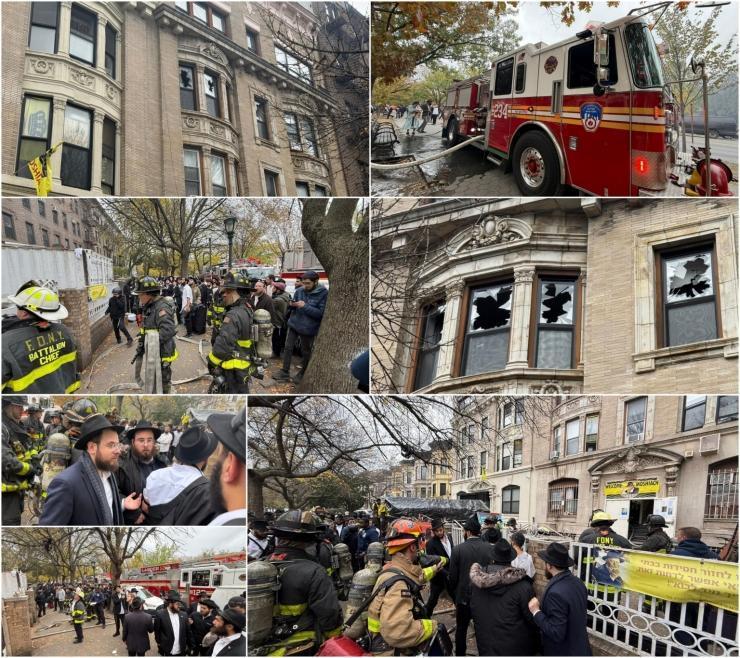
11 minutes later, at 10:21, his world completely changed. A fire broke out on the second floor of the building, right in the living room between the two bedrooms. A cleaning lady who smelled the smoke knocked on doors, trying to wake the bachurim. But the fire spread with dizzying speed.
One of the bachurim woke up and saw the inferno. He screamed a blood-curdling scream. “A scream that really woke up all the bachurim,” they described afterward. Some of the bachurim who slept in the back room jumped from the second floor to the yard. One fell without injury, two others were hurt, but their lives were saved.
Only Shmuel remained inside. “Apparently when he saw the fire, the entire living room was already burning,” said his father. “He saw no possibility to pass through the living room to the back side of the house. He was trapped on the Eastern Parkway side, with bars on the windows, unable to escape.”
By hashgacha pratis, one of the neighbors, R’ Yossi Melamed, a Hatzalah volunteer, who usually leaves his house at 9:00 in the morning, was delayed at home that very day, and when he smelled the fire, he tried with all his might to alert the students to flee the building. The non-Jewish neighbor on the right side, understanding that the fire might reach his apartment, began pouring water through the window, which reduced the intensity of the flames and contributed to Shmuel’s rescue.

For seven terrible minutes, Shmuel stood by the window, desperately screaming for help. Then he collapsed. For 24 long minutes, he remained inside the inferno. The firefighters who arrived didn’t see him immediately, and only after one of the bachurim told them there was someone inside, did they go back in and bring him out to the rescue forces who had arrived en masse at the scene of the fire.
The rescue personnel who received the burned body would later tell his parents that this was one of the most difficult cases they had seen, and that they didn’t believe it would be possible to bring him back to life.
A Difficult Shabbos and an Encouraging Psak Din
In the Chabad neighborhood in Lod, thousands of miles away, the father, Rabbi Zohar Amar, finished a shiur in Likkutei Sichos, when one of the local Hatzalah personnel asked to speak with him. With utmost care, he conveyed the difficult news and instructed him to communicate with the medical team in New York through a local goy.
“I didn’t know what to think. In those moments I said to Hashem: You arranged the events in such a way that I would receive the news on Shabbos, when there are no phones and I have no way of doing anything. This means everything is in Your hands! We sent our child to the Rebbe, and we don’t intend to give up on him. We ask for him back healthy and whole!” This was the most difficult Shabbos for the Amar family.
During Shabbos, several close friends came to encourage and support them, and at a Chassidishe farbrengen they established a ‘Beis Din’ and ruled that despite the reports about the critical condition – Shmuel would recover quickly, by his birthday. “We were optimistic and thought that by his birthday, three weeks later, he would already be able to return home. In practice, it didn’t progress as we wanted, but as I’ll tell later – there was definitely a very significant change on his birthday,” said R’ Zohar.
Meanwhile, while the parents were in Israel, the Hatzalah personnel decided to transfer him from Kings County Hospital to Jacobi Medical Center in the Bronx, which excels in treating fire victims and burns, thanks to a combination of advanced technology, skilled medical staff, and ability to handle complex emergencies. In retrospect, this was one of the first links in the chain of miracles and hashgacha pratis.
A Medical Angel by Divine Providence
Rabbi Shneur Zalman Teitelbaum, one of the Rebbe’s shluchim in the Bronx, who runs the Chabad house near Jacobi Medical Center, was updated on the situation and welcomed Shmuel’s friends at the Chabad house who wanted to be near him at the hospital. He explained to them how to get to the hospital, but when he walked back to his house after davening, he was surprised to see them standing outside the hospital. It turned out that security personnel refused to let them in after visiting hours.
R’ Teitelbaum asked his guests to continue to his house, while he used his connections to get the bachurim into the intensive care unit where Shmuel lay surrounded by machines. By hashgacha pratis, just then, he met Dr. Mike Winter who works at the medical center, but not in the department where Shmuel was being treated. R’ Teitelbaum asked him to ensure that Shmuel received the best treatment.
It turned out that the medical staff didn’t believe it was possible to save the young man they had received in such critical condition, and they were only providing basic life support. The condition was critical beyond all imagination. Later, the doctors would tell his father that this was one of the most difficult cases they had ever had.
“Dr. Winter was blessed with the right balance of Jewish chutzpah and American diplomacy,” describes R’ Teitelbaum, “and when he saw the critical condition, he himself entered the room – even though it wasn’t his department at all – and worked hard to stabilize all the indicators, while simultaneously using all his professional connections so that Shmuel would receive the best treatment from the most senior staff.”
Dr. Winter’s dedication was above and beyond. He stayed there all night, and the next day continued closely monitoring the treatment. From then on, he decided to take Shmuel on as his personal project and took care of every detail. “This was amazing hashgacha pratis that the bachurim were delayed outside and I had to go up with them to the department, where I met Dr. Winter, who was the right doctor at the right time,” R’ Teitelbaum recounted with amazement.
You Know It’s Your Son, But You Don’t Recognize Him…
Meanwhile in Eretz Yisrael, local askanim arranged for the parents to get tickets for the first flight leaving motzoei Shabbos. “At 11:30 at night we were already on the plane on the way to New York. We couldn’t get updates before the flight because in New York it was still Shabbos, and during the flight fortunately there was no internet reception, so we were spared the difficult news.”
The parents received the real shock when they arrived at the hospital. “It was horrifying,” the father describes the first moment he saw his son. “His head was really huge, to such a degree that we didn’t recognize him. That is, you know it’s your son, but you don’t recognize him.”
Most parts of the body were burned, with about 60% of the skin completely burned off. Most of the burns were third-degree – a degree where all layers of skin are completely destroyed. In such a condition, it’s vital to maintain maximum sterility to prevent life-threatening infections, since the skin’s natural barrier is completely compromised.
The treatment was intensive, indescribable; two nurses around the clock, 24 hours a day. Bandaging was done for six hours daily – three hours at night and three hours at noon. Enormous amounts of antibiotics and medications were continuously administered to fight infections and support vital systems.
Rays of Light Within the Darkness
And within all this hell, Hashem sent rays of light, as Rabbi Amar recounts:
“Besides the bachurim, Shmuel’s friends, who were always by our side at the hospital, friends and acquaintances constantly came to visit us, to support us. One day R’ Nissim Baron sat with us, and just then one of the senior doctors entered the room who showed special interest in Shmuel’s condition. I didn’t know his position on the medical team, but after R’ Nissim spoke with him for a few moments, he turned to me excitedly and said: You have no idea what miracles Hashem is doing with you: This is Dr. Teperman, a Jewish doctor among the most senior in the hospital, responsible for managing the trauma department and intensive care, and he himself is managing Shmuel’s treatment!”
Indeed, Dr. Teperman took this as a personal case, on a daily basis, in a way that surprised everyone. Every day he sat for at least half an hour with the parents, updating them on developments and answering all their questions with deep and genuine concern. For the parents, this was beyond belief, as R’ Amar described:
“We sat with him every day, and he explained with endless patience and didn’t get up until we finished all our questions. He gave us the best feeling.
“Throughout the entire difficult period, this doctor didn’t stop farbrenging with us. He sat with us seven hours, eight hours in farbrengens. He was with me on Seder night, and at several other farbrengens. This wasn’t a medical visit – this was a neshama that farbrenged,” R’ Amar recounts emotionally.
Adding the Name, and the Discovery of the Doctor’s Jewish Name
About a week after the fire, what everyone feared happened. Dr. Teperman was in the room when the lungs collapsed. The parents were in the waiting room and Dr. Teperman ran out to them and asked them to immediately sign their consent to connect Shmuel to the ‘ECMO’ machine that introduces oxygen into the blood and replaces the function of the lungs. In this situation, every minute is critical. Dr. Teperman immediately summoned all the doctors who needed to be involved in the process, had the parents sign all the necessary forms, and saved his life.
In light of the difficult situation, his parents decided to add a name. In his personal perek of Tehillim it says “Life (chaim) he asked of You, You gave him length of days forever and ever,” and therefore they decided to add the name ‘Chaim.’ Only when they left the hospital with revealed miracles would his father notice that the gematria of ‘of You’ [mimcha] is exactly one hundred, like the number of days he was in the hospital…
“The next day,” R’ Amar recounts, “I brought to the hospital the Tehillim that the Rebbe himself read from, and I suggested to Dr. Teperman that we say the Rebbe’s perek, and also his perek according to his age. Meanwhile, I asked him: ‘What is your Jewish name?’ and he answered – without hesitation: ‘Shmuel Chaim’… exactly like the new name we added to my son. From that moment, the special connection that formed between us became stronger.”
Usually, when connecting a patient to an ECMO machine, it’s a process of at least two weeks. In this case, there was a revealed miracle, when after only five days the lungs recovered and it was possible to disconnect the ECMO machine.
Actually, the condition of the lungs at the beginning was catastrophic. “The lungs, the trachea, everything was burned. The quantities they suctioned out of his lungs, it was something incomprehensible,” his father describes. “Quantities of black fluids, also in the blood, carbon in the blood, everything black.”
Every day or two they inserted a camera to check the condition and take X-rays. The situation looked hopeless. But Hashem performed a miracle beyond nature. “They managed to save the lungs, that was a miracle in itself. Today his lungs function completely, at the level of a normal person, and he can breathe normally, without machines and without any help.”
The processes that Chaim Shmuel underwent were complex beyond all imagination. Third-degree burns require skin grafts, and Chaim Shmuel needed transplants in almost every affected area.
Before performing permanent skin grafts, there’s a preliminary stage of temporary covering using skin from deceased donors or animal skin, to protect the tissues and create an initial protective layer. Only after the skin receives an initial covering can the real transplants begin.
The best skin for transplantation comes from the patient’s own body. After 60% was burned, areas remained on the legs from which they managed to take skin for transplants. But this wasn’t enough. Therefore, additional skin samples were taken and sent to a laboratory in Boston for tissue cultivation. This process lasted six weeks and cost about half a million dollars – a great expense not covered by any insurance.
The Rebbe Wraps in Miracles
Throughout the difficult period, the family never stopped strengthening themselves through the Rebbe. “Every day we wrote to the Rebbe,” R’ Amar recounts. “In the first month we mainly described the difficult situation and asked for brachos. In the second month, boruch Hashem, we could already start reporting good news.”
The responses from the Rebbe, in the Igros Kodesh, were amazing and precise. “One of the responses was about the burning of the skin,” the father recounts. “The Rebbe writes there to be mechazek [strengthen, fortify] all those around him, the parents, being that the inyan of skin is the inyan of levushim [i.e. ‘garments’ of the soul], and garments are the inyanim of thought, speech and action, that they need to be mechazek others and themselves in this matter, and this will accelerate the healing.”
He continues, “All the friends who came to visit him took upon themselves good resolutions in thought, speech and action. This in addition of course to abundant Tehillim.”
Mrs. Amar, also merited wonderful divine providence. After she prayed tearfully at 770 and asked for the Rebbe’s bracha, a local woman approached her and said: Come with me, and I’ll bring you a dollar from the Rebbe. On another visit to 770, someone gave her a coin from the Rebbe. “The Rebbe simply embraced us in so many ways,” they say.
When I ask R’ Amar what sustained them through all those difficult days, he says: “The only thing that kept us above water was the faith and trust that everything comes from Hashem, who is the source of good. We learned again and again the Igeres HaKodesh ‘l’haskilcha bina,’ where the Alter Rebbe explains at length that even when it seems everything is bad – we must believe that with Hashem, everything is good, and it’s only that there is revealed good and concealed good, and when we strengthen ourselves with this faith, Hashem turns the concealed good into revealed good.
“And of course the tefillos, and the brachos we asked for, from the Rebbe. We saw the fulfillment of the Rebbe’s brachos, whether in the form of the two medical angels who accompanied us, which was amazing, or in the dozens and hundreds of small miracles along the way.
“We saw tangibly, that even when the situation is black as black – a Jew has the power to change reality through positive thinking, emuna and bitachon. I thought a lot about the parallel between our private situation and the general situation of the Jewish people, which on one hand is in a difficult galus, and on the other hand the Rebbe demands from us to open our eyes and see and live Geula. I noticed that when we lived personal Geula, Chaim Shmuel’s medical condition improved. That’s exactly how we should behave regarding the general Geula. When we learn the Torah of Geula and look at reality with Geula eyes, this will undoubtedly change reality. I saw this.”

The Miracle of Yud Adar, Shmuel’s Birthday
Shmuel’s birthday, Yud Adar, was approaching, and the condition was still critical. Shmuel was under medical sedation, not responding to anything, and the doctors were pessimistic about his chances of recovery.
Then R’ Amar remembered the Beis Din that gathered in his house on the first Shabbos, and their psak din. He decided to turn to Chaim Shmuel and ask him to respond.
“What happened that day was above and beyond the doctors’ understanding,” R’ Amar tells us about the great miracle. “I turned to him and asked him to raise his hand, or his leg, and a moment later he raised his hand or his leg.”
When the parents told the doctors about this, they responded with open skepticism, and said it was simply impossible medically, and apparently the parents were seeing what they wanted to see and not actual reality.
Dr. Teperman told the parents that he couldn’t believe such a thing until a doctor performed the examinations according to all medical rules. To his surprise, the attending physician performed a series of medical examinations, at the end of which it was clear that indeed the brain was beginning to cooperate with the body.
This happened on his birthday, Yud Adar. A month and a day later, on the 11th of Nissan, the second miracle occurred and Chaim Shmuel woke up completely.
The miracles continued, and on the 19th of Nissan they already removed the ventilator from his room.
Chaim Shmuel returned to life.
A Heartfelt Call: To Accept and Honor Others
Erev Shabbos Parshas Behar-Bechukosai, Chaim Shmuel left the rehabilitation department of the hospital. Exactly one hundred days had passed since the fire – one hundred days of revealed miracles.
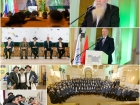
On motzoei Shabbos, Chaim Shmuel and his parents came to Beis Chayeinu for a seudas hodaah combined with Melave Malka and a Siyum HaRambam. Hundreds of Anash and Tmimim excitedly welcomed Chaim Shmuel as he entered 770. Rabbi Menachem Gerlitzky honored him to conduct the Siyum on the Rambam, and when his clear voice echoed from the loudspeakers of 770, there was no end to the audience’s amazement at the revealed miracle. Later in the evening, his father thanked all the Chassidim who helped throughout the entire period, his friends who came every day to visit him, and of course – the two medical angels. One of them, Dr. Winter, was present at the farbrengen and was very impressed by the enormous love that the entire crowd radiated toward Chaim Shmuel.
In his moving speech, R’ Amar thanked Hashem for the miracles and wonders, and drew an interesting lesson from the process they went through: “In Chaim Shmuel’s healing process, we saw how important every healthy organ is, and even when certain organs don’t feel well – the healthy organs ‘set the tone,’ and ultimately they heal the entire body. This emphasizes our responsibility, the healthy organs in the Jewish people, to care for our brothers and sisters who are not Torah and mitzva observers as of now, both to heal them, and to ensure the integrity of our own health.”
Following this, R’ Amar called from the depths of his heart for strengthening unity among the Chassidim: “We must know how to accept each other, even if his opinion is different from yours. Even if you don’t agree with the approach – love him because he’s your brother. You can oppose the approach, but not him.
“For more than thirty years everyone has been running in different directions, and this still hasn’t brought the Rebbe’s revelation. Maybe we’ll finally change direction, and without giving up on faith – we’ll know how to honor and love the other Chassid, from understanding that he too acts from a desire to connect to the Rebbe, and from understanding that in his way he fulfills the Rebbe’s will. The more we focus on the inner and less on the outer – the easier it will be to love all the Chassidim.”
R’ Amar concluded emotionally with the recitation of ‘Mizmor L’Soda,’ emphasizing that although he is not a man of words, he decided to speak in order to fulfill the Rebbe’s instruction to publicize the miracles and wonders, as preparation for the Geula shleima.
***
One hundred days of miracles have passed, but the miracles continue. Every day that Chaim Shmuel gets up in the morning is a miracle. Every breath he takes is a miracle. And this whole story is preparation and an example of what will happen when the Rebbe MH’M is revealed. Now we await the greatest miracle of all – the revelation of the Rebbe in the Geula shleima immediately and literally now!
*
Beis Moshiach magazine can be obtained in stores around Crown Heights. To purchase a subscription, please go to: bmoshiach.org
224
Join ChabadInfo's News Roundup and alerts for the HOTTEST Chabad news and updates!

Related Posts:


Most Popular


New Videos

Editor's Picks











I am moved and awed after reading the details of this clear open miracle and the clear lessons it shows.