One World, Many Realities: How Perspective and Bitachon/Trust Redefine Limits
Rabbi Shlomo Ezagui explores the idea that a person can shape their own destiny despite external limitations is often dismissed as motivational rhetoric, yet both modern science and classical Jewish thought offer a far deeper and more compelling case and explains why two people never see the same rainbow • Read More


by Rabbi Shlomo Ezagui
Why do two people never see the same rainbow?
The idea that a person can shape their own destiny despite external limitations is often dismissed as motivational rhetoric, yet both modern science and classical Jewish thought offer a far deeper and more compelling case. When examined closely, physics, neuroscience, and Torah sources converge on a striking conclusion: reality, as each individual experiences it, is not fixed or uniform but deeply personal and, to a meaningful extent, malleable. What appears limiting from the outside may not define the inner truth of a person’s potential. We truly possess the agency to effect meaningful, substantial change.
From a scientific perspective, the idea that no two people inhabit the same reality is not merely philosophical—it is literal. In physics, every observation depends on the observer’s position in space-time. An “event” is defined by coordinates (x,y,z,t), and no two individuals occupy the exact same coordinates at the same moment. This means that even before interpretation begins, each person receives slightly different information from the universe. Light, which carries visual data, travels at a finite speed c, so photons reach each observer at slightly different times and angles. Even if these differences are infinitesimally small, they are real and unavoidable.
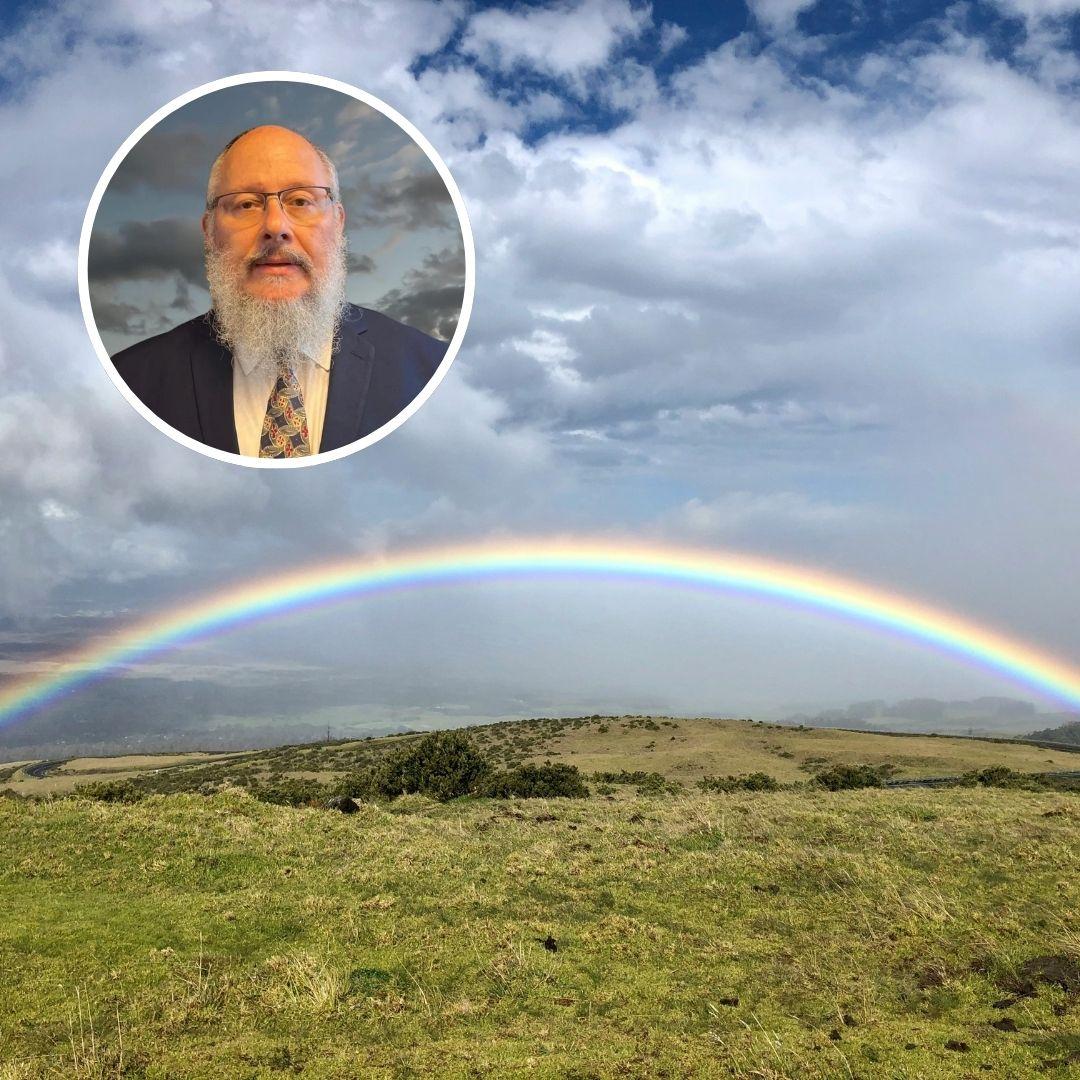
A powerful illustration of this is the rainbow. A rainbow is not an object but an optical phenomenon that depends entirely on the observer’s position. Light refracts and reflects within water droplets at specific angles, approximately 42 degrees for red light. Because each observer stands in a different location, each sees light from different droplets. If you move even slightly to the right or left, you change the rainbow in your experience.
In a precise scientific sense, each person sees their own unique rainbow. If they move, the rainbow moves with them. This shows that what we call “reality” is not a shared, static picture but a personalized interaction between the observer and the environment.
Neuroscience deepens this idea. The brain is not a passive receiver of information but an active constructor of experience. The retina contains millions of rods and cones, yet their distribution and sensitivity vary from person to person. After light is converted into electrical signals, the brain processes and interprets them through prior experiences, memories, and neural pathways. Two people could, in theory, receive identical sensory input and still perceive it entirely differently because their brains are wired differently. In other words, reality is filtered, shaped, and even partially constructed within the individual.
When we turn to Jewish thought, we find a strikingly parallel idea expressed in spiritual language. Chassidus teaches that each soul has its own divine mission, its own shlichut, and a unique channel through which divine energy flows into the world. Bechirah chofshit (free will) is the defining feature of human existence. According to these teachings, a person is not merely reacting to circumstances but is constantly choosing how to interpret and respond to them in a deeply personal way, thereby shaping the direction of their life.
A striking halachic example illustrates this concept. Jewish law allows two individuals to occupy the same physical space while living in different halachic realities. If one person has accepted Shabbat early, they are bound by its restrictions, while another who has not yet accepted Shabbat may still perform work. Similarly, at the conclusion of Shabbat, one individual may extend its sanctity while another has already ended it through Havdalah. The Shulchan Aruch (Orach Chaim 263:17) explicitly permits interaction between these individuals under certain conditions, acknowledging that their lived realities can differ significantly even when they occupy the same environment.
This is not merely a legal technicality; it reflects a profound metaphysical truth. In Torah thought, reality is defined not only by external conditions but also by internal states—awareness, intention, and spiritual alignment. Our Sages describe individuals such as Rabbi Shimon bar Yochai as living in a reality so spiritually elevated that even events as monumental as the destruction of the Second Temple did not shape his inner world.
Two people can stand side by side, yet one inhabits a world of holiness and rest while the other lives in ordinary weekday reality. Their physical surroundings are identical, but their experiences are entirely different.
This convergence between science and Torah suggests a powerful conclusion: the limitations we perceive are not absolute constraints but interpretations shaped by our position, perception, and inner framework. Just as two observers see different rainbows, two individuals can interpret the same life circumstances in radically different ways. One may see obstacles and impossibility, while another sees opportunity and growth. This shift—an expression of the uniquely God-given faculty of free choice—enables a person to reshape their lived reality in a very real and meaningful way.
Chassidic teachings often use the metaphor that each person has a “pipeline” of divine sustenance. Just as each hair grows from its own follicle, each person receives their life force from a unique spiritual source. This means that another person’s success or failure does not define or limit your own. Your path does not compete with theirs because it originates from a different source. What appears to be a closed door in someone else’s experience may not even exist in yours.
This idea challenges a deeply ingrained assumption—that external reality dictates internal possibility. In fact, both science and Torah suggest that influence often runs in the opposite direction. The observer plays an active role in shaping what is experienced. In physics, particularly quantum mechanics, measurement itself can influence outcomes. In neuroscience, perception constructs meaning. In Torah, consciousness and choice shape spiritual reality.
Of course, this does not mean external constraints are imaginary or irrelevant. Physical laws, societal structures, and life circumstances do impose real boundaries. However, the critical insight is that these boundaries do not fully determine the scope of a person’s destiny. Within any given set of conditions, there remains ample room for interpretation, response, and creative action.
Consider two individuals facing the same hardship. From the outside, their situations appear identical. Yet one emerges stronger, more focused, and more purposeful, while the other becomes discouraged and stagnant. The difference lies not in the external reality but in the internal framework through which that reality is processed. Science would describe this in terms of neural plasticity and cognitive framing; Torah would describe it as emunah (faith), bitachon (trust), and the exercise of free will.
The practical implication is both empowering and demanding. If reality is partially shaped by perception and choice, each individual bears significant responsibility for their own experience of life. It is not enough to passively observe circumstances; one must actively interpret, respond, and, in a sense, co-create their reality.
This is where the message becomes deeply personal. What seems limiting—whether it is the environment, past experience, or present struggle—is not the final word. Just as no two people see the same rainbow, no two people are bound by the same constraints. Your perspective, inner world, and present choices open possibilities that may not be visible to others.
In this light, these teachings are not abstract spiritual ideals but practical guidance aligned with scientific insight. Strengthening one’s inner “well”—through reflection, learning, intentional action, and trust in God—directly shapes how reality is experienced and which possibilities emerge. The more a person develops internal clarity and resilience, the stronger their bitachon becomes. As that trust deepens, external appearances lose their grip, and new possibilities open.
Ultimately, the intersection of science and Torah reveals a unified message: reality is not a fixed, objective stage on which life simply unfolds. It is a dynamic interaction between the world and the individual. Each person occupies a unique coordinate in space, time, and consciousness, receiving a distinct flow of information and opportunity. Within that uniqueness lies the potential to shape a distinct, meaningful destiny.
The Lubavitcher Rebbe, Rabbi Menachem M. Schneerson emphasized that living a Messianic reality begins within one’s own heart. When individuals begin to view the world and their lives through that lens, it adds tangible weight—each individual as an entire world unto themselves—to the delicate balance that shapes the universe’s destiny.
The world around you may suggest limits, but those limits are not absolute. They are, at least in part, a matter of perspective. By recognizing the deeply personal nature of reality—both scientifically and spiritually—you gain access to a powerful truth: your path is not defined by what appears, but by how you choose to see, interpret, and act within it.
Rabbi Shlomo Ezagui, director of Chabad of Palm Beach, Florida, since 1987, has authored two books: Maimonides Advice for the 21st Century and A Spiritual Soul Book, and is now working on a third book, Physics of the Mystics. Additionally, Rabbi Ezagui regularly contributes to his blog on the Times of Israel.
For more information on Rabbi Ezagui’s workshops, you can email him at [email protected] and find him online at www.rabbishlomoezagui.com
104
Join ChabadInfo's News Roundup and alerts for the HOTTEST Chabad news and updates!

Related Posts:




Most Popular



New Videos

Editor's Picks