Let’s Talk About: 40 Years of Shabbos Achdus
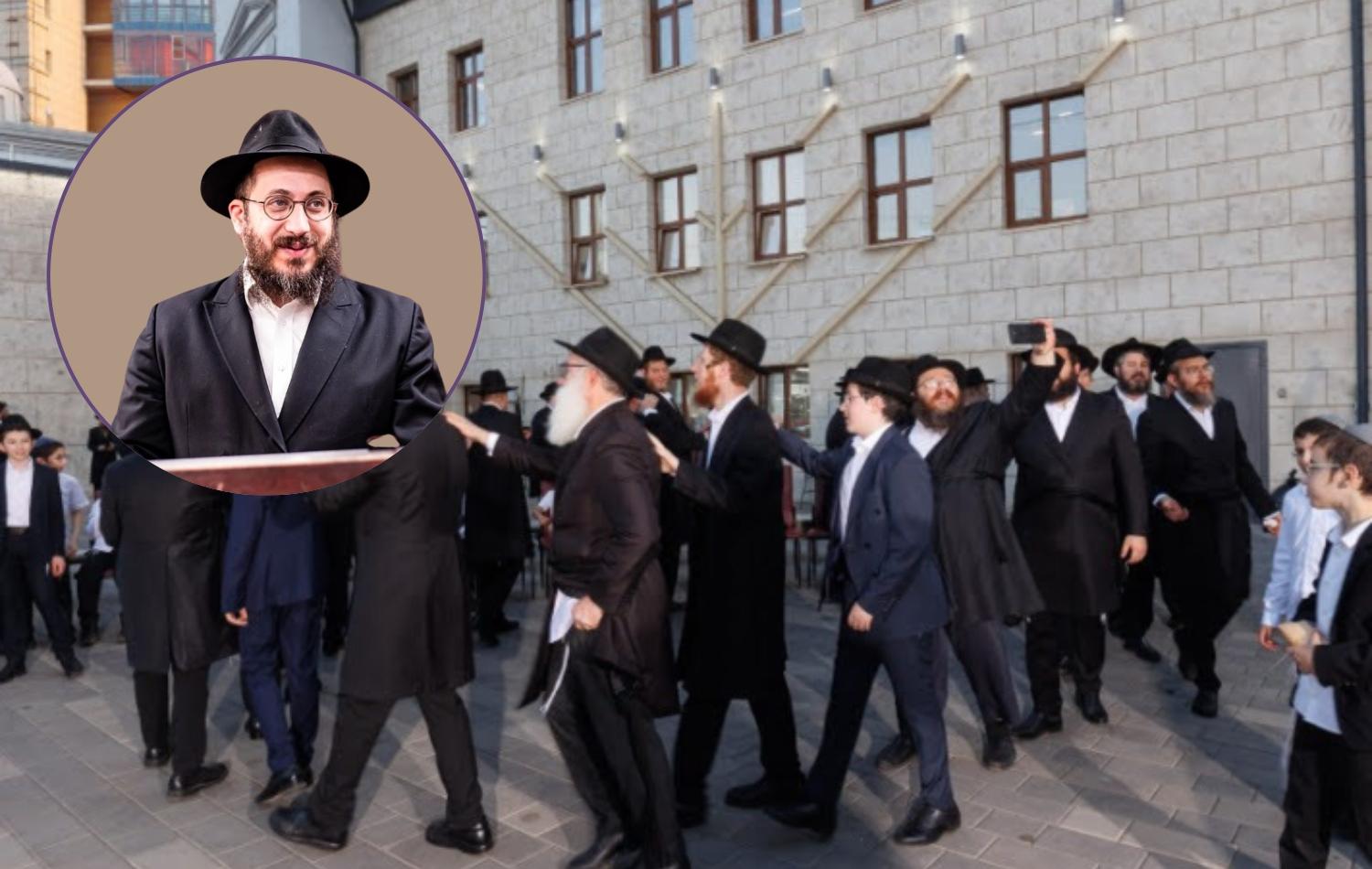
By Rabbi Geshon Avtzon: Shabbas Parshas Bamidbar is always the Shabbas before the Yom Tov of Shavuos. There are many explanations as to why it is this way, but that is not the purpose of this article. In most Chabad communities, this Shabbas is also called “Shabbas Achdus” as per the very personal request of the Rebbe in 5746 – exactly 40 years ago- to have a special unity Farbrengen during the time between Mincha and Maariv on Shabbas afternoon • Read More


By Rabbi Geshon Avtzon
Shabbas Parshas Bamidbar is always the Shabbas before the Yom Tov of Shavuos. There are many explanations as to why it is this way, but that is not the purpose of this article. In most Chabad communities, this shabbas is also called “shabbas achdus” as per the very personal request of the Rebbe in 5746 – exactly 40 years ago- to have a special unity Farbrengen during the time between Mincha and Maariv on shabbas afternoon.
There are some people (especially younger bochurim) that are very “technical” and like to put everything into a square box. They also like to feel that they are doing “the right thing”. Thus, every year, there is at least one bochur who will come to be with the following question: “Are we actually fulfilling a directive of the Rebbe by participating in this unity Farbrengen”?
What is the foundation of the question? When you learn the sicha, it does not seem that the Rebbe is giving a new directive that should be done year after year. In 5746, the Rebbe – for whatever reason – really wanted it to happen and it did happen as a one-time event. As a matter of fact, I do not recall participating in any “shabbas achdus – Bamidbar” Farbrengen until some time in the late 90’s when someone “rediscovered” the Sicha and made a major uproar in crown Heights about it.
If so, they ask, is this really something important to participate in enthusiastically?
The following is the approach and perspective that I share (and I welcome your thoughts and perspective as well):
Besides the obvious benefit of any activity that promotes unity should be encouraged at all times – especially with all the tests that Klal Yisroel is going through these days – there is a more fundamental approach here:
There is a famous parable that was told over by the Mittiler Rebbe, and quoted by some of our other holy Rabbeim, regarding two brothers. I will paraphrase the parable: There was once a very dedicated father that had two sons that he loved dearly and they truly loved him. One day the father does not come home and the two brothers find themselves alone for the first time. After a while, in which the father does not return, one son comes to terms that the father has passed away and this causes him great pain. He begins to cry loudly and everyone sees how much he misses his father. After a period of crying and mourning, he accepts the new reality and goes on with his life.
The second son takes a very different approach. He is convinced that his loving father is alive and did not forsake his beloved children. He sets out on a journey to find his father by tracing the steps and paths that his father would normally travel. He first goes down the main roads and highways that his father usually travelled but does not find his father. He does not give up or get discouraged, rather continues to look for the father in the side roads and the paths that his father travelled less-often.
Eventually, the second son – called “the loyal son” – finds the father and is showered with deep love and affection. The father reveals that he was testing the deep commitment of his two sons and was really waiting to see which one understood that the father still lives and loves his children, and would not give up looking for their father.
We, Chassidim living in 5786, do not need to be explained how this parable applies to us as we are living through this exact circumstance since 5754. We all realize that the path that we all should be striving for is the path of “the loyal son”. How is this done?
It is obvious that we first start with connecting with the Rebbe through “the main roads that he travels”. This would be the main and clear directives that the Rebbe has given us. Think of the learning of (Chitas and) Rambam, Geula and Moshiach, having a Mashpia and being actively involved in Mivtzoim.
Yet as the time passes, and the yearning to be reunited with our Rebbe intensifies, we begin looking at the “roads less traveled”. These may be directives that (for whatever reason) were not so invested in over the years or directives that may have been a “one time event” but were obviously important to the Rebbe. We, obviously with consulting our Rabbanim and Mashpiim, try to review these directives and see if we can still implement those as well.
Thus, when we see that the Rebbe asked – even one time! – as a “Bakasha Nafshis” to make this special unity Farbrengen, the “loyal son attitude” is to travel down this path as it may lead to the reunification with our beloved “father-Rebbe”.
We must always remember the words of the Rebbe, the Tzemach Tzedek: “The achdus of Chassidim will lead them to the Geula”.
Please feel free to share your thoughts on the above with me by sending me a personal email: [email protected]
127
Join ChabadInfo's News Roundup and alerts for the HOTTEST Chabad news and updates!

Related Posts:
Most Popular


New Videos

Editor's Picks