
It’s Time to Talk About: Proactive Chinuch
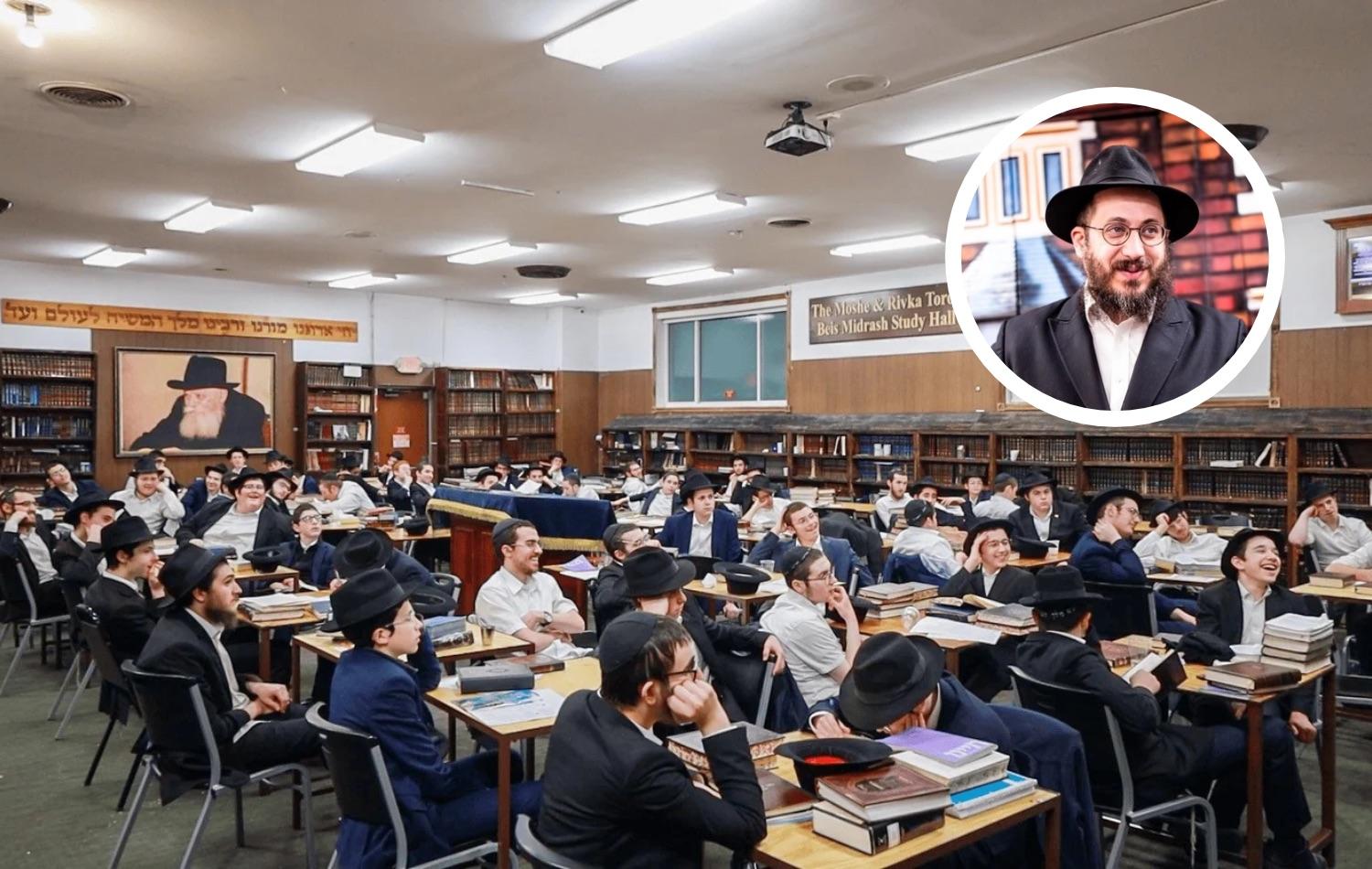
In this week’s column, Rabbi Gershon Avtzon explores the importance of giving children and students the attention they need – not only when they struggle, but especially when they are doing well – and the role of proactive Chinuch • Full Article


I recently attended a Farbrengen for the birthday of one of our younger members of Hanhalla. He was turning 26 years old and was fulfilling the directive of the Rebbe to have a Farbrengen in honor of his birthday.
At that Farbrengen, I remembered the Farbrengen for my 26th birthday (almost 20 years ago bh). It was truly a memorable Farbrengen because it was the first birthday of Farbrengen after moving to Cincinnati and reestablishing the Yeshiva. It was the first Farbrengen that I was sitting with my own talmidim in my own home.
There are two things that happened by that Farbrengen that I learned big lessons from. I would like to share one of them in this week’s column and will share the second at a different opportunity. It boils down to a short question of one of my talmidim.
In order to appreciate and understand this saying, some background is needed. One of the many components of a Yeshivas Tomchei Temimim are the talmidei Hashluchim.These devoted Temimim are living examples and “big brothers” to the younger students.
That year we had a group of older bochurim and they were a big help. There was one of them that needed some extra spending money, so he came up with the following idea: He contacted the local Jewish funeral home and offered to be the official ‘shomer’ (watching over the body throughout the night) if they needed. It turned out that his services were needed pretty often. It is obvious to all that if someone is up all night, they will not have the energy and patience to be involved during the day.
[ It is also obvious that today, I would never allow one of our Talmidei Hashluchim to accept such a job. This is all part of the “first year – learning on the job” issues.]
By my 26th birthday Farbrengen, all the talmdim came to my house with all the Talmidei Hashluchim. At that point in time, they could all fit in my dining room. It turned out that this older bochur ended up sitting across from one of the younger talmidim who – while being a very fine student – did not always have a “filter” between what he thought and what he said. With this particular student, you got his full and honest opinion when he spoke.
As they were sitting not far from where I was sitting, I heard the younger talmid turn to the older one and ask him the following question: “Do I need to die for you to spend time with me?”
This blunt and innocent question resonated with me and I have thought about it often as I deal with my own children and with my talmidim: Our children, and students, should never feel that they need to act out and misbehave to get our attention.
There is a well-known saying that “squeaky tires get the oil”. As we, parents and educators, are naturally overwhelmed with life (we need to juggle the responsibility that comes with raising our children, doing our shlichus, paying our bills and being good spouses etc) it is only natural that if something is going well (i.e. our kids or students are behaving and following the normal path and rules), we just take it for granted.
We must always remember that all our children and students want and are deserving of our attention. This is what builds their foundations and self-confidence and trust. Their obedience should not be punished, by the lack of our attention, rather rewarded with more attention.
They are not blind and foolish. They see very clearly that children who are struggling get plenty of attention from their parents and the Hanhalla. This included hours of being talked to and also negative attention (to many students, negative attention is also attention). Our lack of attention to those which are just doing the right thing (and in many cases don’t stand out with exceptional abilities – as those students also get attention) will make them ask the question: “ “Do I need to die (misbehave or start going off the derech) for you to spend time with me?”
The question is first asked internally and if not addressed can start showing itself externally as well. By giving them the attention that they need and deserve, it is – the right thing on its own, and also “preventative chinuch” as the child will have no need or incentive to want to get your attention in other ways.
This is similar to the difference between conventional medicine (which cured the sick) and preventative medicine (which works to prevent illness in the first place). The Rebbe famously told Dr. Louis Teicholtz (who was very involved in the health of the Rebbe in 1978) when he came for dollars on 11 Tammuz 5751: “May G-d bless you by healing all your patients. Then you can focus on practicing preventive medicine for healthy people. Instruct your patients about kosher diet and lifestyle, which will bring G-d Almighty’s blessings.”
Please feel free to share your thoughts on the above with me by sending me a personal email: [email protected]
13
Join ChabadInfo's News Roundup and alerts for the HOTTEST Chabad news and updates!

Related Posts:


Most Popular




New Videos


Editor's Picks