Why Do We Need The Bad?
On Yom Kippur, there are two kinds of work: doing good and fixing the sins. Why isn’t it enough just to do good things? How can mistakes or hard moments actually help us grow and move forward? • Moshiach Beparsha is a weekly drasha connecting the Rebbe’s teachings on Moshiach with the weekly Parsha, presented in an engaging way with stories and practical life lessons • Read More


BEGIN WITH A GRIN
Iyar is an acronym for “Ani Hashem Rof’echa” – “I am G-d your Healer” – and it arrives right after Pesach. Why?
Because after our teeth were broken from all that matza, our heads were spinning from the wine, our stomachs were ‘shot’ from the bitter herbs, and potatoes were coming out of our ears – don’t we deserve a little healing?!
GROUNDED INSPIRATION
It is well known that the Rebbe’s approach holds that every calendar placing in the Jewish calendar carries meaning and a message, since everything that happens to a Jew – and to the Jewish people as a whole – is by Divine Providence. This certainly applies to the fixed placement of days, weeks, months, and years in the Jewish calendar.
The current Shabbos may seem like a fairly ordinary one – it is Shabbos Rosh Chodesh Iyar, and we read the parshiyos of Tazria-Metzora. At first glance, there’s nothing particularly special about a Shabbos Rosh Chodesh, since with the regular structure of our calendar, every six months (or less) Rosh Chodesh must fall out on Shabbos. So, what’s the big deal?
And how does this connect to the parsha, Tazria-Metzora? And what does it have to do with the unique significance of the month of Iyar specifically?
In simple terms: what is the connection between (a) Shabbos, (b) Rosh Chodesh, (c) Iyar, and (d) Tazria-Metzora – and the true and complete Geula?
At an otherworldly farbrengen held by the Rebbe on this very same calendar combination in the year 5742 (1982), the Rebbe revealed the answer (Sicha parshas Tazria-Metzora 5742 osiyos 1-22).
First, the connection between Shabbos and Rosh Chodesh. Shabbos is connected to the days of the week, while Rosh Chodesh is connected to the days of the month. Shabbos, connected to the weekly cycle, symbolizes the path of the sun – a fixed, unchanging rhythm. The sun has risen and set in the same orderly fashion for over 5,785 years, day after day, without variation.
Rosh Chodesh and the days of the month, by contrast, are connected to the path of the moon, which changes daily – waxing through the first half of the month and waning through the second, until Rosh Chodesh marks the moon’s renewal, what Jewish law calls the molad (the new moon). This is also why the Hebrew word for “month” – chodesh – comes from the root meaning renewal and change.
The difference between the sun and the moon, between the days of the week and the days of the month, represents a fundamental difference in a person’s service of G-d: “Tmidim k’sidram, u’musafim k’hilchasam” – “The daily offerings in their order, and the additional offerings according to their law.”
There is a standard, regular service – tmidim k’sidram – waking up in the morning, praying, learning Torah, going to work, and so on. And there is service that goes beyond the ordinary – musafim k’hilchasam – things a person adds to their service of G-d out of an inner, heartfelt awakening to serve G-d even better.
When Shabbos and Rosh Chodesh coincide – as they do this week – each influences the other positively. Rosh Chodesh “influences” Shabbos by adding a feeling of renewal and an awakening of growth, which we must incorporate into our daily lives – even on a holy day like Shabbos. We need to add, to improve, to renew – as if this were the very first time we were fulfilling this mitzva. As if this were the first time we ever put on tefillin and davened. As if this were the very first Shabbos we ever kept.
At the same time, Shabbos “influences” Rosh Chodesh. How so?
Sometimes, the feeling of growth and renewal – that inner awakening to add more in service of G-d – can clash with the “fine print” of the Shulchan Aruch, with what may seem to us like the “small details” at the margins of halachic observance. In our excitement and joy, and with genuinely good intentions to add in holiness, we can forget those “small details” (and sometimes not-so-small ones).
The Rebbe gave a memorable example at that farbrengen: A Jew woke up in the morning and, out of a burning desire to connect to G-d through His holy Torah, sat down and studied a Chassidic maamar in depth – before washing his hands! The intention is good, and the inspiration to learn Chassidus is necessary – but “there is an order (in Lubavitch) in Torah.” One must first say Modeh Ani, wash one’s hands, recite the morning brachos along with the bracha over Torah study – and only then can one learn!
So Shabbos influences Rosh Chodesh, and Rosh Chodesh in turn influences Shabbos – a perfect fusion of “tmidim k’sidram u’musafim k’hilchasam”: innovative, heartfelt addition in the service of Hashem, in Torah study and mitzva observance, while paying careful attention to every last detail.
EXPLOSIVE GROWTH
And what about the month of Iyar, and the parsha?
Iyar symbolizes the founders of the Jewish people – Iyar is an acronym for Avrohom, Yitzchok, Yaakov, and Rochel, the “four legs of the Divine Chariot.” This month symbolizes the capacity of every Jew to become a merkava – a “chariot” – for the Divine will: total selfless dedication to G-d’s will, beyond any personal agenda or interest.
This means that the synthesis described above – between tmidim k’sidram and musafim k’hilchasam – must be pursued for one reason only: to fulfill the will of the Creator. We must add, and we must be careful; we must renew, and we must obey – all from one inner desire: to carry out the will of G-d.
And what about the parsha and its connection to the Geula?
Tazria symbolizes planting, whose true purpose is the growth that follows. The descent of the soul into a body, and a person’s labor in this world, is the “planting” that is meant to yield an extraordinary spiritual harvest. Typically, Tazria symbolizes our current “planting” – the work we do now, in exile – while the “harvest,” the growth, is what we await in the time of the Geula.
This is also the significance of Metzora, which in earlier times and in the writings of the Rishonim was called “Zos Tihyeh” – “This shall be” – after its opening words. “Zos Tihyeh” is the language of a promise. Not merely a hope. Not merely an expectation. Not merely a blessing – but a promise. G-d promises the Jewish people: if you “plant” (tazria), if you sow today in exile, then “zos tihyeh” – an infinite flourishing in the complete Geula is guaranteed to you.
It is absolutely certain that the Geula will come – G-d promised us this in His Torah. Even if a situation were to arise where the Jewish people “did not merit” it, to the point where “the entire generation is guilty,” G-d has placed Himself in a position where He is, so to speak, compelled to bring the Geula – because He promised!
“Zos Tihyeh” – we have a promise of Geula. But we must connect that promise to the parsha that preceded it – Tazria. We must plant, we must sow, we must act and we must grow: adding in divine service, both in the steady and natural way (tmidim k’sidram) and in the inspired and heartfelt way (musafim k’hilchasam), with a feeling of anticipation for the Geula – and through this, we will merit its arrival!
So all four – (a) Shabbos, (b) Rosh Chodesh, (c) Iyar, and (d) Tazria-Metzora – teach us about the “paved path” that leads directly to the Geula!
TO CONCLUDE WITH A STORY
We will end with a story about the capacity to grow anew even in the most difficult of circumstances.
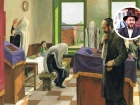
On the night of Thursday, the 1st of Iyar, 5716 (1956), at around eight in the evening, the Beis Medrash of the vocational school in Kfar Chabad was attacked by fedayeen terrorists. In the brutal massacre, an instructor and five students were killed.
The following is quoted from a report by Menachem Barash, a correspondent for Yediot Acharonot, describing what happened next:
Disappointment and bitterness enveloped the entire village. Signs of disintegration appeared. Some saw in this a clear sign that the time had not yet come… that the generation was not worthy… Perhaps we should uproot ourselves from here?… Go wherever we go… The enterprise was on the verge of collapse.
Yet it was clear that before any decision could be made, the Rebbe’s opinion must be sought – nothing would happen without his knowledge or his explicit consent.
On 4 Iyar, at nightfall, the telegram from the Rebbe finally arrived. Men, women, and children gathered in the central square to hear the telegram and its contents. And the telegram, in the Rebbe’s characteristic style, was short and to the point: one sentence. Three words only:
“B’hemshech ha’binyan tenuchamu – Through continued building shall you be comforted.”
That same night, the village elders gathered and deliberated on how to fulfill the Rebbe’s words. A brief discussion, and the decision was made: a printing school would be established, where Jewish children would learn the trade of printing. On the very spot where blood had been spilled, the building would rise.
The next morning, every man, woman, and child in the village went out to the lot near the agricultural school and began clearing it of stones, preparing it for construction. Joy returned to the village.
The Chabad Chassidim fulfilled their Rebbe’s instruction. Without donations from major philanthropists or institutions, they raised approximately 50,000 liras – and today, just one year after the tragedy, the building stands complete.
Good Shabbos!
70
Join ChabadInfo's News Roundup and alerts for the HOTTEST Chabad news and updates!

Related Posts:



Most Popular



New Videos

Editor's Picks