When Harsh Words Heal: The Hidden Message of Tzoraat and the Power of Speech
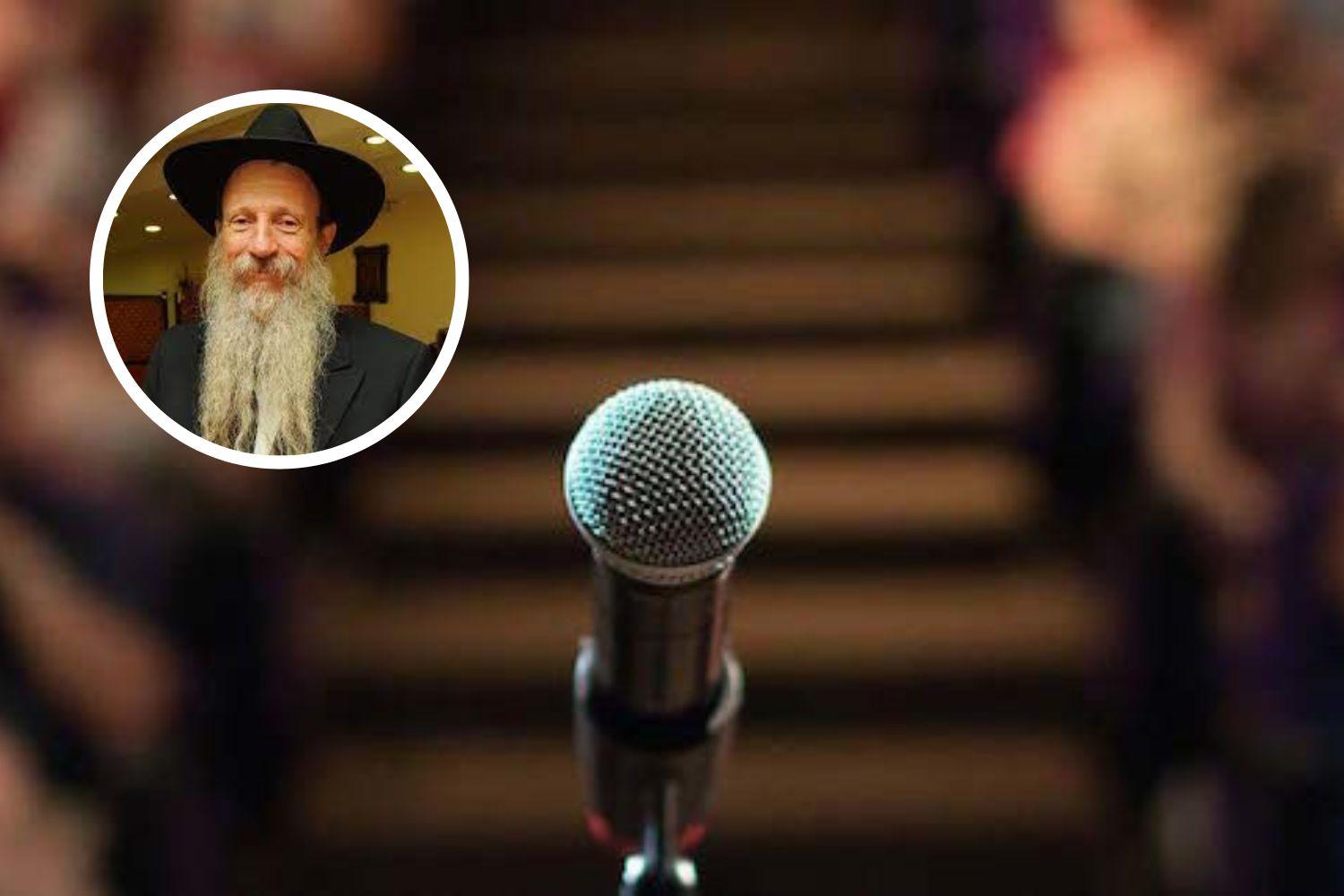
This week’s Parsha of Tazria examines the mysterious and now-absent affliction of Tzoraat, once brought on by harmful speech and inner flaws. Through a powerful story of Rebbe Boruch of Mezibuz and his shocking public rebuke of a devoted follower, Rabbi Tuvia Bolton reveals how even painful moments can conceal deep compassion and Divine purpose — and how the power of our words today can still bring blessing, healing, and ultimately the Geula • Full Article


This week we learn about the unusual, complicated and now extinct Torah ‘impurity’ called ‘Tzoraat’ caused by haughtiness and viciously damaging speech.
Rashi, the main Torah commentator, explains that this lesson about human impurity comes after last week’s Torah reading (Shmini) about which animals are kosher, because ‘Just as man was created after the animals …so his laws are written afterward’.
But does this make sense? Tzoraat no longer exists at all, while the laws about kosher animals are very relevant. Can we really call Tzoraat the laws of man when it is extinct?
To understand this here is a story about Rebbe Boruch of Mezibuz almost 300 years ago.
Jews would come from all over Russia to hear Rabbi Boruch speak or even just see his face.
For instance, it once occurred that a certain Jewish wine merchant was in the middle of a business trip with a wagon laden with hundreds of bottles of wine that he had bought on credit when suddenly he got a great urge to travel to see him.
Some say it was because he suddenly remembered a certain sin he had done, others because he suddenly realized a certain character flaw in himself and others because he just needed a dose of holy inspiration.
In any case, because he had to move fast and his wagon was much too heavy a burden for the horses, he paid for a room at the first inn he passed, unloaded all the barrels of wine and rolled them into the room, locked the door, took the key and sped off like the wind in his now empty wagon to Mezibuz.
He got there a half hour before Shabbat got a room, got dressed for Shabbat and ran to the Rebbe’s Shul (Synagogue) for the prayers. But when the Rebbe looked over the crowd after the evening prayer and saw him he called him over asked him the reason for this sudden visit and got the full story.
“What! You left all your wine just to come here? You fool! Idiot! Have you no brains? You are hopeless! All the blessings in the world couldn’t help a dunce like you!?” And he continued insulting and shaming the poor fellow in loud tones in front of the entire congregation of several hundred people for several minutes.
And it didn’t stop there. The entire Shabbat in front of hundreds of Chassidim sitting together in joyous solemnity at the Sabbath meals the Rebbe would let this Chassid have it in the most degrading terms.
“Deformed fool! Numbskull! Better you weren’t born!! Etc.” Needless to say the Chassid was embarrassed to the essence of his soul but the Rebbe didn’t seem to care and no one dared to stop him. The Rebbe never makes a mistake… that’s what makes him a Rebbe.
Now, it just so happened that the Rebbe’s in-law, another great and holy Jew called Rabbi Avraham of Chemilnik, was also there and although he also believed in the Rebbe’s infallible wisdom, he just couldn’t bear to see what was happening. Every time his father-in-law said an insult he felt as though an arrow was piercing his heart! He had never seen anything like this, especially from his holy father-in-law and it almost brought him to tears.
“Rav Boruch, my precious Father-in-law” he leaned over and said softly and caught the Rebbe’s attention, “This pains me deeply to see you shaming that poor fellow? What about what it says in the Talmud and the Zohar that one who embarrasses his fellow man in public has no place in heaven?! Please! I beg you; you are forfeiting your place in the world to come!!!”
But the Rebbe just turned to the wine merchant, threw out a few more terrible insults and then to his son-in-law and motioned under the table for him to come into the next room.
Once they were alone where no one could hear them he explained. “My dear son-in-law, of course I know what punishment awaits me for what I am doing. And believe me I have never spoken like this in my life and hope I never will again. But I can see things that you can’t. It’s a gift that G-d gave me … and, well, what can I say, it’s not always so pleasant.
“I see that there are thieves that want to rob all the barrels of wine that this fellow left locked up miles from here. It will leave him a not only a pauper but a debtor for life … maybe even put him in debtor’s prison. He borrowed a lot of money to purchase that wine.
“I know I’m losing my heavenly reward … but it’s the only way I can save him. You see, the shame that my insults are causing him is in the place of the shame and misery he’ll have otherwise. As long as I’m insulting him the thieves won’t succeed. And it’s worth my ‘heaven’ to save this poor Jew.”
And so it was; When the wine merchant returned to the hotel to retrieve his wine, the owner told him of how thieves tried repeatedly to break-into the room he rented but amazingly didn’t succeed.
This answers our question about the relevance today of Tzoraat.
Tzoraat, says the Talmud, is caused by slanderous or damaging speech. In the days of the Temple when one spoke damagingly about another, blemishes of Tzoraat would appear on the speaker’s skin as an encouragement to correct the spiritual blemishes that caused his evil words.
But today we have fallen too far from the truth and rather than taking responsibility for our faults and misfortunes most of us blame others, natural causes, economy, the government etc.
But occasionally there are Tzadikim; like the Rebbe in our story, who know and live the truth. Everything in this world has a spiritual source and every action here causes a spiritual reaction and every fault can be corrected.
These people can actually see and feel what happens in the spiritual worlds when a good deed or, G-d forbid, the opposite is done. And their example teaches us that there is order and justice far above our ability to discern.
Because of them, things that ‘seem’ to be bad are really good in disguise. As we saw in our story.
That is the ‘law of man’ Rashi is speaking of. These Tzadikim truly bear the form of man, (as the book Tanya teaches (Chapt. 24) regarding Daniel in the lion’s den).
And the main Tzadik of our generation, the Lubavitcher Rebbe teaches us that if evil speech can do so much damage then CERTAINLY positive speech can do the opposite and bring blessing into this world. And how much more so positive action and even thought.
Until the spiritual sum total of all the good deeds, words and thoughts of all the generations will be revealed at once in the Geula (redemption).
And, as the Lubavitcher Rebbe said repeatedly; this should happen at any moment. We are standing on the merits of thousands of years of Jewish service, hopes, prayers and suffering. It all depends on us!
One more good deed, word or even thought, especially if done with Ahavat HaShem and Ahavat Yisroel can bring …….
With Moshiach NOW!
Rabbi Tuvia Bolton
Yeshiva Ohr Tmimim
Kfar Chabad, Israel
31
Join ChabadInfo's News Roundup and alerts for the HOTTEST Chabad news and updates!

Related Posts:




Most Popular




New Videos

Editor's Picks