Behaaloscha: Every Jew is Moshiach’s Lamp
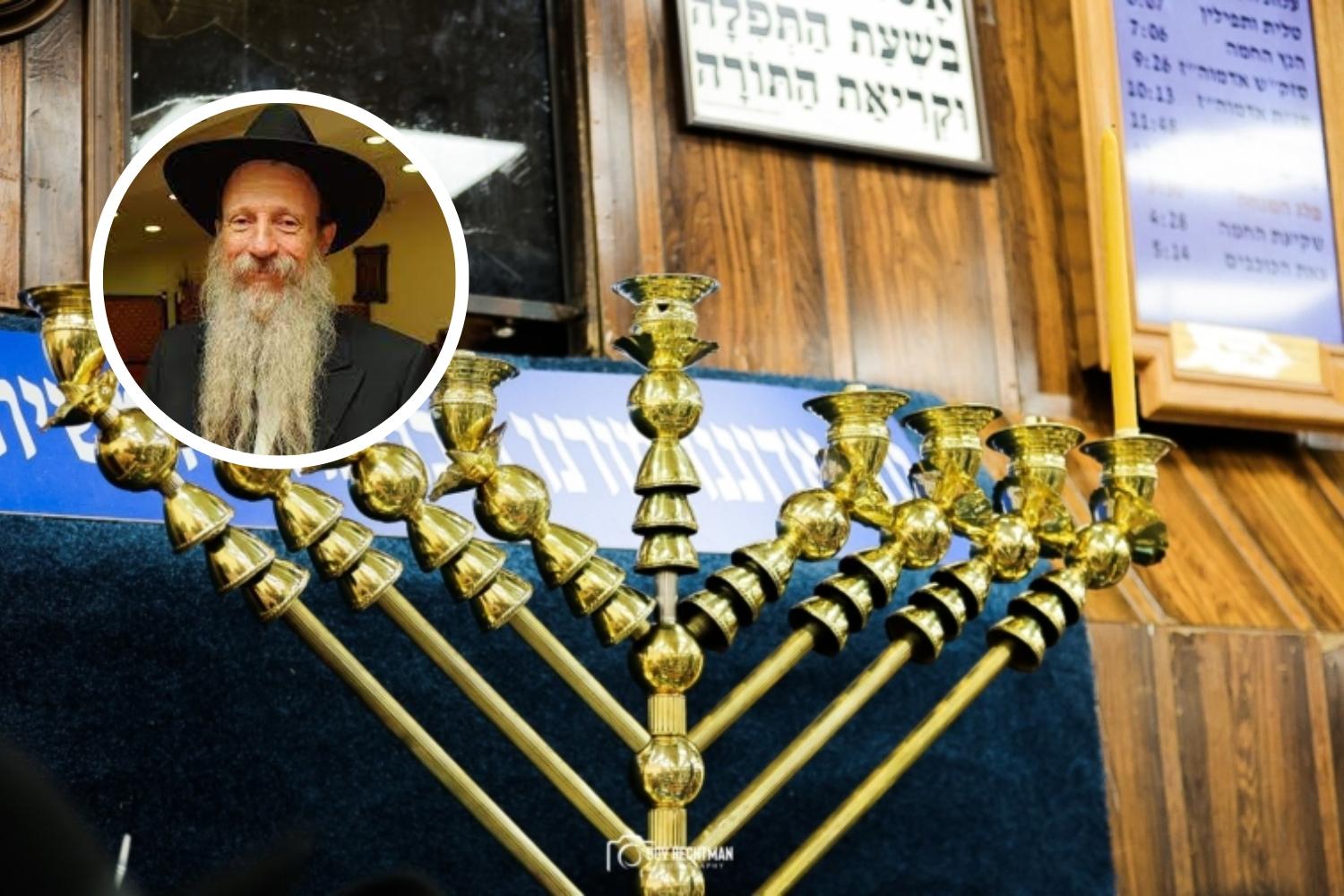
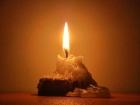
This week’s Torah reading begins with the commandment of lighting the seven lamps in the Tabernacle Menorah. This commandment has great significance today because it is connected to the Moshiach. In the third blessing after the Haftora reading we say: “His (The Moshiach’s) ‘Nair’- lamp will never be extinguished.” Namely, because his lamp burns constantly, everywhere Moshiach will ‘light up’ the entire world- (Tanya end of Chap. 36). Here is a story that happened over 50 years ago to help us understand • Read More


By Rabbi Tuvia Bolton, Yeshiva Ohr Tmimim, Kfar Chabad, Israel
This week’s Torah reading begins with the commandment of lighting the seven lamps in the Tabernacle Menorah. This commandment has great significance today because it is connected to the Moshiach.
In the third blessing after the Haftora reading we say: “His (The Moshiach’s) ‘Nair’- lamp will never be extinguished.”
Namely, because his lamp burns constantly, everywhere Moshiach will ‘light up’ the entire world- (Tanya end of Chap. 36).
Here is a story that happened over 50 years ago to help us understand.
Rabbi Chiam Tzvi Shvartz was the head and founder of a very successful girl’s school in Brazil with several hundred young pupils (most of them from non-religious families).
Our story begins one afternoon as a well-dressed middle-aged couple, the parents a girl who had learned in his school years earlier, were sitting opposite him in his office.
They looked at each other nervously, the husband nodded to his wife who leaned over facing the Rabbi and said, almost in a whisper.
“Rabbi, you must help us, we do not know where to turn… it is a tragedy! Our oldest daughter just announced her engagement to a non-Jew!”
She became choked up with tears and began whimpering into her small handkerchief. They both were obviously beside themselves with anguish.
“It is true that we are not very observant ourselves,” the father continued, “but we never dreamed it would go this far, ooy if we would have known …. Oy Rabbi we will do what you want, just bring our daughter back!” And he too began weeping.
The Rabbi nodded silently, thought for a while, asked them for her phone number and, right then and there, dialed it. To his surprise the daughter answered very pleasantly and even said that she was willing to speak face to face.
The next day the Rabbi was sitting in the young lady’s apartment using every argument he could think of to convince her to change her mind. He appealed to her emotions, her loyalty, her logic, faith etc. until after almost two hours, he was simply out of ideas.
“Well… thank you Rabbi” She said as she stood up indicating that the conversation was over, “I appreciate you taking all this time out for me… really I do. But you see Rabbi, Eduardo and I love each other and we are going to get married, the date for the wedding is already set. I know that this is not what you want to hear, but just as you live your life so I must live mine. Again, thank you for your good intentions.”
She showed him politely to the door. The Rabbi walked down the apartment building stairs in low spirits, it was hopeless… he had failed. And you can imagine how her parents felt when he called them.
A week later he was sitting in his office when a thought suddenly occurred to him. “I’ll call the Lubavitch Rebbe! Why didn’t I think of it earlier!”
Rabbi Shvartz had been a Munkatch Chassid but when he arrived in America after the Holocaust he became very attached to the previous Lubavitcher Rebbe and his son-in-law who succeeded him, and would ask their advice frequently.
In fact the Rebbe’s son-in-law was the one who advised him over ten years earlier to move to Brazil and look for work, and now, thanks to this advice many hundreds of souls had been saved from certain assimilation.
He called and one of the Rebbe’s secretaries, Rabbi Hodakov, answered the phone and listened to the problem.
Please tell the Rebbe my name,” concluded Rabbi Shvartz. “Perhaps he will remember me. Please tell him I really need an answer as soon as possible, it is very urgent.”
The secretary told him to wait on the line, and a minute later he was back with an answer. “The Rebbe says you should go to her and tell her that because she wants to marry a Gentile there is a Jew in New York that can’t sleep nights.”
Rav Shvartz was totally confused. “A Jew in New York can’t sleep? Who is he what is his name?” Suddenly the call was interrupted; the Rebbe’s unmistakable voice cut in and said, “His name is Mendel Shneerson”. Startled but no less confused,
Rav Shvartz thanked the Rebbe and his secretary and said good-bye.
“How will this help?” he was thinking to himself after he put down the phone, “it makes no sense! The girl will just laugh at me!” While he was still lost in thought his phone rang and he answered. It was the Rebbe’s secretary speaking once again.
“Hello, Rabbi Shvartz? The Rebbe says to tell you that a Chassid does what he is told with joy, not with pessimism. Also, the Rebbe said that you can tell the young lady that she has met him and she knows him.”
No less confused, Rav Shvartz hung up. Immediately called the girl once again and convinced her that he had something new to tell her, they would meet again tomorrow.
But the next day when they met in her parent’s home and he told her the message her response was not positive.
“Listen Rabbi Shvartz,” She fumed, “last week I listened to you for two hours, today I took time off from work! I want you to leave me alone or I will call the police! I don’t know any Jews in New York! And even if I did I can’t imagine why my wedding would disturb anyone’s sleep! Now please stop bothering me!”
But the Rabbi was in it too deep to stop now.
“You know this man” He blurted out, “He is a famous Rabbi!”
“Listen, Rabbi Shvartz the only Rabbi I know is you and I’m beginning to regret that!!” She said as she stood up to leave.
“Wait, Wait! I’ll show you his picture”, said Rav Shvartz, beginning to feel a bit crazy himself. He began searching together with her parents and just as she had reached the door he presented her with a picture of the Rebbe they found in some magazine. “Here, do you recognize this man?”
She grabbed the picture and gave a quick angry glance when suddenly her face became serious and she sat down, still looking at the picture.
“Who is this man?” She asked, and after hearing the answer she continued; “This man has been appearing in my dreams for the last several nights and begging me not to intermarry, but I didn’t pay any attention. I thought that because I had met you, I was dreaming about Rabbis. Now I understand why he doesn’t sleep at nights… he’s busy talking to me!
One week later they postponed the wedding and shortly thereafter it was cancelled completely. In addition to the thousands of Jews the Rebbe ‘woke up’ in Brazil (there are over 20 Chabad houses there) he had time for one more.
This answers our question about the Menorah and Moshiach.
The soul of every Jew is called a lamp (Prov. 20:27).
One reason is because each Jew, like a lamp, is made to illuminate the world.
That is why we are called the ‘Chosen People’. G-d chose us to bring ‘light’ blessing and meaning, into every aspect of creation through the Torah and its commandments.
But the analogy goes even deeper. A lamp consists of a vessel, a wick, oil and fire. So does every Jew.
The vessel is the physical body. The wick is our natural life (‘Animal Soul’). The oil is the Torah and its commandments.
But the fire, which is the main thing, is the Jewish (G-dly) soul.
It is genuine enthusiasm for, and love of G-d. The Midrash calls it ‘the Shechina’ and the only way it can be lit is by Aaron. Namely through the inspiration of Tzadkim, the Righteous Jews found in every generation. It is their job to ‘turn on’ as many souls as possible. Without them Judaism can be cold and selfish.
But each Jew is different: Some are inspired by doing kindness, others by the regimen of the commandments, others by the beauty and depth of the Torah, others by prayer, by the land of Israel etc. etc. Like the branches of the Menorah.
Kabalistic works classify them into seven general categories, [corresponding to the seven ‘emotions’ of G-d, seven days of creation and the seven branches of the Menorah] and the Moshiach will light all of them; ALL the seven lamps.
That is what is hinted at in the title of this week’s section: ‘B’HAALOTCHA’
It does not just say that Ahron should ‘ignite’ or ‘light’ the lamps, but rather he should “RAISE UP the lamps” i.e. from below to above. Yhe arousal must from Ahron the High Priest.
In other words, G-d doesn’t do it alone (from above).
Just as we are inspired by music from a master musician, so we need the influence and blessing of Tzadikim like the Rebbe to arouse the inner identity; or ‘point of Moshiach’, in each and every Jew;
This is the ‘Lamp’ of the Moshiach (the fifth and highest soul level called ‘Yechida’) that will eventually illuminate the entire world with the Oneness of G-d in the final Redemption, as it says in the Prophet Zacharia (14:7-9) “And it will be at the time of evening that there will be LIGHT… And G-d will be the King of the whole world. On that day G-d will be One and his Name will be ONE.”
And, as the Rebbe said repeatedly; this should happen at any moment. We are standing on the merits of thousands of years of Jewish service, hopes, prayers and suffering. It all depends on us! Just one more good deed, word or even good thought, can bring …….
Moshiach NOW!!
39
Join ChabadInfo's News Roundup and alerts for the HOTTEST Chabad news and updates!

Related Posts:




Most Popular



New Videos

Editor's Picks