
Anger or Emunah? Finding Calm Through the C.A.L.M.E.R.S.™ Method
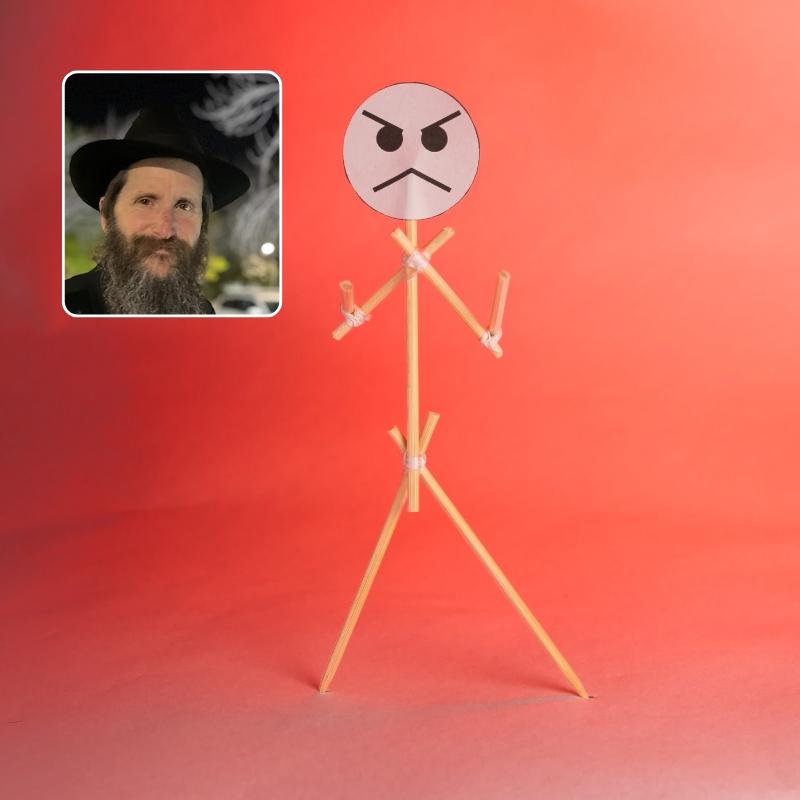
Question: My wife and I have a happy marriage; yet, there’s one thing that really bothers her — my temper. I don’t want to get angry, but when something upsets me, it feels like I lose control. How can I overcome this? • Aharon Schmidt replies, from the Living Jewish’s Farbrengen column • Read More


Question: My wife and I have a happy marriage; yet, there’s one thing that really bothers her — my temper. I don’t want to get angry, but when something upsets me, it feels like I lose control. How can I overcome this?
Answer: It’s understandable that you feel frustrated — wanting to stay calm yet finding emotions rising is something many people struggle with. The fact you want to change already shows self-awareness. With focus and practical tools, you can absolutely make progress. Consider the following approach: The C.A.L.M.E.R.S.™ © Method:
C – Control the Red Line. You can stop yourself from getting angry — it depends on where you draw your red line. Each of us decides at what point we lose control. By moving that line further out through awareness and practice, you teach yourself that you can choose not to cross it.
A – Awareness of the “I.” Anger often stems from ego — from focusing on I want, I deserve, I’m right. Shifting focus from “I” to understanding the other person reduces tension and builds empathy.
L – Let Go of Expectations. We get angry when reality doesn’t match our expectations. The world outside doesn’t always mirror our inner world. Accepting that disconnect — and allowing for internal flexibility — helps release frustration and brings calm.
M – Mindfulness of Hashem. Remember that everything comes from Hashem, and everything He sends is good, even if we don’t understand. Even if someone seems to wrong you, they are only a messenger. With this mindset, anger fades, replaced by calm trust.
E – Emphasize the Good. When you focus on another person’s positive traits, you see them in a more balanced, compassionate light. It becomes harder to feel anger toward someone you appreciate.
R – Recognize Growth. Everyone is in a process of growth — like products on an assembly line, each at a different stage. Mistakes are part of development. Seeing others as works in progress builds patience.
S – Self-Acceptance. When you accept your own imperfections, it’s easier to accept others’. Self-compassion breeds compassion.
By practicing C.A.L.M.E.R.S.™, you replace reaction with awareness — and create space for peace, understanding, and connection.
C.A.L.M.E.R.S.™ Method © 2025, Aharon Schmidt. All rights reserved.
Aharon Schmidt is the editor of Living Jewish, a weekly Chabad publication; Shliach in Ramat Beit Shemesh Alef; and therapist specializing in marriage and individual counseling. For more information about therapy services, visit: www.aharonschmidt.com
To receive periodic ideas on navigating marriage and personal growth, reach out to: [email protected]
To receive Living Jewish, email: [email protected]
139
Join ChabadInfo's News Roundup and alerts for the HOTTEST Chabad news and updates!

Related Posts:




Most Popular




New Videos

Editor's Picks