When Money Becomes Irrelevant: Elon Musk’s Vision and the Rambam’s Prophecy
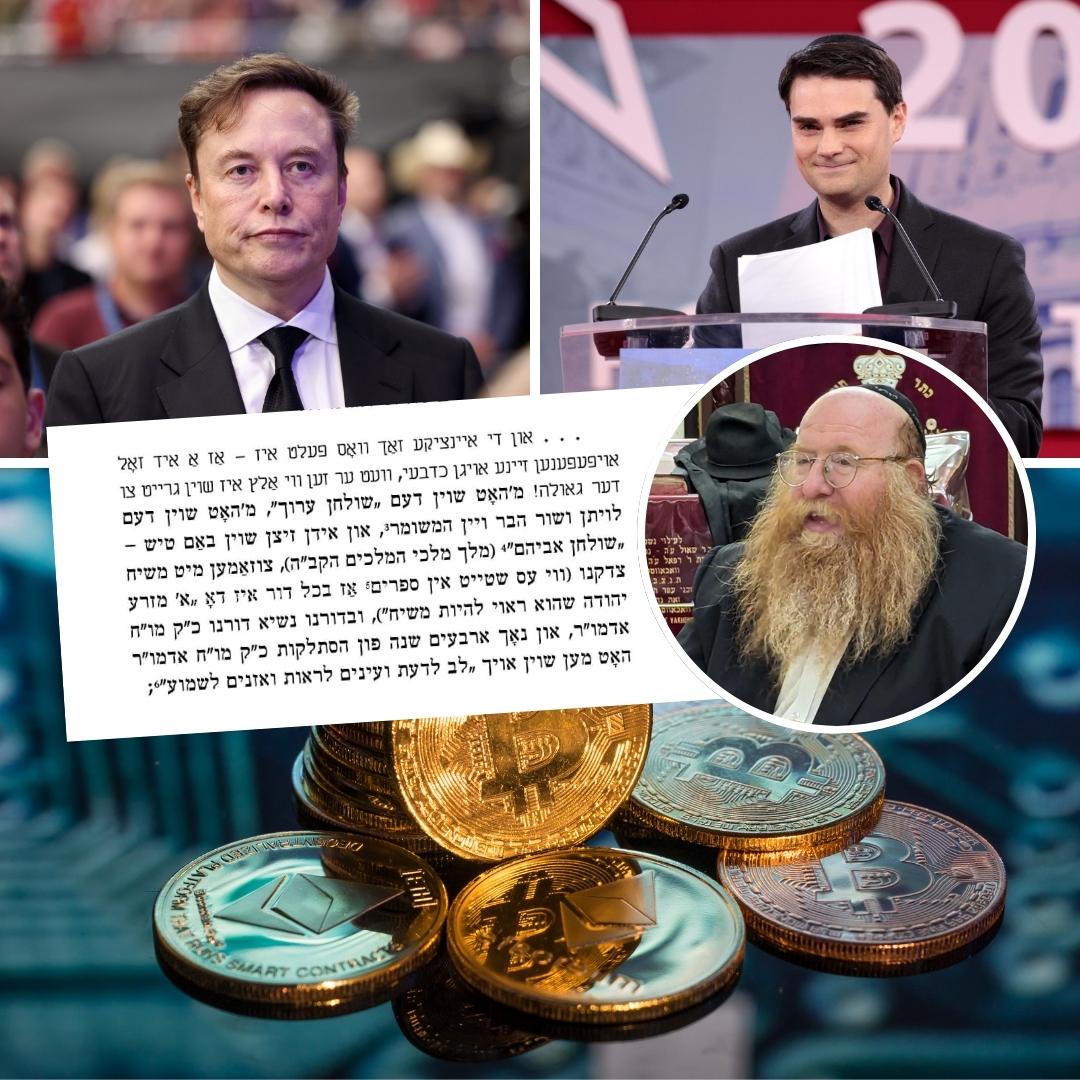
Rabbi Zalman Liberow: “In a striking prediction, Elon Musk painted a future that sounds remarkably familiar to anyone versed in Jewish messianic prophecy. “My prediction is that work will be optional,” Musk declared. “It’ll be like playing sports or a video game or something like that.” To Jewish ears, this doesn’t sound like science fiction. It sounds like the Rambam.” • Read More


By Rabbi Zalman Liberow, shliach of the Rebbe to Flatbush
A Glimpse of the Messianic Era
In a striking prediction at the U.S.-Saudi Investment Forum last week, tech billionaire Elon Musk painted a future that sounds remarkably familiar to anyone versed in Jewish messianic prophecy. “My prediction is that work will be optional,” Musk declared. “It’ll be like playing sports or a video game or something like that.”
But Musk didn’t stop there. In what might be his most ambitious forecast yet, he suggested that “if you go out long enough—assuming there’s a continued improvement in AI and robotics, which seems likely—money will stop being relevant.”
To Jewish ears, this doesn’t sound like science fiction. It sounds like the Rambam.
The Rambam’s Vision: Laws of Kings, Chapter 12
In Hilchos Melachim (Laws of Kings), Chapter 12, the Rambam describes the Messianic Era in terms that echo Musk’s technological utopia—but with a crucial spiritual dimension:
“באותו הזמן לא יהיה שם לא רעב ולא מלחמה, ולא קנאה ותחרות, שהטובה תהיה משפעת הרבה, וכל המעדנים מצויין כעפר”
“In that time, there will be neither famine nor war, neither jealousy nor competition, for goodness will flow in abundance and all the delicacies will be as common as dust.”
The Rambam continues: “ולא יהיה עסק כל העולם אלא לדעת את ה’ בלבד” — “The occupation of the entire world will be solely to know Hashem.”
This is where the Torah’s vision diverges profoundly from Silicon Valley’s dream.

Photo: Gage Skidmore
The Religious Advantage: Purpose in Abundance
Conservative commentator Ben Shapiro has astutely observed that if Musk’s prediction comes true, secular society faces a crisis of meaning that religious communities will be uniquely equipped to handle. While non-religious individuals may struggle to find purpose when traditional markers of success—career achievement, wealth accumulation—become obsolete, religious people will already have a framework for meaningful existence.
They will use their newfound time for family, for study, for prayer—for connection with the eternal rather than the temporal. The very activities the Rambam describes: לדעת את ה’, to know Hashem.
In the Rambam’s vision, material abundance isn’t the end goal—it’s merely the removal of obstacles. When “there would be no shortage of goods or services,” as Musk put it, humanity will finally be free to pursue its true purpose.
The Question of Human Nature
Musk compared optional work to growing vegetables in your backyard—something harder than buying them at the store, but which “some people still do it because they like growing vegetables.” It’s a charming analogy, but it misses something essential.
The Rambam understood that humans aren’t designed merely to consume or to engage in hobby-work. We’re designed for transcendence. The absence of material want creates the opportunity for spiritual ascent, but it doesn’t automatically produce it.
This is why the Torah describes the Messianic Era not primarily as a time of material plenty—though it will be that—but as a time when “ומלאה הארץ דעה את ה’ כמים לים מכסים” — “the earth will be filled with knowledge of Hashem as water covers the seabed” (Isaiah 11:9).
A Test Run for the Future?
What makes Musk’s prediction particularly intriguing for Jews is that it poses the question: Are we prepared for the Messianic Era?
If money becomes irrelevant and work becomes optional in 10-20 years, as Musk suggests, or even today, as we hope that אחכה לו בכל יום שיבוא, will we know what to do with ourselves? Will we spiral into nihilism and purposelessness, or will we embrace the opportunity for growth in Torah and mitzvos?
The secular world, as Shapiro notes, may struggle with this transition. When career and wealth can no longer provide meaning, what will? Entertainment? Perpetual leisure? The “video game” existence Musk describes sounds more like spiritual stagnation than redemption.
But for those rooted in Torah, the answer is clear. When the Rambam writes that our sole occupation will be knowing Hashem, he’s not describing a burden—he’s describing liberation. The freedom to finally pursue what we were meant for all along.

Photo: Gage Skidmore
The Role of Technology in Bringing Moshiach
There’s a profound irony in Musk’s vision. He imagines AI and robotics creating this utopia through purely material means—better technology producing more abundance. But the Torah teaches that true abundance comes from a different source entirely.
The Rambam writes that in the days of Moshiach, the world will operate according to its intended design. Perhaps Musk’s robots and AI are precisely the tools through which that divine plan will unfold. Perhaps the “continued improvement in AI and robotics” that Musk expects is itself part of Hashem’s preparation of the world for its ultimate purpose.
The Ultimate Question
Musk told his audience that “there would be no shortage of goods or services” in this automated future. The Rambam promised that “הטובה תהיה משפעת הרבה” — “goodness will flow in abundance.”
One vision sees robots serving humans so we can play video games. The other sees Hashem’s blessings flowing so we can serve Him. One future is aimless; the other is purposeful. One is empty; the other is full.
The real question isn’t whether work will become optional or money will become irrelevant. The real question is: When that day comes—whether through Musk’s robots or Moshiach’s revelation—will we be ready?
Will we know what to do with our freedom?
The religious world already has the answer. As the Rambam teaches, we will לדעת את ה’ — know Hashem. Everything else is just details.
And in the same vein that the Rebbe instructed us after the miraculous end of the Persian Gulf War—that we ought to go out and dance in the streets—so too, hearing these amazing predictions, we should go out and do somersaults in the street! Not because robots will serve us, but because we’re witnessing the unfolding of the Rambam’s vision before our very eyes.
Author’s Note: As an expression of the very technology discussed in this article, this piece was composed in approximately 5 minutes. Using a simple voice note to my preferred AI assistant, what would have taken half a day just three years ago now takes mere minutes. Perhaps this, too, is a small glimpse of the future the Rambam envisioned—where technology frees us to focus on what truly matters.

504
Join ChabadInfo's News Roundup and alerts for the HOTTEST Chabad news and updates!

Related Posts:


Most Popular


New Videos

Editor's Picks