Op-Ed: The (Shavuos) “Pilpul” of Reb Sholom Hecht A”H
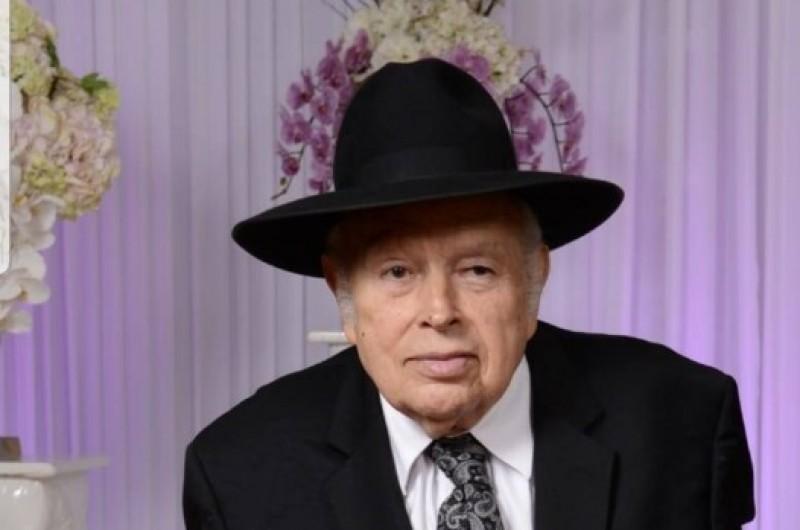
Rabbi Gershon Avtzon: Recently, as I was learning about the Farbrengen where Rabbi Hecht is mentioned, I decided to actually open this special sefer and see some of what is written there. There are many strong Torah insights written by the Rabbanim of the Hecht family, but I was most inspired by the “Pilpul: written by his youngest brother, – Reb Sholom Hecht (A”H). • Read More


By Rabbi Gershon Avtzon
I imagine that most people that are reading this article have heard of the Sefer “Tiferes Moshe Yitzchak”. Just for the sake of those that may not be familiar, here is the brief history: One of the first Shluchim in America, was the Chassid Rabbi Moshe Yitzchak Hecht A”H. For many decades, he was on Shlichus in New Haven (Connecticut), and passed away on 27 Adar 5752.
The Rebbe personally in the Levaya (which was on a Friday!) and spoke about him the next day at the Shabbas Farbrengen. The Rebbe requested that the family print a Sefer in honor of the Shloshim, which should have Torah writings from family members and students. His son, Rabbi Yosef Hecht (Eilat), worked tirelessly on this sefer – named Tiferes Moshe Yitzchak – and indeed it was printed in time for the shloshim and the Rebbe mentioned it again by the Farbrengen.
Recently, as I was learning about the Farbrengen where Rabbi Hecht is mentioned, I decided to actually open this special sefer and see some of what is written there. There are many strong Torah insights written by the Rabbanim of the Hecht family, but I was most inspired by the “Pilpul: written by his youngest brother – Reb Sholom Hecht (A”H).
Who was Reb Sholom Hecht? He was a special Chassid who had the unique privilege of being able to enter Yechhidus whenever he wanted and he would actually bring the dollars for the Rebbe to distribute. He is most famously known for what happened during the legendary Purim 5718 Farbrengen: During a farbrengen of 5718, between the Sichos, the Rebbe suddenly called out to him, “Change your name from Sidney to Sholom, so that you may have peace in your body and soul, and you will have healthy child!” Sydney became Sholom, and was blessed with a daughter within the year.
In his “Pilpul” (pages 18-21 in the Sefer) Rabbi Hecht asks a question that relates to Matan Torah: Before the giving of the Torah, his father-in-law Yisro comes to visit him and sees that he is being worn out by dealing with the Jewish people. He tells him (Shemos 18:18): “You will surely wear yourself out, you yourself as well as this entire people that is with you, for this matter is too weighty for you; you will not be able to do it alone.”
He then advises Moshe to create a system where authority is delegated.
The idea seems very good, and Moshe Rabbeinu accepts the advice, where find that shortly afterwards (18:27) : “Moses sent off his father-in-law, and he set out on his way to his homeland.” The obvious question is: Why, after receiving such good advice, was Yisro sent away?
[The truth is that Rashi addresses this question and answers: “to convert the members of his family to Judaism.” But, dear reader, listen to a Chassidish thought from Ren Sholom Hecht.]
Rabbi Hecht answers: Moshe Rabbeinu respected his father-in-law Yisro, but realized that – as much as Yisro had Mesiras nefesh to come to Bnei Yisroel – he was missing a very basic foundation: He viewed Moshe Rabbeinu as a regular human being which can get worn out from doing the work of a Jewish leader. This was a terrible mistake and can have a very negative affect on the Jewish people.
They are about to receive the Torah and to internalize the Torah is going to demand much effort and toil. It takes supernatural energy to be able to make Torah a reality in our lives. We have that ability because we have a soul which is part of Hashem, we are not limited by the natural limitations. If we start listening to voices that say “You will surely wear yourself out, you yourself as well as this entire people that is with you”, we will never be able to properly accept the Torah. Thus Yisro, who had this faulty mindset (which could corrupt those around him), needed to be sent away.
This idea, whether or not you accept this “pshat” of the events in the Parsha, is definitely true. In order to accept the Torah, we must make sure that we understand that we do not understand the true essence of Moshe Rabbeinu. While Moshe Rabbeinu is obviously human, he is not limited to the regular human limitations. Moshe Rabbeinu is an “ish elokim” (as it says in Tehillem) and thus not bound to the regular rules of nature.
The more we realize this point and how it connects to our Rebbe, especially during this temporary time of concealment, the better we are prepared for the “Torah Chadasha” of Melech Hamoshiach.
Please feel free to share your thoughts on the above with me by sending me a personal email: [email protected]
195
Join ChabadInfo's News Roundup and alerts for the HOTTEST Chabad news and updates!

Related Posts:


Most Popular



New Videos

Editor's Picks