
Not Every Day a New Word Enters the Lubavitch Lexicon
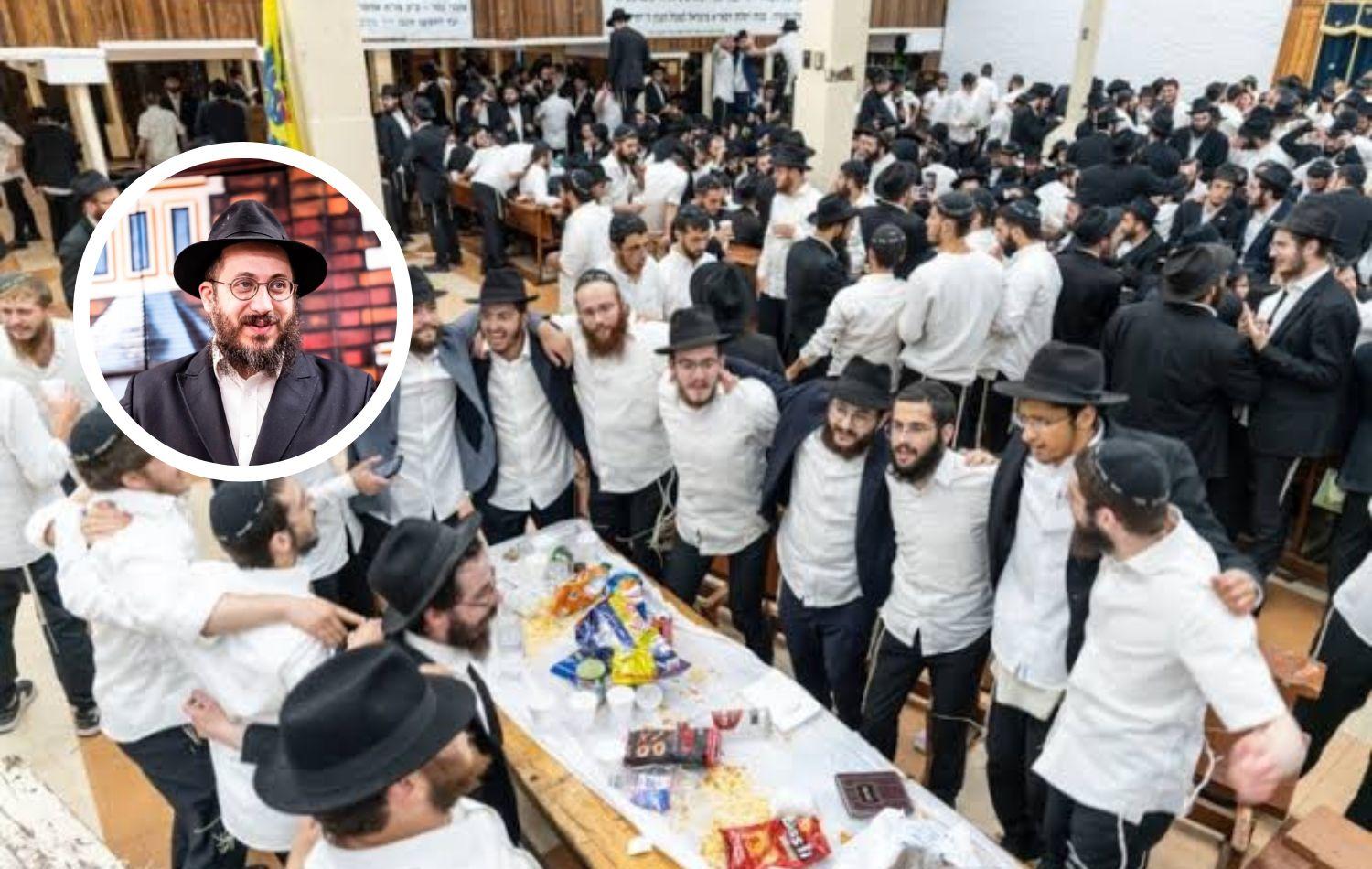
Forty years ago, the Rebbe introduced a new word into the Lubavitch lexicon: “Chodorom.” In this \ op-ed, Rabbi Gershon Avtzon, Rosh Yeshivah of Yeshivas Lubavitch Cincinnati, reflects on the Rebbe’s famous sicha of 16 Elul 5746 and the profound meaning behind his expectation that 770 should have been “Chodorom” on 15 Elul • Full Article


Rabbi Gershon Avtzon
It is not every day that a new word is added to the Lubavitch lexicon. Such an event took place exactly forty years ago, on 15 Elul 5746 (1986). That year, the fifteenth of Elul, the day Yeshivas Tomchei Temimim was established in 5657 (1897), fell on a Friday like this year. The Rebbe went to the Ohel that day, most bochurim were out on mivtzoim, and the baalebatim were preparing for Shabbos.
The Sicha of 16 Elul
The Rebbe returned from the Ohel before Shabbos, and 770 was, as one would expect, basically empty and quiet. At the farbrengen the next day, on 16 Elul 5746, the Rebbe said the following:
“I was sure that when I returned from the Ohel, I would find 770 going ‘chodorom’ (upside down!), not because of anything connected to fighting or machlokes (ch”v), but because of the great joy that breaks all boundaries, great joy and dancing with the greatest shturem, as befitting such a special day, and especially this year, the eighty-ninth year of Tomchei Temimim and entering the ninetieth!”
While this sicha created a new “Yom Tov” in Lubavitch, with lively celebrations now held all over the world in honor of 15 Elul, I have always been bothered by a question: how did the Rebbe really expect that on a busy Friday afternoon, for the eighty-ninth year of Tomchei Temimim (which most people would not connect to ninety), 770 would go“chodorom”?
The question is even stronger: 5746 was over thirty-five years since the Rebbe accepted the nesius, in 5711. If so, why did the Rebbe never express such shock in all the years before? What changed in 5746 (it is hard to say it was simply because we were entering the ninetieth year)?
The Year the Sefarim Were Stolen
While, obviously, I do not know the true answer, I would like to share a perspective, and everyone is welcome to share their own: 5746 was a truly unique year, the year of the story and trial over the sefarim of the Rebbe’s library. It was extremely personal and painful to the Rebbe, for obvious reasons, and it was during this difficult time that the Rebbe taught us many lessons about what a Rebbe truly is, the eternity of the Rebbe, and what true connection to a Rebbe means.
I would like to focus on one vital, novel idea the Rebbe revealed: that the sefarim of a Rebbe, the ones he learned from or owned, are not simply books, rather they are like living organs of the tzaddik. The Rebbe expressed himself with the following words:
“This is especially the case with regard to his sefarim: ‘The life of a tzaddik, the Alter Rebbe writes, is not a physical one; his sustenance consists of emunah, ahavah, and yirah. The studying of these concepts, the basis for his entire avodas Hashem, is done through sefarim. Therefore, the sefarim of the tzaddik are his very life!’”
“Taking a sefer from the possession of the Rebbe Rayatz means taking a part of his life, Rachmana litzlan (G-d save us). Anyone who takes a sefer without the permission of the Rebbe Rayatz, for every moment that he does not return it, causes an inyan of a levaya, R”l!”
This was a great novelty to many Chassidim. They had never viewed the sefarim of the Rebbe or the Rebbe himself this way. These were not just books that he studied, they were part of his essence, and therefore had to be in their rightful place: in the library of 770, the Rebbe’s eternal, permanent place.
Why 15 Elul Deserved Boundless Joy
I want all of my dear readers to think about the following: if the above, that things connected to the avodas Hashem of the tzaddik are part of his true life, is true regarding the books of our holy Rabbeim, how much more so regarding something that is the main shlichus of their life in a revealed way!
In simple words: founding Tomchei Temimim was connected to the essence of the Rebbe Rashab, and being the Menahel of Tomchei Temimim was the essence of the Rebbe Rayatz. The Rebbe Rayatz lived, breathed, and had mesiras nefesh for the success, growth, and continuation of Tomchei Temimim, even under the communist regime!
Now we can answer our question. After a year spent teaching us how much we should care about the books of the Rabbeim, and how pained we should feel that they were stolen and not in their rightful place, it should be obvious that on 15 Elul, the day Tomchei Temimim began, a day clearly connected to the essence of our holy Rebbeim, we should be dancing without limitation! The fact that it was a Friday afternoon should be irrelevant.
To put it another way: if the verdict of Didan Natzach had come out on a Friday afternoon, would there be any question that every Chabad chassid would be dancing in 770? Of course not. We all know what that court case means to the Rebbe, and we are joyous from the depths of our hearts. That is how the Rebbe expected, and expects, us to feel, after a year of being taught, in regard to 15 Elul!
L’chaim! Chodorom! Moshiach now!
Please feel free to share your thoughts on the above with me by email: [email protected].
43
Join ChabadInfo's News Roundup and alerts for the HOTTEST Chabad news and updates!

Related Posts:



Most Popular




New Videos

Editor's Picks