A Lesson in Bittul, Relationships and Sholom Bayis
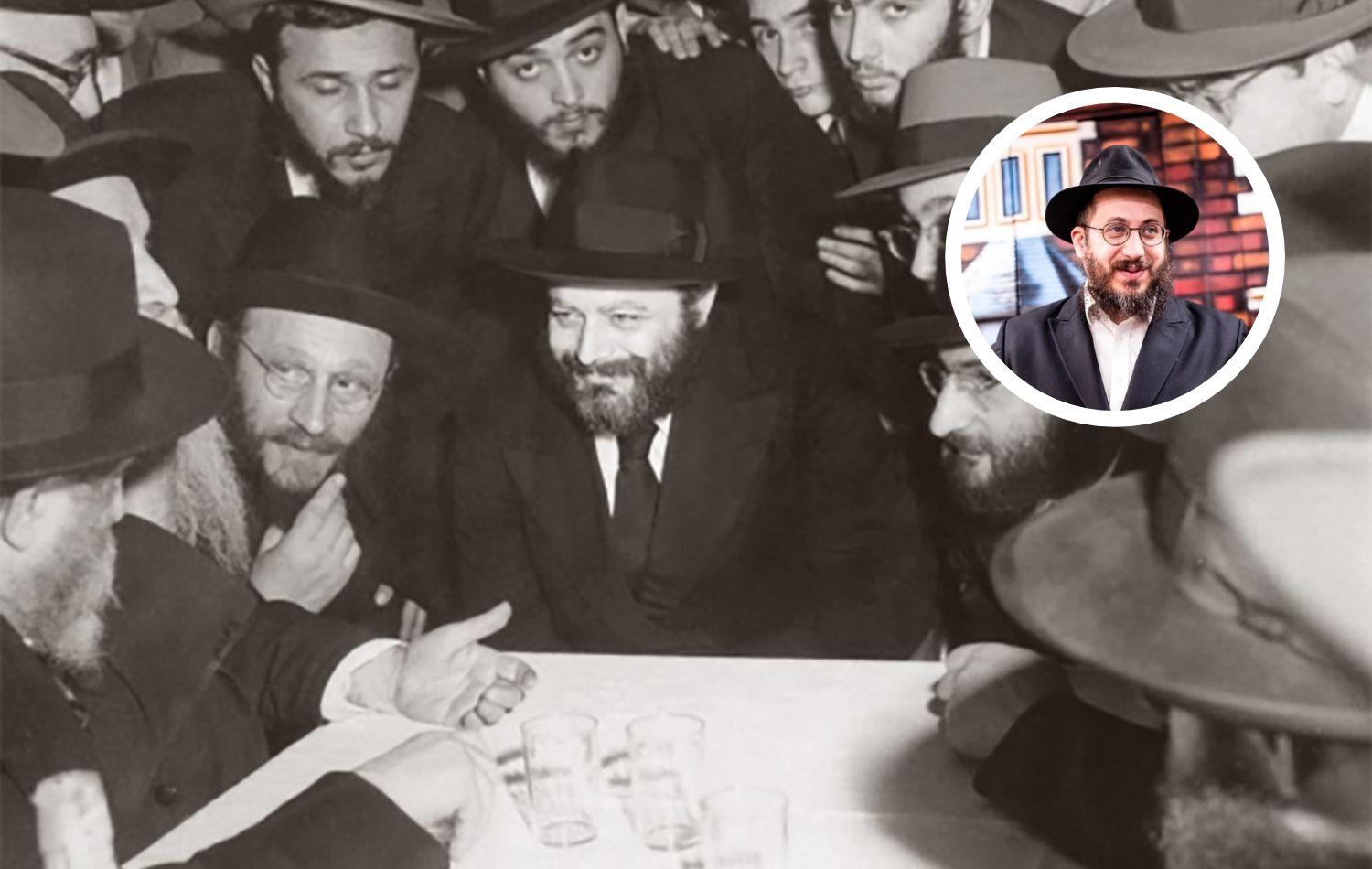
As we mark 98 years since the Rebbe’s Ufruf on 11 Kislev, Rabbi Gershon Avtzon reflects on a powerful story the Frierdiker Rebbe added to the Maamar at the Rebbe’s Chasunah, at the instruction of the Rebbe Rashab. The story offers a timeless lesson in putting aside one’s ego, not only in marriage and Sholom Bayis, but in every relationship, including our connection with the Rebbe • Full Article


This past shabbas, Vayeitzei 5787 – 11 Kislev, was exactly 98 years (to the date) of the Rebbe’s “Ufruf” and I would like to discuss something that took place by the Rebbe’s Chasuna that we can learn a lesson in our own Avodas Hashem and Sholom Bayis.
Some background: The Rebbe’s “ufruf” and Kiddush took place in Riga Latvia on 11 Kislev. Rebbetzen Chaya Mushka and her mother had already left for Warsaw to prepare for the Chasunah. At the Kiddush, the Frierdike Rebbe said a Maamer based on the passuk “Vechal Banayich Limmudei Hashem”. On Sunday, the Rebbe and the Frierdike Rebbe travelled to Warsaw and the Chasunah took place on Tuesday – 14 Kislev.
By the “Chassan-Mehl”, which took place in Tomchei Temimim of Warsaw the night before the wedding, the Frierdike Rebbe repeated the exact Maamer that he said by the Kiddush the shabbas before. The only difference was the following story that he added:
“There was a Chassid who came to the Rebbe – Tzemach Tzedek – and complained,” Wherever I move about in the House of Study, people always tread on me.” Tzemach Tzedek answered: “When you have spread yourself out over the whole House of Study, someone will be treading on you wherever you step….”
And explained (Hayom Yom 10 Teves): “It is written, ‘Let the wicked man abandon his path and the man of iniquity [abandon] his thoughts.’“The word אָוֶן (‘iniquity’) can also be interpreted as hinting at אוֹן (‘strength’). Just as a wicked man must ‘abandon his path,’ for without teshuvah he cannot approach holiness, so too, a man of strength — that is, a person who is strong and confident in his own opinions — must ‘abandon his thoughts.’ He should no longer say: ‘This is what I say,’ or ‘This is how I hold.’ For any mention of ‘I’ and [any conception of oneself as an] entity [of weighty import] is the source of evil and instills divisiveness between people’s hearts.”
The following week (when everyone was back in Riga and were celebrating 19 Kislev), the Frierdike Rebbe revealed something fascinating: The fact that he added this story to the Maamer was a direct instruction from his father – the Rebbe Rashab!
This begs the question: Why would the Rebbe Rashab come from Olam Ha’emes to tell the Frierdike Rebbe to add this story to the Maamer in connection to the Rebbe’s wedding?
I obviously do not know the answer, but would like to suggest the following (and everyone is entitled to their thoughts and opinions):
This story is such an important lesson for all of us that are looking to build our own homes on the Foundations of Torah and Chassidus. The number one rule for a successful marriage and relationship is the knowledge and the ability to put your ego aside and not “spread yourself over the whole Beis Midrash”. Without this mindset and understanding, no relationship with last.
This is not just in marriage, it is with all relationships that we will experience. It is true with our Chavrusa, people we meet on Mivtzoim and our siblings. If our ego and existence is not put in the right place, we will always be wondering why we are not accepted or respected.
We must keep this in mind as we think of our relationship with the Rebbe – as 14 Kislev is also “the day that connected me to you and you to me”. The Rebbe-Chassid relationship is built on complete bittul to the Rebbe and his will. The Rebbe’s directives and desires are paramount and this is what the Chassid dedicates himself to live with and fulfill. The moment the person’s personal ambitions and desires become part of the calculation, it already strains and ruins the purity and the relationship.
We need to shift our focus from what we want and need to what is wanted and needed from us. In the words of the famous Hayom Yom (5 Tammuz):
“One of the Alter Rebbe’s great and very close chassidim had yechidus, in the course of which the Rebbe inquired after his situation. The chassid complained bitterly that his financial situation had utterly deteriorated. The Rebbe responded: You are needed to illuminate your environment with Torah and avoda of the heart – (davening). Livelihood and what you need – that, G‑d must provide for you. You do what you must, and G‑d will do what He must.”
Please feel free to share your thoughts on the above with me by sending me a personal email: [email protected]
1
Join ChabadInfo's News Roundup and alerts for the HOTTEST Chabad news and updates!

Related Posts:

Most Popular



New Videos

Editor's Picks