Flock Cameras Spark Privacy Debate as AI-Powered License Plate Tracking Spreads
Flock Safety’s automated license plate reader cameras are rapidly expanding across the United States, giving police a powerful tool to locate stolen vehicles, identify vehicles connected to crimes and find missing people. But the technology is also generating growing concerns over privacy, data sharing and the possibility of government agencies effectively tracking people’s movements • Read More


Flock Safety’s automated license plate reader cameras are rapidly expanding across the United States, giving police a powerful tool to locate stolen vehicles, identify vehicles connected to crimes and find missing people. But the technology is also generating growing concerns over privacy, data sharing and the possibility of government agencies effectively tracking people’s movements.
The debate has now reached New York, where Flock cameras are being used by police departments outside New York City, while the NYPD operates its own license-plate reader network. Across Brooklyn and the rest of the city, questions are increasingly being raised about how much vehicle-tracking technology is already in use—and how that information is accessed.
What exactly are Flock cameras?
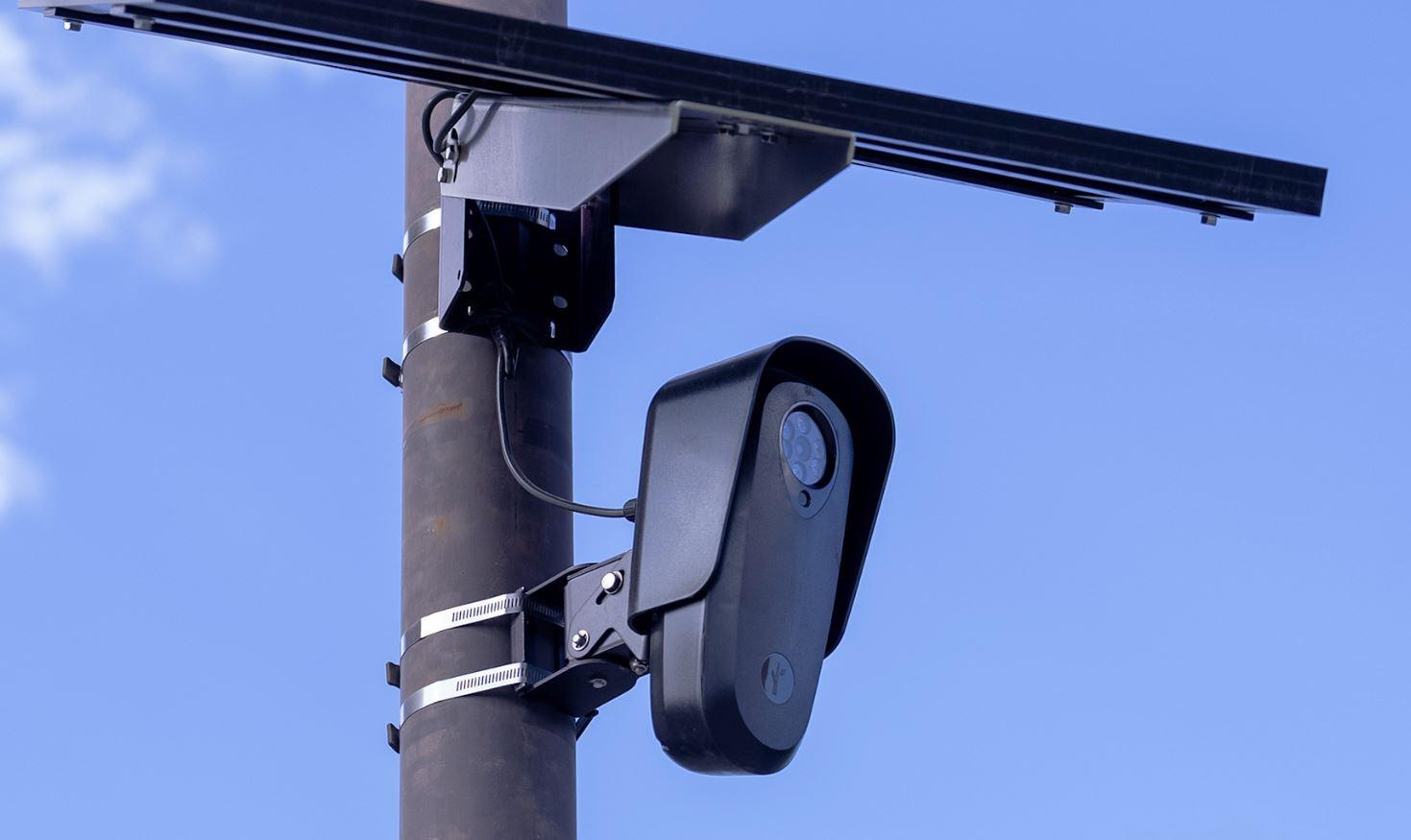
Flock Safety cameras are specialized automated license plate readers, or ALPRs. Typically mounted on poles and often solar-powered, they photograph passing vehicles and use software to read license plates.
The system can also capture characteristics of the vehicle, including its make, model, color and distinguishing features such as bumper stickers or roof racks. The information is associated with the time and location where the vehicle was recorded.
Police can then search the database when investigating a crime. If a vehicle reported stolen or connected to an investigation passes a camera, officers can receive an alert and potentially determine where the vehicle was seen.
Flock says its cameras do not use facial recognition. The company also says access is controlled by participating agencies and that searches are logged.
The technology has been credited by police departments with helping recover stolen vehicles, locate missing people and develop leads in serious criminal investigations. In Hempstead, for example, the police chief said the technology contributed to a major increase in arrests involving stolen vehicles.
The concern
The same capability that makes the cameras useful to police is at the center of the privacy debate.
A single camera may simply record a vehicle passing through an intersection. But when thousands of cameras operate across different communities and their data can be searched by law enforcement agencies, critics argue that the system can effectively create a detailed record of where a vehicle has traveled.
Civil-liberties advocates warn that this can reveal sensitive information about where people live, work, worship, receive medical care or associate with others—even when they have not been accused of a crime.
The New York Civil Liberties Union has argued that warrantless surveillance of this kind can implicate constitutional protections involving privacy, freedom of association, speech and religion.
There are also concerns about misuse. Investigations have identified cases in which law-enforcement personnel allegedly used license-plate systems to search for people they personally knew or romantic partners, rather than for legitimate police purposes.
Flock has responded by tightening its safeguards. The company recently announced that, beginning in 2027, law-enforcement searches will have to be tied to case numbers, while an automated auditing system will flag unusual searches. Flock has also reduced its default data-retention period from 30 days to seven days, although agencies can retain information longer for specific investigations.
What about immigration enforcement?
Flock says it does not have a contract with ICE and that ICE does not have direct access to its system. The company also says that communities control access to their data and that sharing with federal agencies is disabled by default. However, local law-enforcement agencies may have their own data-sharing arrangements, and Flock has acknowledged previous pilot programs involving federal agencies.
New York City does not currently have a contract with Flock Safety.
The NYPD, NYC Department of Transportation and MTA all operate or use automated license-plate reader technology, but they have confirmed that they do not hold contracts with Flock Safety. Some maps circulating online have caused confusion because they show ALPR cameras generally, rather than specifically identifying Flock cameras.
That does not mean New York City is without license-plate surveillance.
According to the NYPD’s current policy, the department operates both stationary and mobile LPRs. The cameras record license plates, vehicle images, and the date, time and location of the scan. NYPD says the technology is used to locate stolen or wanted vehicles and vehicles connected to AMBER Alerts, Silver Alerts, missing persons cases and other crimes.
The NYPD also says a limited number of authorized personnel can access a national commercial LPR data repository. At the same time, the department says its LPR data and commercial LPR data cannot be used to track a vehicle in real time.
That means that while a Flock camera may not be sitting on a Crown Heights or Flatbush street corner, New Yorkers are already living with a significant license-plate surveillance infrastructure.
The issue has become particularly heated elsewhere in New York State.
In Troy, officials fought over a network of Flock cameras after residents and council members raised concerns about surveillance, data security and immigration enforcement. The city’s police department, meanwhile, argued that the cameras had become an important investigative tool and had helped solve major crimes.
In Newburgh, Council Members repeatedly pushed to terminate the city’s Flock contract, citing concerns about data sharing and the possibility that information could reach federal immigration authorities.
Other New York communities have taken a more balanced approach, seeking restrictions on how the cameras may be used rather than eliminating them altogether.
The controversy is no longer confined to one side of the political spectrum.
Across the country, Republicans and Democrats alike have raised concerns about the technology. The issue has even reached Congress: Sen. Josh Hawley, a Republican from Missouri, has launched a formal investigation into Flock’s data collection, retention and sharing practices.
At the same time, Democratic officials and civil-liberties groups have raised similar concerns about the possibility of creating a nationwide surveillance network.
The unusual political overlap reflects the central question surrounding the technology: How much surveillance should government be allowed to use in the name of public safety?
Public safety vs. privacy
Supporters argue that the cameras are not designed to punish ordinary drivers or issue tickets. Rather, they give investigators another source of evidence when a crime has occurred.
A stolen car can be identified within seconds. A vehicle involved in a robbery can be traced through multiple locations. A missing person can potentially be found because the vehicle they are traveling in was captured by a camera.
But opponents say the technology fundamentally changes the scale of surveillance. Instead of investigating one suspect at a time, authorities can potentially search a database containing records of millions of ordinary people who happened to drive past a camera.
And once that information exists, critics ask, what guarantees that it will only be used for its original purpose?
That question has become more urgent as reports of unauthorized searches, data-sharing concerns and false plate reads have emerged. Investigations have documented cases in which incorrect plate readings contributed to wrongful police stops and detentions.
Flock maintains that its technology is intended to help communities fight crime while protecting privacy, and the company says it is strengthening safeguards in response to recent concerns.
For New Yorkers, the immediate issue is therefore somewhat different from the debate taking place in communities that have installed Flock: New York City already has extensive ALPR technology, even without Flock.
3
Join ChabadInfo's News Roundup and alerts for the HOTTEST Chabad news and updates!

Related Posts:



Most Popular



New Videos

Editor's Picks