Red-Handed, Pure-Hearted – Guilt, Teshuva & Spilled Blood
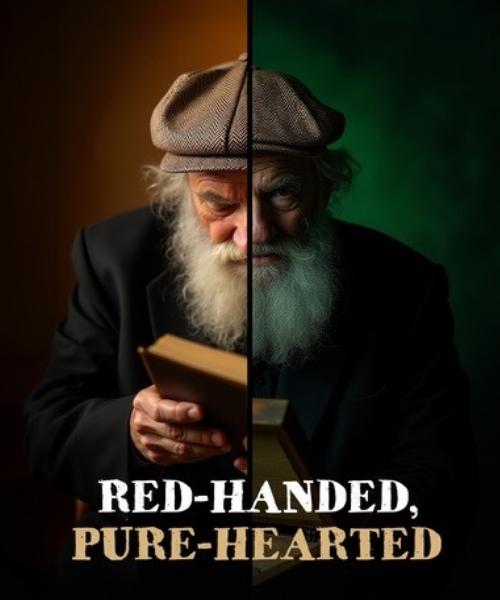
The tragic excuse offered by Reb Abba from Lubavitch, an “oved” by day who sometimes stole by night, and the lessons we can glean from him about chinuch, guilt, and true teshuva • By Yitzchok Gross, Beis Moshiach • Read More


By Yitzchok Gross, Beis Moshiach
I once heard the following remarkable story from Rabbi Chaim Shlomo Cohen of Montreal. The Chassid Reb Abba Pliskin was the shamash in 770 when Rabbi Cohen and his friends traveled from Eretz Yisrael to the Rebbe to study as part of the “kevutza”.
Reb Abba Pliskin
Their mashpia in Kfar Chabad, Reb Mendel Futerfas, had encouraged the bachurim before they traveled to farbreng with Reb Abba, but, in his great humility, he consistently refused their requests. Finally, one night, the bachurim felt that they “had enough”, and one determined bachur wedged his foot in the door of his apartment, leaving Reb Abba no choice but to let the boys in, and duly satisfied their thirst for an authentic Chassidishe farbrengen.
Reb Chaim Shlomo remembers one story from that special farbrengen.
Reb Abba shared a story with the boys about a different Abba – a man who struggled with a stutter and, it seems, kleptomania.
The story he told goes as follows.
Abba, the Oved-Ganev
In the city of Lubavitch, there was a Chassid named Reb Abba who was considered an ‘oved’, the term used for a person of great spiritual caliber, one who sits all day in shul davening, learning and “working on himself”. He was well known for his tremendous and serious avoda.
One day, his neighbor caught him, not more and not less, stealing wood from his courtyard. The neighbor, also a Chassid, couldn’t believe his eyes: “Abba?! You? Of all people? A ganev?!” Abba, caught red-handed, responded with his natural stutter:
“ד-ד-דאס א-א-איז נ-נ-ניט א—א-אבא!… א-א—אבא ד-דאווענט א-א-א-אבא ל-ל-לערנט… ד-ד-דאס א-א-איז נ-נ-ניט א—א-אבא!!!”
This is not Ab-bb-a. Abba davens, Abba learns – this is not Ab-bb-a.
The Teshuva Revolution in 5749
“Shabbos Parshas Shoftim” appears to be an auspicious time for revolutionary statements, as demonstrated by the famous sicha about the return of prophecy. But two years earlier, in the same week in 5749 (1989), the Rebbe said something perhaps even more reactionary.
In that farbrengen, first, the Rebbe explained the opening words of the Parsha in our avodas Hashem: one must put shoftim and shotrim, judges and policemen, on all his “gates”: our eyes, our ears, our mouth etc. We must make sure that nothing goes in or out of our gates that is not what Hashem wants.
This, tells us the Rebbe, is the way to go. The l’chatchila way.
But then, the Rebbe said, we have the end of the parsha, which talks about the Egla Arufa procedure, which is done where someone was found dead in the field and the killer is unknown. This, in spiritual terms, refers to someone that unfortunately fell-through and did an aveira – each one being considered so-to-speak “spilling the blood” (=misusing the energy) of Hashem r’l.
What must he do then?
He fulfills the mitzva of Egla Arufa. Where the Elders of the closest town go to the river and announce “Our hands did not spill this blood, and our eyes did not see.” So too, says the Rebbe, every Jew must know that he or she has no connection with any sins that he or she performed – “Our hands did not spill this blood.”
It Wasn’t Me!
Every Jew is a part of Hashem. Those are our ingredients: 100% G-d. That’s who we are and what we are.
We were minding our own business, our souls were enjoying His presence, basking in His glory. We didn’t want to come down to this physical and trying world. We aren’t, were never, and will never be interested in disconnecting from Him ch”v. It is Hashem’s fault for putting us here and giving us these trials and tribulations of desires and pulls for things that are the exact opposite of anything that we ever wanted.
Only after we have come to the realization and recognition that we have nothing to do with those horrible sins, It is not me – can we go to the next stage of the mitzva, when the Sages are to state: “Atone to your people, Hashem.” Which for us means, that we can do teshuva, rectify the sins and even transform the sins into merits. But the first stage is “Our hands did not spill this blood, and our eyes did not see.”
The “BT” Bachurim Who Went “OTD”
There’s nothing better than a personal experience to help bring such a powerful idea home.
During my time in a certain yeshiva for struggling bachurim, we had many guest mashpiim and shluchim visit us. These speakers came from various backgrounds within Chabad. However, what was fascinating to me was that they all shared one consistent message with the boys: They encouraged the bachurim to avoid dwelling on guilty thoughts, to be positive, to get involved in doing good, and not to fixate on fixing their past misdeeds.
Interestingly, there were two boys, who unlike their peers, refused to accept this approach. They insisted and argued that one must feel guilty for their actions, otherwise you will never do teshuva. I will never forget those heated arguments, how those two bachurim argued their point, against the different rabbis, citing all sorts of sources in Torah and Chassidus as proof.
Today, it’s painful to say, these “teshuva-defenders” are the only two bachurim from that whole group who l’eis attah are no longer religious, to say the least.
I often think to myself, that if only they wouldn’t have had these “holy thoughts” about fixing and regretting their aveiros, maybe they would still be putting on tefillin and keeping Shabbos today.
The Rebbe’s Wake-Up Strategy
In the Rebbe MH”M’s most recent sicha we were zoche to hear thus far, of Shabbos Parshas Vayakhel 5752, the Rebbe speaks about the first thought that we must have when we wake up in the morning. The first thought must be that we are one mamash with Atzmus U’Mehus (with His very essence Blessed be He).
The Rebbe then continues that this must be the first thought when one is “sleeping in the nonsense of this world” and needs to wake up from his sleep.
Many people feel that feeling G-dly, raising yourself and realizing your holiness and unlimitedness is something one can do in the later stages of serving Hashem. “Only once you have the basics.”
But what does the Rebbe say?
The Rebbe tells us that if you are “sleeping” — or in our language, “You’re out-to-lunch” — and you’re looking for where to start from and wake up, “the beginning of the avoda is to know that you are one with Atzmus U’Mehus”!
***
Abba, the Lubavitcher Oved-Ganev, was right. He recognized that his true self was not defined by his momentary lapse, or in general by what he did.
The Rebbe Melech HaMoshiach shlita reminds us that our essence is our holy neshama, which cannot change and remains one with Hashem even when we falter.
When we make mistakes or struggle with our yetzer hara, it’s crucial to remember that our actions do not define us.
Like Abba, we must assert that our true selves are the ones who daven, who learn, who connect with Hashem. Our mistakes? They are better dealt with when we acknowledge that they’re ours, but not us.
*
Beis Moshiach magazine can be obtained in stores around Crown Heights. To purchase a subscription, please go to: bmoshiach.org
142
Join ChabadInfo's News Roundup and alerts for the HOTTEST Chabad news and updates!

Related Posts:



Most Popular



New Videos

Editor's Picks