Rabbi Avremel Korf: “Every Town Needs One Meshugener”
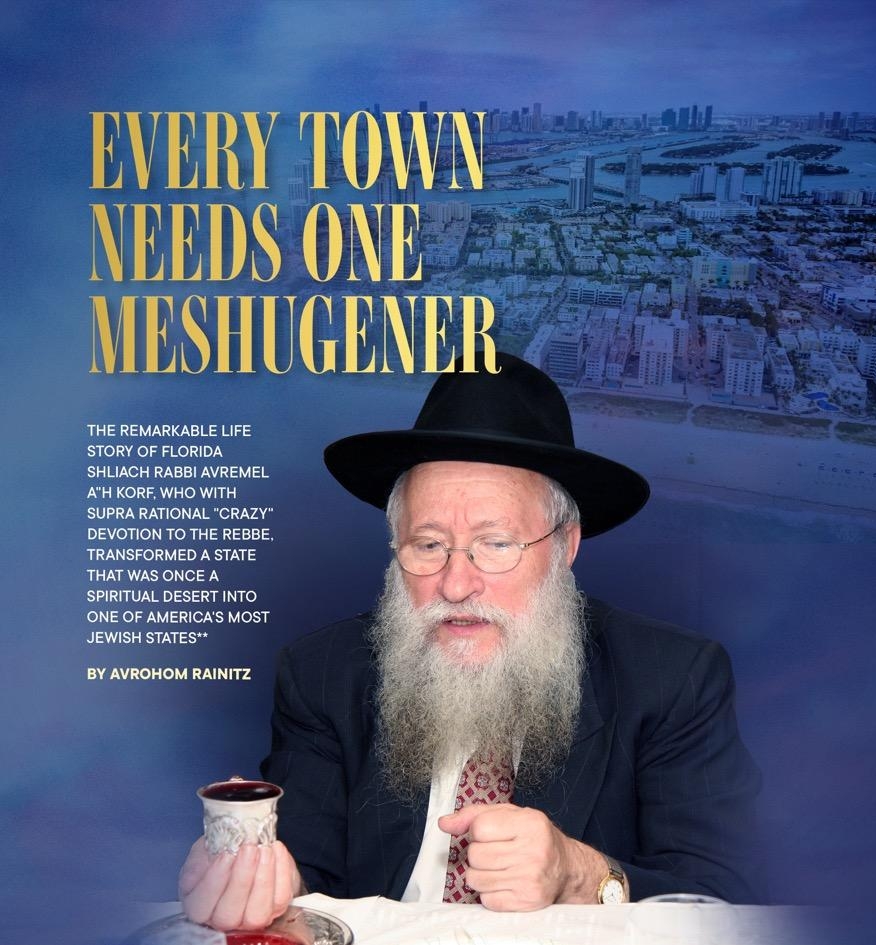
The Remarkable Life Story of Florida Shliach, Rabbi Avremel Korf a”h, who with Supra Rational “crazy” devotion to the Rebbe, transformed a state that was once a spiritual desert into one of America’s most Jewish states. • This is the story of the “meshugener” who proved that sometimes you need to be a little crazy to change the world • Full Article


By Avrohom Rainitz, Beis Moshiach Magazine
When a colleague complained to the Rebbe about how Rabbi Avrohom Korf mortgaged his private apartment to get a loan for the yeshiva, he expected sympathy. Instead, the Rebbe’s response became the perfect description of his legendary Florida shliach: “Nu, s’darf doch zayn ayn meshugener in shtetl —Well, there must be one crazy person in town.”
What appeared as madness to others was, in the Rebbe’s eyes, the complete dedication necessary to transform the impossible into reality. From a Chassidic child born in war-torn Russia, Rabbi Avrohom Korf arrived in Miami as a lone shliach facing a spiritual wasteland. His “craziness” knew no bounds – fearlessly entering racist territory with a strikingly Jewish image, placing full-page ads in Miami’s top financial paper declaring “The Rebbe is a Prophet,” and sacrificing everything for his sacred mission.
Sixty-four years later, his legacy speaks for itself: from six students to 2,200, from one shliach to 400, from spiritual desert to Jewish oasis. This is the story of the “meshugener” who proved that sometimes you need to be a little crazy to change the world.
***
When Rabbi Avrohom Korf sat in his small office in Miami Beach in the mid-1960s, thoughts of the Jewish children in Florida gave him no rest. He saw how an entire generation was distancing itself from Judaism and growing up without any connection to tradition.
“Where Judaism is lacking – that is your work.” The words the Rebbe had told him in yechidus echoed in his ears and he understood, it was time to take action and establish a summer camp.
Thus, he began searching for suitable land for a summer camp. He visited various sites until he found the perfect place – a large and beautiful area in central Florida, full of trees and nature, ideal for children. The price was reasonable and the conditions excellent.
Just one problem: this area was notoriously known for extreme racism and dangerous antisemitism. It was a “whites only” area. In the atmosphere of the 1960s, a place where strangers – and especially Jews – were clearly unwelcome, it had become a danger zone.
When Rabbi Korf told several of his supporters about the idea – those balabatim who had already grown close to him – they looked at him with genuine fear.
“Rabbi Korf,” one of them said anxiously, “do you understand how dangerous this is? Your appearance – the long beard, the black hat, all that Chassidic dress – for the people there it would be like a red flag before a raging bull!”
“We’re begging you,” someone else joined in, “don’t go there yourself. It’s simply too dangerous. Send someone on our behalf, someone who doesn’t look Jewish, who can arrange everything quietly and discreetly.”
Rabbi Korf sat in his office and felt the weight of responsibility. He sat and wrote a long letter to the Rebbe in which he described in detail the beautiful land he had found, the enormous potential for a wonderful camp, and the problem: the antisemitism in the area. He added the advice of the local supporters – to send a representative in his place, someone who didn’t look Jewish, so as not to instigate provocations.
Within a short time, the response came from the Rebbe, and it was sharp (the content of the response follows): Precisely because you look like a Jew, you must be the one who goes there!
In this short sentence, the Rebbe overturned all human logic. The Rebbe revealed that proud and open Jewish identity is not a weakness to be hidden from the eyes of enemies; on the contrary, the very fact of being an open and proud Jew, a Chassid who walks with a beard and black hat, a shliach of the Rebbe who is not ashamed of his identity – this is the strongest armor.
Rabbi Korf read the letter again and again. These simple words infused him with new strength. This wasn’t just a practical horaah – but a complete ideological transformation. All the fears dissipated as if they had never been.
That same day he set out on his way, without fear, to the heart of the area of hostility and racism, armed with his burning faith and the explicit bracha of the Rebbe.
There’s no need to add that Camp Gan Israel opened and succeeded beyond expectations. It operated for two years with 45 Jewish campers from throughout Florida, and became the seed from which grew the entire educational empire that Rabbi Korf built in the following years. He proved that precisely Jewish pride and holy chutzpa are the true keys to breaking down the walls.
From Childhood in Kharkov to Shlichus in Miami
Rabbi Korf’s personal story begins in the distant city of Kharkov, on 2 Cheshvan, 5693 (1932).
Avrohom was born to the esteemed Reb Yehoshua and Mrs. Rivka Korf. His father was one of the chozrim of the Rebbe Rayatz before his departure from Russia. After his marriage, his father moved to live in Kharkov, where he served as a mashgiach in the underground yeshiva. These were dark days for Yiddishkeit in Soviet Russia, days of cruel oppression under Stalin’s rule. Little Avrohom was born to a Chassidishe family of strong spirit that did not surrender to Communist terror.
In the year 5702 (1942), with the Nazi invasion, the family escaped on the last train that left burning Kharkov on the way to refuge in distant Samarkand. There too, the Chassidim established an underground branch of Yeshivas Tomchei Tmimim. Ten-year-old Avrohom pleaded with his father to send him to study in the yeshiva. Although he was too young, his stubbornness won. With enormous effort and tireless diligence, he closed the gaps and flourished in the path of Torah and Chassidus.

Rabbi Korf receiving a dollar from the Rebbe
The Path to Shlichus
After the great escape from Russia in 5707 (1947), the Korf family arrived in France. In Yeshivas Tomchei Tmimim in Brunoy, his personality as a shliach was shaped. His friends remember him as one of the “ovdim,” a “tamim” who davened at length and truly worked on himself spiritually.
He himself used to point to two individuals who left their mark on him: The first, the Chassid Reb Benzion Shemtov a’h, who said to the talmidim with an emphatic Chassidic demand: “Es tor nisht zein kein private leben!” (You mustn’t have any private life!). This wasn’t just a slogan; it was an absolute demand that their lives didn’t belong to them. Every moment, every thought, every action – everything was dedicated to one purpose: the will of the Creator, as revealed through the Rebbe, and spreading His light in the world.
The second was the legendary mashpia, the Chassid Reb Nissan Nemanov a’h, the embodiment of bittul and kabbolas ol. He was mechanech his talmidim with a deep inner sense of “I was created only to serve my Creator.”
When Avrohom was preparing to travel for the first time to the Rebbe, Reb Nissan told him: “The preparation for yechidus is to be devoted to the Rebbe completely, in absolute kabbolas ol. When a Chassid enters to the Rebbe, he must be completely ‘transparent.’”
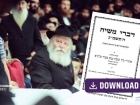
Reb Avrohom arrived at Beis Chayeinu 770 in 5713. The following years were years of spiritual elevation and devotion to the Rebbe. He didn’t just suffice with learning, but began ‘spreading the wellsprings.’ He personally went out to give Chassidus shiurim in various yeshivas throughout the United States. Among others, he visited the yeshivas of Mir, Chaim Berlin, the Beis Medrash of Satmar, Skver, Torah Vodaas, and Yeshivas Rabbi Yitzchok Elchanan. Among his students in those years was a young man named Shlomo Riskin (later rabbi of Efrat), who through Rabbi Korf merited to draw close to the Rebbe and develop a deep connection with him.
The peak of his activity was on Thursdays, when he gave five Chassidus shiurim! Once, Yud Shevat fell on a Thursday, and since he wanted to be with the Rebbe when the Rebbe led the tefillos on that day, he decided to cancel the shiurim.
But surprisingly, he was called in to Rabbi Chodakov, who said to him: “Surely you’re traveling to give your regular shiurim…” When Rabbi Chodakov heard about the cancellation of the classes, he rebuked him: How could such a thing occur to you? Did you think the Rebbe would be happy to daven knowing that because of him you canceled the classes? Obviously, on the spot, Avrohom Korf called to announce that the shiurim would take place as usual, and even hurried to report to the Rebbe about all the shiurim he gave on that day.
In 5716 (1956), after the murderous attack at the vocational school in Kfar Chabad, the Rebbe chose a group of twelve select students, and sent them on a special shlichus to Eretz Yisrael, to strengthen the spirit of the Chassidim and bring the inspiration of the Rebbe’s court to the Holy Land. Reb Avrohom Korf was chosen as one of those twelve.
In 5719, Reb Michoel Teitelbaum a’h, menahel of Oholei Torah, asked him to serve as a melamed in the institution he had founded. Reb Avrohom refused. His great dream was to go on shlichus, and he feared that chinuch work would have him stuck in New York. When he entered for yechidus, the Rebbe asked him why he didn’t want to teach. “Because I hope the Rebbe will send me on shlichus,” he answered honestly. The Rebbe replied with a smile that since he hadn’t yet gotten engaged, a permanent shlichus wasn’t currently on the agenda, and instructed him to accept the position and see it as a ‘temporary shlichus.’
In that same yechidus, the Rebbe told him that the time had come to start thinking about a shidduch.
A year passed, but no shidduch materialized, and this disturbed him greatly. In the next yechidus, he poured out his heart to the Rebbe: “Rebbe, I cannot bear this anymore!” The Rebbe listened and said pleasantly: “Nu, from now on everything will proceed quickly.” The next day, he received the shidduch suggestion of his future wife, Rivka Eichenbaum a’h. The vort was three days later.
Years later, when Rabbi Korf reflected on this story, he understood something deeper. “Afterwards I thought, if it’s so easy for the Rebbe to arrange a shidduch for me in a few days, why did he let me work so hard for a whole year? I think it was a lesson for me for my entire life. The Rebbe prepared me for shlichus, by teaching me that shlichus demands devotion, persistence, and work without pause. Sometimes you’ll succeed, sometimes not. But always, the true strength comes from the Rebbe.”
In those years, the Rebbe stopped his custom of officiating at weddings. However, for the Korf couple, the Rebbe made an exception and agreed.
A week later, another couple got married. The chassan asked that the Rebbe perform the kiddushin at his wedding, but was answered negatively.
“But for Rabbi Korf the Rebbe did perform it!” the chassan wondered.
The Rebbe’s answer was short: “They are going on shlichus!”
Arrival in the Spiritual Desert
Initially, the young couple was offered to go on shlichus to Mexico, but this didn’t work out. A few months after the wedding, in 5720, Rabbi Chodakov called him and asked: “Would you be willing to go to Miami, Florida?” Reb Avrohom immediately answered affirmatively. “I didn’t even know how to locate Miami on the map,” he related later, “but when the Rebbe suggests, you answer ‘yes’…”
Before their departure for shlichus, the Korf couple merited a special yechidus with the Rebbe. Rabbi Korf asked: “What will be the essence of my work there?” The Rebbe’s answer became the compass of his entire life: “Vu s’felt in Yiddishkeit – dos iz dein arbet” (Where Judaism is lacking – that is your job).
And so in Kislev 5721, the Korf couple arrived in Miami. What they found there was amazing in its scope and shocking in its spiritual level. Approximately 175,000 Jews lived in Florida at that time, but active Torah Judaism barely existed there. The numbers spoke for themselves: only three Orthodox shuls in the entire Miami area, two mikvaos in all of enormous Florida, and not one institution for Torah education suitable for frum families.
Rabbi Chodakov instructed Rabbi Korf to go on a trip throughout all of Florida to see what needed to be done in each place. But the center – he said – must be in Miami.
Already in the first year of shlichus, Rabbi Korf succeeded in meeting with the leaders of all the Jewish communities in Miami – who were all Reform or Conservative – and speaking with the ‘rabbis’ (except two who refused). They all asked him to address their congregations. He even gave classes to students (without knowing English – something that also had an interesting reference from the Rebbe), with the Rebbe involved in every detail, encouraging and giving strength.
When their firstborn son Yossi was born and Rabbi Korf’s father went to the bris, the Rebbe questioned him upon his return to New York about every detail: which rabbis came, what was said, how was the atmosphere. One could feel that the Rebbe was there, in Florida, together with his shluchim.
Throughout the years of shlichus in Florida, Rabbi Korf received hundreds of letters and maanos (handwritten responses usually on the note the petitioner sent in) from the Rebbe. He used to ask the Rebbe about every significant step: purchasing buildings for institutions, appointing rabbis and administrators, expanding activities to additional cities, and so on.
Reb Avrohom also sought the Rebbe’s guidance in sensitive areas like interactions with the local Jewish establishment. For example, when he wanted to invite a political personality to a Jewish event, the Rebbe guided him “not to poke out eyes” – that is, to act modestly and without excessive publicity, so that the activity would be done for the sake of heaven and not for external honor.
In one of the early years, Rabbi Korf was involved in a car accident while making his way to New York, and he went into mild shock. His wife immediately called Rabbi Chodakov, who reported to the Rebbe. A short time later, he recovered.
When they arrived in Crown Heights, his brother ran to 770.
“Why are you running?” Reb Avrohom asked his brother.
“Every half hour,” the brother answered, “they call from the Rebbe’s secretariat to check if you’ve arrived yet…”
At the end of Yom Tov, Rabbi Korf asked the Rebbe through the secretariat what was the meaning of all the difficult events. Rabbi Chodakov came out of the Rebbe’s room with a smile: “The Rebbe said – while making a dismissive gesture with his holy hand – ‘There’s nothing to worry about. He always notifies me before traveling, and this time he didn’t notify’…” From this, the young shliach learned about the depth of the Rebbe’s connection to every step and movement.
“And What About the 40,000 Jews Who Didn’t Receive Chanuka Menorahs?”
In one of the early years, Rabbi Korf wrote to the Rebbe with great enthusiasm that they had succeeded in distributing 4,000 menorahs to Florida Jews in Mivtza Chanuka. This was an enormous achievement relative to that period. He was sure he would receive a complimentary response letter.
The Rebbe indeed wrote at the top of the response “thanks for the report,” but immediately after added a short question that became a guiding light for Rabbi Korf for his entire life: “And what about the remaining forty thousand Jews who still don’t have menorahs?”
“The Rebbe showed us what the true target we must reach is,” Rabbi Korf summarized this experience. From that day he understood, not to rest on one’s laurels but to strive to reach every Jewish neshama.
In his later years, when he didn’t feel well and was forced to rest more, he would say that he felt oiver u’batel (‘over the hill’) because he always wanted to be in action. He always asked how it was possible to reach more and more Jews.

Rabbi Korf (center) at a dinner on behalf of mosdos Chabad
Laying Foundations for an Empire
The beginning of the shlichus was fraught with difficult challenges. Initially, the Rebbe didn’t approve of opening a school, so as not to create competition with an existing institution in the city, ‘Hebrew Academy.’ Thus was born the initiative to establish a summer camp. The summer camp succeeded beyond expectations.
At one of the farbrengens, before he could ask for a bracha regarding difficulties that had arisen, the Rebbe turned to him and said: “Vilst hoben a kemp? Vest hoben a kemp!” (You want a camp? You’ll have a camp!), and made a dismissive gesture with his hand. “That year,” Rabbi Korf related, “it was the most successful camp we ever had.”
The positive influence of the camp was evident from afar, as Rabbi Korf told the following amazing story:
“One of the boys who was with us in camp traveled years later to California, and one day he called his father and told him he was getting married. The father, who was a modern-Orthodox Jew, asked him with whom, and he answered vaguely ‘with a girl’… When the father asked if she was Jewish, the son replied: ‘What does it matter? She’s a good person’…
“The father tried to explain to him about the importance of Jewish family continuity, but it was like talking to a wall. The father called me, crying and asking for help. I didn’t know what to do – he was 3,000 miles away and there weren’t Chabad houses in California then that I could ask for their help. I wrote about this to the Rebbe and asked for a bracha.
“Two to three weeks later, the father called me again, and this time he sounded happy. He told me that his son called and said he wasn’t getting married… It turned out that when they went up the steps to get married, suddenly all four weeks at our summer camp came up in his head. He remembered the songs, the learning, and his counselors. All this made him nauseous, and he felt he couldn’t do it… He told the girl he was sick and that they would postpone the wedding. All night he didn’t sleep, and the next morning he announced to her that he decided to break off the relationship with her.”
This is one result, among many, of four weeks at a Chabad summer camp.
From Six Students to 2,200
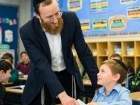
Only after the success of the summer camp did the Rebbe approve Rabbi Korf’s request to open a permanent Jewish school. “We started with only six children,” he later recounted. “In the second year we already had 32 students, in the third year there were 67 students, and from there it simply flourished…”
Word about this quality Jewish school spread rapidly. As a result, more and more families joined. Initially, the institution had no permanent location, so the students were forced to move from place to place.
A large-scale educational empire gradually began to emerge: a yeshiva high school for boys, a high school for girls, preschools, a kollel for married students, and an advanced yeshiva. Today, more than 60 years after six children began studying in that small classroom, the mosad houses nearly 2,200 students and is one of the largest Chabad educational systems in the world.
Rabbi Korf’s son, Rabbi Yossi Korf, who grew up as an “only prince” among the retirees in Miami Beach, once humorously recounted: “When I was a child, I was the only Jewish soldier in the city. I was also the only one walking around with a yarmulke and tzitzis. Everyone knew me as Avremel’s son. Today, boruch Hashem, I am one of tens of thousands of Jewish children in Florida who know how to say ‘Shema Yisrael.’”
“If You Stop Worrying, It Will Be Easier”
The mosdos went through difficult periods more than once. Once, the yeshiva was on the verge of closure due to lack of money. The bank held the deed and was about to sell the building. Rabbi Korf traveled to the Rebbe to pour out his heart. When he passed before the Rebbe, the Rebbe looked at him and said: “Miami? If you stop worrying, it will be easier!”
When he returned to Florida, a series of miraculous things began to happen. A broker offered him $200,000 profit on the building that served the yeshiva. Everyone pressured him to sell and use the profit from the deal to open the yeshiva elsewhere, but he refused. Two weeks later came an offer for $400,000 profit. Again he refused. Then came a pre-signed contract for one million dollars. Even then he refused.
Two weeks later, two goyim from Spain came and offered $1,360,000 in cash. “Then I understood what the Rebbe meant,” Rabbi Korf recounted, and he sold to them at that price. The Spanish buyers demolished the building to construct something new, but immediately afterward the real estate market crashed, and the lot stood empty for 20 years. They lost a huge fortune while Rabbi Korf received the sum that saved the yeshiva…
The Empire’s Expansion: 200 Chabad Houses and 400 Shluchim
Rabbi Korf never stopped for a moment. The early days were not easy, but he didn’t allow himself to get bogged down. There were no chalav Yisrael products? He personally went to the dairies and supervised the milking of the cows. Was there a need for mikvaos? He became a world expert in building mikvaos. In this field, he even helped rabbis from all circles and earned the appreciation of the Satmar Rebbe, the ‘Divrei Yoel,’ who relied on his rulings.
Thanks to his extensive activities, Florida became a true Chabad powerhouse over the years. He didn’t limit himself to Miami and established ‘regions,’ with each regional head responsible for bringing additional shluchim. By the year 5761 (2001), there were already 68 branches. At the centennial birthday celebrations of the Rebbe, he announced in Washington that they would establish 101 branches in Florida alone… Within two years they reached 101 branches.
Today, more than 60 years since Rabbi Korf arrived as a single shliach to Miami, nearly 200 Chabad houses operate in Florida with more than 400 shluchim, dozens of educational institutions, hundreds of mikvaos, and thousands of students in the schools.
Rabbi Chagai Mapai, who was Rabbi Korf’s personal assistant for the last fifteen years, relates: “Rabbi Korf was a devoted Chassid and shliach of the Rebbe, and this was expressed in the fact that he lived the Rebbe in every fiber of his soul. When I would speak with him about personal matters, he would always ask: ‘Did you write to the Rebbe?’
“Rabbi Korf always said that shlichus is 24/7,” Rabbi Mapai continues. “When one of the Chassidim involved in business wanted to combine it with shlichus, he requested that Rabbi Korf appoint him as an official shliach. Rabbi Korf sensitively told him that he first wanted to study a maamar of the Rebbe with him. After they studied the maamar, the Chassid understood that in shlichus one must be occupied 24/7, and he apparently wasn’t suitable because he was also busy with business matters.”
This was Rabbi Korf’s approach: shlichus is not a job you do from 9 to 5. It’s a way of life. You are the Rebbe’s shliach every second, every minute, and every hour of the day.
Dedication at an Advanced Age
One moving story about his dedication occurred a few years ago when he was 85 years old. Rabbi Dudi Caplin, the Rebbe’s shliach on Cozumel Island in Mexico, needed professional advice regarding the kosher status of the mikva he had built.
R’ Caplin heard about Rabbi Korf’s expertise and called him: “I heard that the Rav is a ‘maven’ in mikvaos. We would be very happy if you could come check the mikva in Cozumel.” Rabbi Korf, who didn’t know R’ Caplin at all, asked a few brief technical questions and immediately said: “Okay, I’ll arrive next week.” “At his advanced age, with the energy of a young man,” R’ Caplin recounts with emotion, “he flew alone from Miami to Mexico, then took a taxi and ferry to reach Cozumel Island… He thoroughly checked the mikva, climbed a high ladder onto the roof, descended into pits, checked all the systems, and finally approved the mikva. Not only that – that same evening he also spent several hours with us, told us stories about the Rebbe and about shlichus, encouraged us, and only then returned home.”
This was Rabbi Korf. At an age when most people are in nursing homes, he still traveled to help a shliach he had never met. Why? Because this is the will of the Rebbe.
92 Years of Life
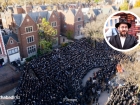
Rabbi Avrohom Korf passed away on the night of Yud-Beis Tammuz, 5785 – on the day of the liberation of the Rebbe Rayatz, the day that symbolizes the breakthrough of spreading the wellsprings outward.
92 years of life, 64 of them in continuous shlichus. The shliach who left 770 on the Rebbe’s instruction became a lighthouse that illuminated the entire state of Florida. His passing on this day is not coincidental. Rabbi Korf lived his life as a personal “Yud-Beis Tammuz” – always breaking down walls, always overcoming obstacles, and always bringing light to dark places.
His legacy lives and breathes in every Chabad house in Florida, in each of the thousands of children studying in the schools he established. His life is a living lesson and embodiment of the essence of shlichus: complete bittul to the Rebbe, boundless mesirus nefesh, constant action, and great humility. He was a faithful soldier in the Rebbe’s army, a pioneer who went before the camp and paved the way for the thousands who came after him.
Rabbi Korf is survived by nine children: Rabbi Yosef Yitzchok (Yossi) Korf – Hollywood, Florida. Mrs. Rashi Raices – Postville, Iowa. Mrs. Shevi Sossonko – Miami Beach. His successor, Rabbi Ben Zion Korf – Miami Beach. Mrs. Leah Jacobson – Crown Heights. Rabbi Mendy Korf – Miami Beach. Rabbi Motty Korf – Miami Beach. Rabbi Zalman Korf – Walnut Creek, Florida. Mrs. Sari Korf – Miami Beach.
All of them continue his path in the shlichus of the Rebbe MH”M to prepare the world to greet Moshiach Tzidkeinu.
***
“There Must Be One Crazy Person in Town”
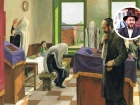
The Chassid Rabbi Gimpel Orimland once complained to the Rebbe about Rabbi Korf: “He operates without logic! He mortgages his private apartment to get a loan for the yeshiva!” Rabbi Gimpel thought the Rebbe would agree with him that this was improper.
The Rebbe’s response was surprising: “Nu, s’darf doch zayn ayn meshugener in shtetl” (Well, there must be one crazy person in town)…
It turns out that in the Rebbe’s eyes, Rabbi Korf’s extreme dedication was not madness, but complete dedication to the cause. The message was that without such “crazy people” who are willing to sacrifice everything for the great goal – it’s impossible to build anything real and meaningful.
The Rolls-Royce and the Popcorn
A gleaming Rolls-Royce stopped next to a yeshiva bachur walking on one of Miami Beach’s streets. The wealthy woman sitting inside asked where the Lubavitch yeshiva was. The student agreed to join her for the ride (taking advantage of the opportunity to taste once in his life what it’s like to ride in a Rolls Royce…), and they arrived at the yeshiva just as Rabbi Korf was exiting the back door.
The bachur was sure that this woman, arriving in such an expensive car, was about to give a large check to the yeshiva. The woman approached Rabbi Korf and asked in Yiddish: “Ir zent Rabbi Korf?” (Are you Rabbi Korf?).
“Yes,” he answered warmly.
“Ich hob gebracht a matone far di yeshiva” (I brought a gift for the yeshiva), she said proudly.
She made her way to the back of the car, opened the trunk, and pulled out a huge white bucket. “Dos iz kosher popcorn far di yeshiva. Ich bin zicher az di kinderlach veln hobn hanaah derfun” (This is kosher popcorn for the yeshiva. I’m sure the children will enjoy it).
The bachur wanted the earth to open and swallow him… but Rabbi Korf? He wasn’t fazed. He accepted the bucket with genuine warmth and respect, thanked her sincerely from the heart, and gave her heartfelt blessings.
Afterward, he told the bachur a sentence he would never forget: “I am the Rebbe’s representative in Florida. And as the Rebbe’s shliach, I must receive every Jew with sever panim yafos (a pleasant countenance)…”
This was him. A true Chassid who lived his shlichus every moment. He never lost the feeling of “before whom you stand” – before the Rebbe, and before every Jew.
***
Beis Moshiach magazine can be obtained in stores around Crown Heights. To purchase a subscription, please go to: bmoshiach.org
224
Join ChabadInfo's News Roundup and alerts for the HOTTEST Chabad news and updates!

Related Posts:


Most Popular



New Videos

Editor's Picks