Three Lessons in Jewish Joy
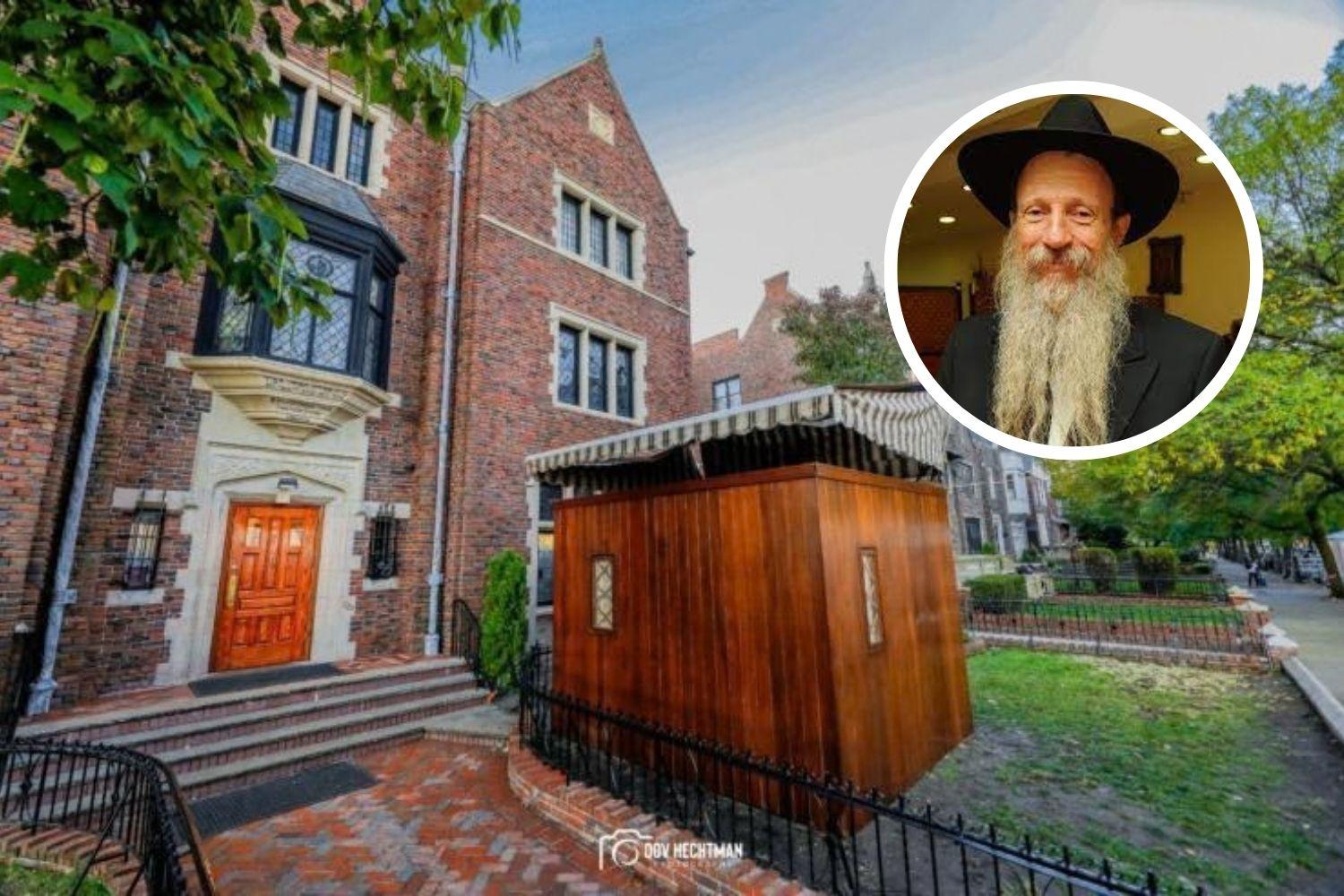
Rabbi Tuvia Bolton explores the deeper message of Sukkos through three inspiring stories, drawing out lessons of emunah, Jewish joy, unity and the certainty of the Geulah. From the Sukkah and the Four Minim to the promise of Moshiach, he reminds us to look beyond the darkness of Galus and recognize the goodness that is certain to come • Full Article


Succot is the happiest holiday of the year. In our prayers we call it “The Time of Our Joy.”
When sitting in a Succa we are to remember that G-d took us from Egypt, protects us (Lev. 26:46) and soon will erect the fallen ‘Succa’ of King David and restore world peace ‘ Succat Shlomecha’ with Moshiach.
Furthermore, the Succa brings Holiness into even the food and mundane things we do in it, just as Moshiach will “Fill the world with the awareness of G-d” (Isaiah 11:9) and “Our mouths will be filled with joy” (Psalms 126:2).
Additionally Succot brings peace and unity with the unique Mitzva of “the Four Types”:
Namely taking a Lulov (central palm branch) Esrog (special citrus fruit) Hadas (Hyssop) and Arava (willow branch) [each of which also symbolizes unity] and holding them together; just as Moshiach will unite the world to serve the Creator. (HaShem Echaud UShmo Echad) (Rashi on Deut. 6:4).
When we see that such unity can be expressed even in plants and that plants are important to G-d, it makes us humans feel even more worthwhile and happy to be alive.
Finally; in the days of the Temple seventy oxen were sacrificed throughout the seven days of Succot to bring blessing to all humanity just as in the days of Moshiach “All mankind will serve G-d with one goal etc.” (Zefanya3:9 ) )
Joy! Unity! Peace! Blessing! Moshiach! These are all revealed to us on Succot.
But how can we really experience all this when the world around us is filled with misery and hatred.
To understand this here are three stories each with its own lesson.
The first I heard from Rabbi Naftali Estulin of Los Angeles.
Once there were two brothers both Chabad Chassidim. One lived in Israel and the other in Los Angeles and both ran Torah institutions.
The one in Israel was in desperate need of funds and, his brother suggested that he solicit donations in L.A.. He told him he would prepare a list of potential donors with a short description of each one saying what he is like and even arrange a driver to take him around.
His brother happily agreed and a week later he was in L.A. dressed in his best suit on his way to visit the people on his brother’s list.
At each address the driver would escort him to the door of the home and when the home owner would answer the driver would return to the car.
Everything went smoothly till they arrived at the home of Mr. M.
Mr. M. opened the door, and as soon as he saw the Rabbi he began yelling.
“What, another parasite? Don’t you guys have anything better to do? You don’t work! You just go around begging money from those who do! I worked fifty years for my money… how long do you work? Fifteen minutes? Your mother and father were probably also robbers just like you! Etc. etc.”
The driver began pulling at the Rabbi’s coat to urge him to return to the car and leave but, surprisingly, the Rabbi didn’t seem to mind the curses. Exactly the opposite! He calmly motioned for the driver to return to the car and wait.
After some five minutes of cursing, Mr. M. was worn out. He paused for a few seconds, asked the Rabbi what he wanted and as the Rabbi began explaining, invited him into his home.
Ten minutes later the Rabbi exited the house smiling, returned to the car and told the driver to proceed to the next place.
The driver was in awe. “Rabbi, you are a holy man!!! The way he cursed you…. And you didn’t lose your temper at all!! Why, I myself wanted to punch him. Rabbi, Tell me, did he give you any money?”
“Thank G-d,” The Rabbi answered, “he gave very nicely. But not because I’m a holy man. I just read my brother’s note…. Here have a look.”
The Rabbi held out the list his brother had given him and said. “Just read what my brother wrote.”
The driver took the list and read aloud.
“Mr. M; he’ll yell at you for ten minutes and then give you a thousand dollars.”
First lesson: Don’t pay negative attention to the world … but rather to the letter that explains it all.
And that letter is the message of the holiday of Succot:
The Succa tells us that just as G-d took us from Mitzriam and protected us with clouds, so too when we sit in the Succa we can be assured that He will do it again.
Indeed, our faith in the good makes a good world come more certainly and swiftly. We are now CERTAINLY in the days of Moshiach. We have to just ignore the exile like the Rabbi treated Mr. M. and understand it’s only a veil to cover the good and the good is CERTAIN to come.
As the Chassidic saying “Think good …. And it will BE good.”
The second story happened to me. It was around ten years ago Succot by the Rebbe in New York. I went to Manhattan with a Lulov and Etrog and stood on a busy corner asking people if they are Jewish and if so would they like to do the commandment of taking the Lulov which takes one minute. Understandably most of the people I asked said they were not Jewish in which case I would thank them and tell them it’s a Jewish Holiday and bless them with a good day .
At one point a well-dressed young Jewish couple approached me, said they had been watching me for several minutes from a distance, and were amazed that I asked only Jews. How could I tell who was Jewish before asking?
“I replied that I don’t know and I asked them where did they get the impression that I do. They were very surprised and replied “Why, everyone you ask, smiles! They are all happy you ask them! We assumed that everyone you ask is Jewish.”
After they left, I resumed asking but this time I paid attention to the responses and I saw the couple was right! Almost everyone I asked if they were Jewish, smiled.
Second lesson: Judaism is a happy thing…. For EVERYONE.
The third story I heard from Rabbi Shabtai Slavtitski the Rebbe’s representative in Brussels, Belgium.
Once a man had a private audience with the Lubavitcher Rebbe and voiced a complaint.
Rabbi Slavtitski didn’t give the name of the man but it seems clear that he was an admirer of Chabad.
“Rebbe, the work your Chassidim do throughout the world bringing non-religious Jews back to their roots is wonderful. But something bothers me.
“Why is it that the first thing you learn with them is a book called The Tanya (Chabad Chassidic explanation of Judaism based on Kabalistic principles) !
“These people know nothing about even the basics of Judaism and the first thing you teach them is a lot of mystical ideas about souls and Moshiach?! You should begin with teaching them how to keep the Shabbat or the Five Books of Moses… or even better… how to read Hebrew!
“Why” he concluded, “it’s like taking a naked man and giving him a tie. It’s ridiculous!!
The Rebbe waited a few seconds and answered.
“If you put pants on a naked man he might think he needs no more, but when you put a tie on him then he knows he’s naked.”
Third lesson: By getting a taste of Moshiach; especially in the holiday of Succot we sense we are missing something.
And that something is Jewish Joy called ‘Simcha Shel Mitzva’.
Chassidut teaches that Joy is the result of certainty in …. G- d’s unconditional love for us.
The entire world may turn over but HaShem’s love for us never will stop. And when we realize G-d’s greatness, power and goodness … we become happy!!
Just as the Succa encompasses so too we begin sense how HaShem’s incomprehensible LOVE also encompasses us above ‘logic’.
In other words; Only when we realize how ‘naked’ we are can we truly rejoice with who we really are and what remains to be done.
And this brings us a to a greater joy “Simcha Shel Mitzva”, that we can repay G-d by doing the commandments (aka ‘garments’ Tanya Chapt. 4)
Or as my teacher Rabbi Mendel Futerfass once said, “Depression comes from trying to make yourself great. Joy comes from trying to make G-d great.”
So the Commandment of sitting in the Succa is like the fancy tie; The taste of Moshiach that brings humility, awareness and – joy!! And the taking of the Lulov and Esrog is like getting dressed… becoming a partner with the Creator.
So when we shake the Lulov or sit in the Succa this year let’s be thankful and look forward to dancing with Moshiach in REAL Holy Temple in Jerusalem with all the Jews together in REAL JOY!
And we have the power to make it happen one moment sooner!
We are standing on the merits of thousands of years of Jewish faith, hopes, prayers and suffering. Now it could be that just one more good deed, word or even good thought, can tilt the scales.
Wishing all our readers a happy Holiday! A meaningful Succot with …….. Moshiach NOW!!
Rabbi Tuvia Bolton
Yeshiva Ohr Tmimim
Kfar Chabad, Israel
70
Join ChabadInfo's News Roundup and alerts for the HOTTEST Chabad news and updates!

Related Posts:



Most Popular



New Videos

Editor's Picks