Fighting Fire With Sound Waves: Could Speakers Replace Sprinklers?
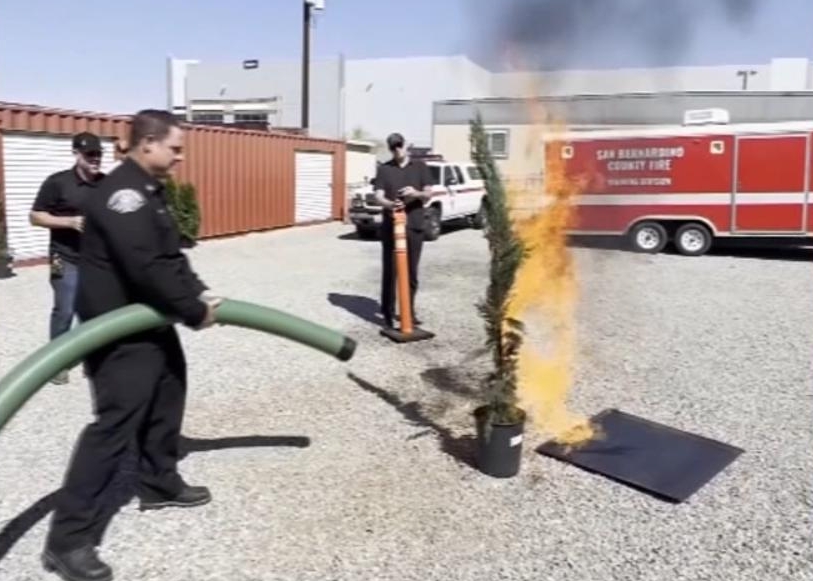
A California startup is testing a technology that sounds like science fiction: using powerful, low-frequency sound waves to extinguish fires – without water, foam or chemicals. The system is now being demonstrated for use inside homes and businesses, with the ambitious goal of eventually replacing or supplementing traditional fire sprinklers • Read More


A California startup is testing a technology that sounds like science fiction: using powerful, low-frequency sound waves to extinguish fires—without water, foam or chemicals. The system is now being demonstrated for use inside homes and businesses, with the ambitious goal of eventually replacing or supplementing traditional fire sprinklers.
The technology, developed by Sonic Fire Tech by former NASA acoustics engineers, uses sensors to detect the early signs of a fire. Once a flame is detected, concealed speakers or emitters send low-frequency infrasound toward the fire.
The sound waves create rapid pressure changes in the air around the flame, disrupting the oxygen flow that allows combustion to continue. In demonstrations, a small flame can reportedly be extinguished within seconds.
One of the biggest potential advantages is what the system does not use: water.
Traditional sprinklers can be extremely effective at controlling fires, but when activated they release significant amounts of water into a building. For homes, businesses, data centers and buildings containing expensive electronics or sensitive equipment, the resulting water damage can itself be costly.
A sound-based system could potentially shut down a small fire while leaving furniture, electronics, flooring and other property untouched. The company is specifically promoting the technology as a possible alternative to water-based suppression in residential and commercial settings.
From the lab to real-world fire departments
The technology is no longer merely a laboratory concept.
In April, the San Bernardino County Fire Department demonstrated and tested the system with Sonic Fire Tech, examining whether low-frequency sound could provide another tool for fighting fires. They are also exploring potential applications beyond buildings, including wildfire protection.
The company has also demonstrated systems designed to protect structures from wildfire ignition, including systems that can detect threats and deploy acoustic waves around a home.
Could it really replace sprinklers?
Fire-protection experts caution that extinguishing a visible flame is not necessarily the same thing as fully suppressing a fire. Water sprinklers do more than knock down flames: they cool burning materials and surrounding surfaces, helping prevent the fire from reigniting and slowing the development of dangerous conditions.
Questions remain about how acoustic suppression would perform with larger fires, hidden fires, obstructed flames or materials that continue smoldering after the visible flame disappears.
For that reason, experts expressed skepticism about completely replacing established sprinkler systems, particularly until the technology has been extensively tested under a much wider range of conditions.
Still, the possibility is remarkable: instead of pipes running through a ceiling and sprinkler heads spraying water when temperatures rise, future buildings could potentially have discreet speakers built into their ceilings and walls, ready to direct sound at a fire the moment sensors detect it.
May we soon merit the true era of Moshiach, when the world will be transformed entirely for the better. Moshiach Now!
40
Join ChabadInfo's News Roundup and alerts for the HOTTEST Chabad news and updates!

Related Posts:
Most Popular




New Videos

Editor's Picks