Nepal Disaster: 30 Jews Among Thousands Still Missing
Some 4,400 people remain missing following the catastrophic floods along the China-Nepal border, including approximately 30 Jews • Chabad of Kathmandu is coordinating efforts to locate the missing and assisting families in dealing with authorities • Full Story


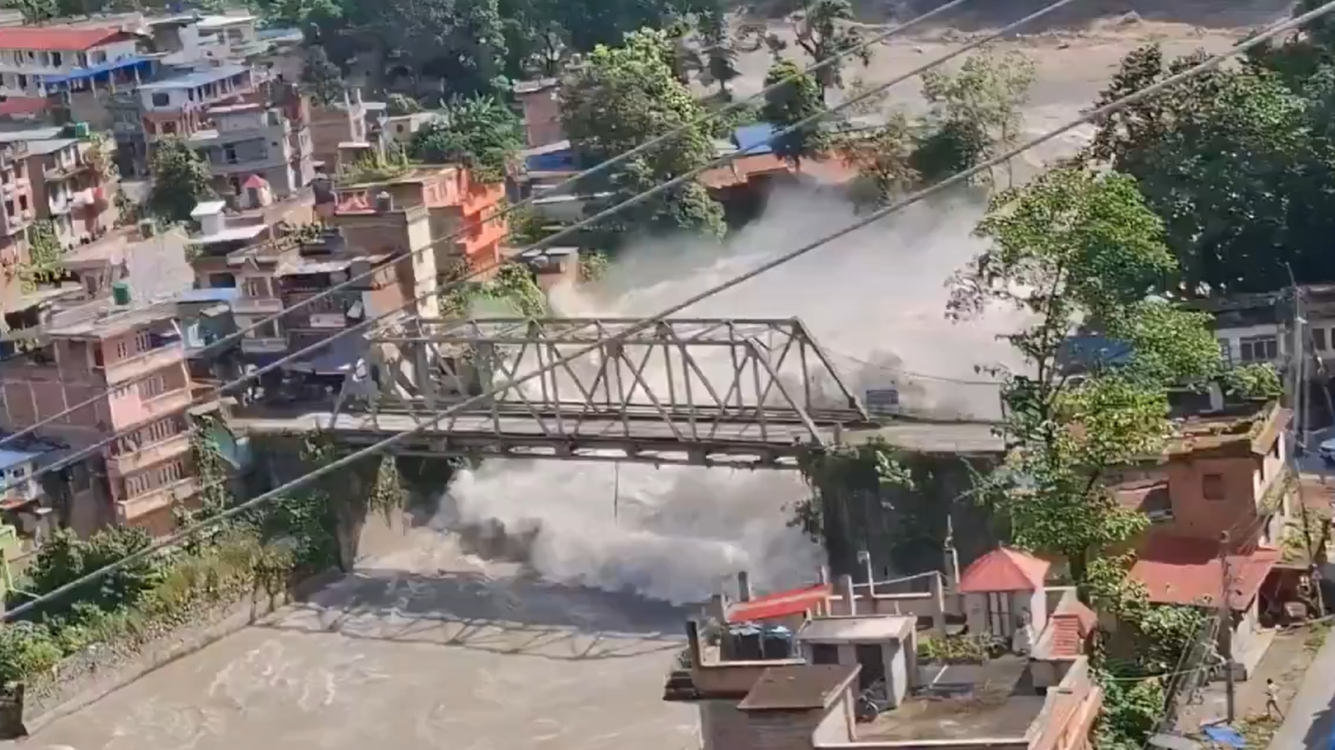
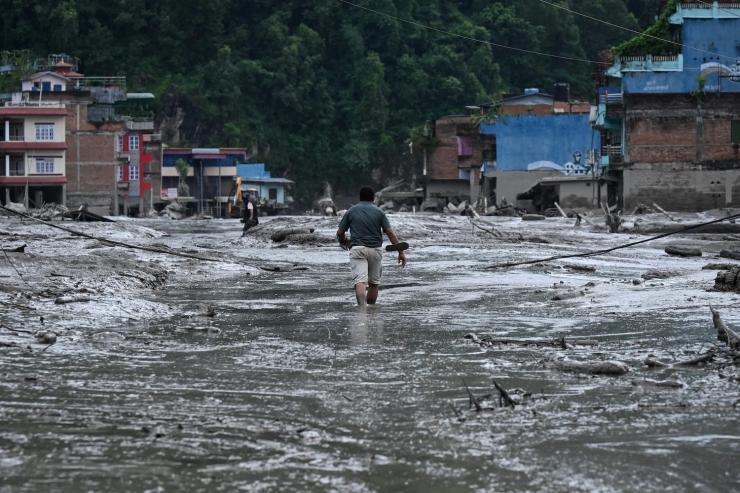
The disaster in Nepal continues to leave behind massive destruction. More than 1,200 people have been killed in the devastating floods and mudslides along the China-Nepal border, while more than 4,200 remain missing on the Nepalese side. Chinese authorities have reported an additional 21 deaths and 541 people missing in Tibet.
Among those missing are approximately 30 Jews and two Israelis. At Chabad of Kathmandu, the focus in recent days has been on efforts to locate the missing and assist their families.
The Rebbe’s Shluchim in Nepal, Rabbi Chezky and Chani Lifshitz, remain in contact with relatives of the missing around the world and are working with local authorities to gather information and assist with search efforts.
Chabad has also dispatched an assistance team with food and medical supplies, which is waiting for access to areas that can only be reached by air. Rescue operations remain extremely difficult, with destroyed roads and bridges, unstable terrain and massive amounts of mud and debris blocking access to some of the hardest-hit areas.
The pressure on Chabad of Kathmandu comes at a particularly busy time of year. Hundreds of Israeli travelers are expected to arrive in Kathmandu ahead of Rosh Hashanah, as the city’s Chabad House traditionally serves as a major gathering point for Jewish and Israeli travelers in Nepal during the Yomim Tovim.
In an interview with Chabad.org, Chani Lifshitz described the ongoing efforts: “We are in contact with the families, local communities and officials on the ground, trying to gather every detail.” She added that they are checking “every report, every name, every location and every possible lead.”
The search is taking place under exceptionally difficult conditions. Helicopters must maneuver through narrow gorges and wait for access, while the mud makes it extremely difficult to bring heavy equipment into the disaster zones.
In areas where entire neighborhoods have been destroyed and buildings have been buried under mud, rescue crews continue searching by hand.
The scale of the destruction has also created a major challenge for identifying victims. Authorities have been collecting DNA samples from recovered bodies to help with identification, while rescue teams continue working to reach areas that remain inaccessible.
At the same time, Chabad is dealing with the sensitive issue of ensuring that Jewish victims are brought to proper Jewish Kevurah.
“For several nights this week, my husband and I barely slept,” Chani Lifshitz said. “Chezky spoke on the phone with people around the world about how important it is to make sure that every Jew is brought to proper Jewish burial, and how difficult this has become under these circumstances.”
Chani added: “In the situation we are facing, even something basic and sacred like Jewish burial is no longer simple.” According to her, bodies recovered after spending days beneath the mud can be in extremely poor condition, making identification particularly difficult.
The disaster began on August 26 after a massive glacier collapse and landslide in the Himalayas sent ice, rock and debris crashing into the Lende River. The resulting torrent traveled nearly 100 kilometers downstream, gathering additional water and debris as it swept through towns and infrastructure along the river valleys.
Satellite analysis by the European Space Agency confirmed that the disaster was triggered by a rapid slope failure associated with the collapse of a glacier on Langtang Lirung.
The devastation has been particularly severe along the Trishuli River valley, where entire communities have been buried or swept away.
Rescue teams are now also focusing on several hydropower stations, where hundreds of workers are believed to remain trapped underground. Reports indicate that approximately 900 people may still be unaccounted for at six hydropower projects.
As rescue operations continue, Chabad of Kathmandu remains at the center of efforts to assist Jewish families, locate missing travelers and ensure that Jewish victims are treated according to Halachah amid one of Nepal’s worst natural disasters in decades.
66
Join ChabadInfo's News Roundup and alerts for the HOTTEST Chabad news and updates!

Related Posts:


Most Popular


New Videos

Editor's Picks