After Initial Cancellation: Limited Framework Approved for Lag B’Omer in Meron
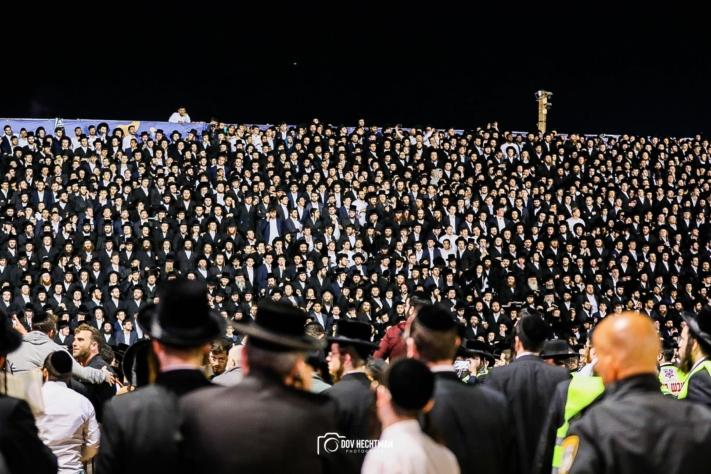
Following the announcement of the cancellation, a limited framework has been formulated to allow for the Lag B’Omer celebrations for Rebbi Shimon bar Yochai in Meron under strict conditions • Read More


The decision comes in light of tightened security restrictions and directives issued by Home Front Command, together with instructions from Israeli police and government authorities due to the ongoing security situation.
According to the updated plan, the Hilula will be marked with just three Hadlakos, held with minimal participation and without allowing the general public to attend.
The primary goal, officials emphasized, is to preserve the long-standing Minhag while ensuring the safety of those present.
Police announced extensive preparations to enforce the restrictions, including road closures in the Meron area. Among the roads affected are Route 89 at Ein Zeitim Junction, Gush Chalav Junction, and Sifsufa Junction, as well as Route 866 at Parod Junction. Additional closures are expected the following day, with all roads scheduled to reopen to the public on May 6, following Lag BaOmer.
Residents of Meron will be permitted access to restricted areas upon presentation of identification.
As part of the proposed framework, three central Hadlakos will take place on the night of Lag BaOmer: the main Hadlaka of the Boyaner Rebbe, a hadlaka representing Eidot HaMizrach led by Harav Shlomo Moshe Amar, and a hadlaka organized by Rabbonim affiliated with the Religious Zionist community.
Each hadlaka will be limited to approximately 200 participants, who will arrive in an organized manner through the respective communities.
The plan takes into account that several thousand individuals are already present in the Meron area with authorization. Designated zones – including the kever area and nearby compounds—will be used to manage those on-site.
Stewards will operate at the kever to allow safe tefillah for those present, and the traditional music will continue in the courtyard adjacent to the site.
Despite the framework allowing for limited observance, it was strongly emphasized that no additional visitors will be permitted to enter Meron—neither via private vehicles nor public transportation, including rabbonim and public figures.
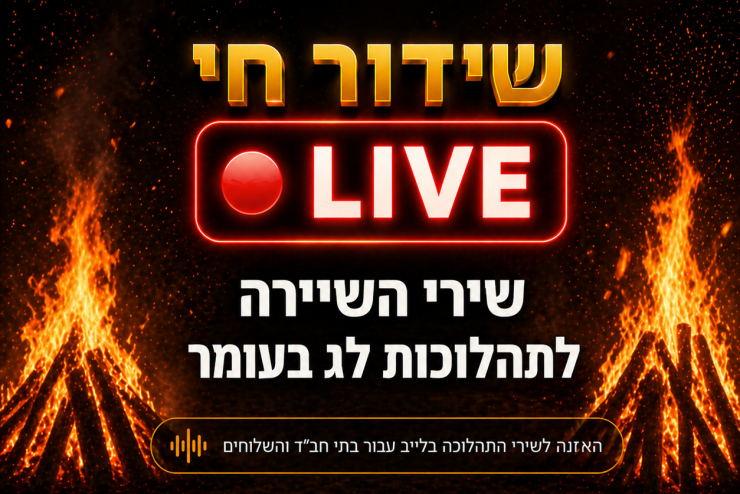
The wider public will be able to follow the events through a live broadcast from the hadlakos and the kever area throughout the day of the hilula.
The framework will remain in effect as long as public order is maintained and the situation allows continued civilian management of the site, and it remains fully subject to Home Front Command restrictions and police directives.
Officials involved in drafting the plan reiterated that the central objective is to uphold the tradition of the hilula while safeguarding the well-being of all those present.
87
Join ChabadInfo's News Roundup and alerts for the HOTTEST Chabad news and updates!

Related Posts:
Most Popular

New Videos

Editor's Picks