The Role of “Chitzonius” in Chabad
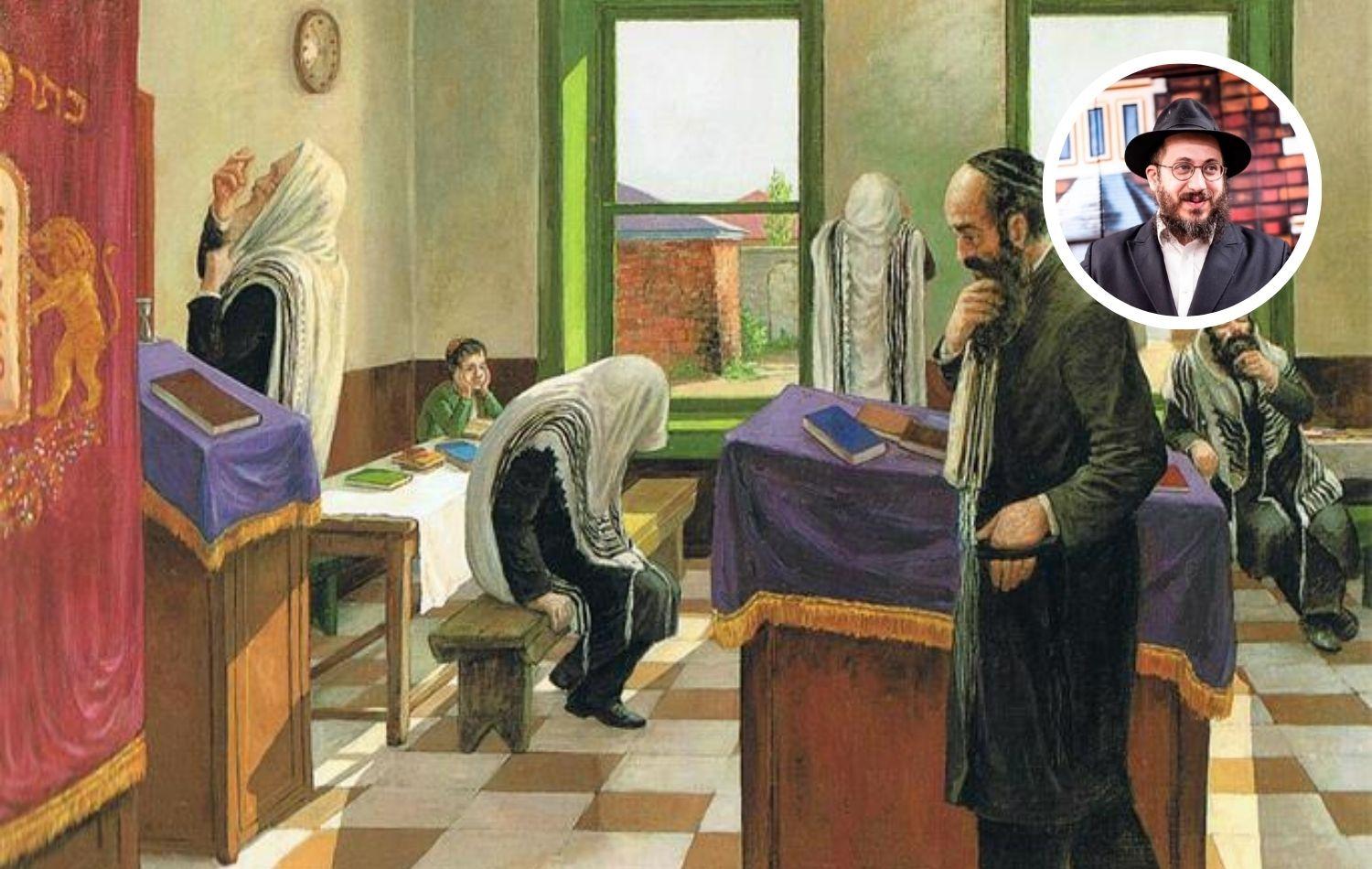
Rabbi Gershon Avtzon, Rosh Yeshiva of Yeshivas Lubavitch Cincinnati, addresses a question raised by a talmid: What is the place of external expressions of Chassidishe conduct in a world centered on Pnimius? Drawing on two fundamental sichos and maamarim of the Rebbe, he explores the connection between Chitzonius and Pnimius, and how the external can serve as a vital step toward genuine inner Avodah • Full Article


I am writing this article on Mortzei Shabbas of Shabbas Breishis. While in most years, the new Zman Haimmudim starts after shabbas Breishis (as many of the talmidim and Hanhalla want to spend the shabbas in 770), this year – being that Simchas Torah was on Sunday – the seder began before shabbas Breishis. This meant that we had to find a chazzan that knew the nusach of Yomim Noraim to daven at the Amud (like in 770) and I had to work very hard to find a “streimel” – in Cincinnati! – for my Drasha on shabbas.
To many of our Talmidim – that live on shlichus and never experienced shabbas Breishis in 770 – it was truly an eye-opener and it was a very special shabbas. At a certain point over shabbas, one of the talmidim came to me with a sincere question: “The Nusach of Yomim Noraim is very nice and cute, and so is the streimel, but is it not just “Chitzonius” (external) and Chabad is into “Pnimius” (internal and real work)? In addition: If this Chitzonius is fine, what is it that is different from all the other wild ideas the certain bochurim come up with and the Hanhalla is so against?
At that point, I did not have time for a full conversation (which will happen), so I just answered that these behaviors were officially approved and encouraged by the Rebbe and thus are in a different category than other created behaviours. This is similar to official “minhagei chabad” – chabad customs – that are in “sefer minhagim” which nobody would say are external behaviours, rather an integral part of the Avodah of a Chassid.
But the truth is that a much larger conversation is needed and I am assuming that it is not only this particular talmid in Cincinnati that has this question, so I would like to share a few general perspectives. These are general ideas and I will not be addressing any specific behaviors of individual groups of Chassidim (although that is deserving of a dedicated conversation).
On shabbas Parshas Pinchas 5751, the Rebbe taught us a fascinating perspective: Everything that one truly believes and feels (with a true “pnimius”) must come out and express itself in an external way. If not, that shows that it is not truly internalized by the person! In such a case the external expression is not considered plainly external, rather an integral part of the internal.
[With this understanding, the Rebbe explains at length the reason that Hashem had to make a unique miracle – when dividing the land of Eretz Yisroel – that the actual lots spoke. The Rebbe uses this to explain the idea of “making here into Eretz Yisroel”. It is recommended that everyone learn this fundamental and paradigm-shifting Farbrengen.]
In the famous Maamer “Lecha Dodi 5714” – which many Chassanim recite at their weddings – the Rebbe establishes another very important foundation: While the goal is to have a real and internal connection to Hashem and Avoas Hashem, the path to that begins with an external connection.
He brings two examples:
the transmission of knowledge from a teacher to a student.Our Sages describethe pattern through which knowledge was conveyed by one of the Sages of the Talmud, relating that before Rabbah would begin his discourse, he would relate a milsa d’bedichusa,literally, a humorous remark,and the Sages would laugh. Afterwards, he would sit with reverence and commence his lecture.The milsa d’bedichusa that precedes the lesson,]reflects only an external aspect of the teacher. His inner dimensions (p’nimiyus) are expressed in the profound wisdom that he subsequently conveys. Nevertheless, this hashpaah chitzonis is an introduction to the hashpaah p’nimis that he conveys (when he begins the lesson).For it is specifically the milsa d’bedichusa that opens the heart and mind of the student, sensitizing him and making him receptive to the teacher’s instruction and making him a vessel fit to receive the hashpaah p’nimis.
A small child with whom his father wants to delight, sharing a face-to-face interaction with him.Since the child is small, the father must first lower his hands to lift the child up in order to delight with him: enjoying the closeness they share, face to face. Lifting up the child is but an external expression of closeness, and only serves as a preliminary step to the inner closeness (i.e., the delightful interaction) that follows.
In short: If the Chitzonius is part of the process of reaching Pnimius, then it is a legitimate step, and necessary step, in the process.
There is a very big difference between external and fantasy. Creating an alternate reality of events is not an “Chitzonis”, rather an unfortunate fantasy that can have devastating results.
There is so much more to write, but these are the general principles and “Ten Lechacham Veyechkam Od”.
Please feel free to share your thoughts on the above with me by email: [email protected].
Rabbi Gershon Avtzon
Rosh Yeshiva
30
Join ChabadInfo's News Roundup and alerts for the HOTTEST Chabad news and updates!

Related Posts:



Most Popular


New Videos

Editor's Picks