
Rare Total Solar Eclipse Sweeps Across Europe and the Arctic
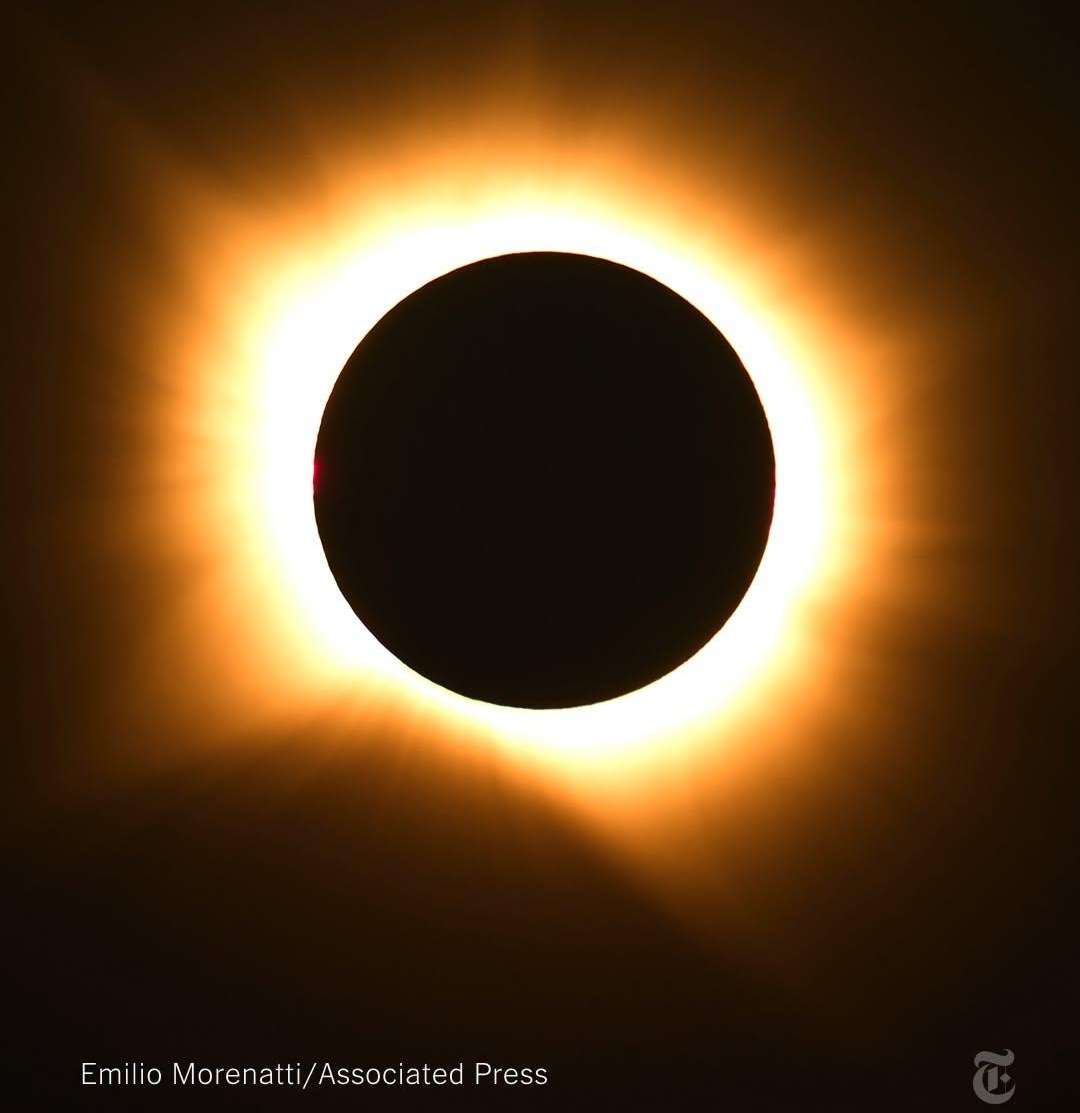
A rare total solar eclipse swept across the Northern Hemisphere on Wednesday, August 12, bringing several minutes of darkness to parts of Greenland, Iceland, northern Russia and Spain in one of the year’s most anticipated celestial events. It was the first total solar eclipse visible from mainland Europe since 1999 • Read More


A rare total solar eclipse swept across the Northern Hemisphere on Wednesday, August 12, bringing several minutes of darkness to parts of Greenland, Iceland, northern Russia and Spain in one of the year’s most anticipated celestial events. It was the first total solar eclipse visible from mainland Europe since 1999.
The Moon passed directly between Earth and the Sun, completely blocking the Sun for observers within the narrow path of totality. The shadow began over far northern Siberia before moving across the Arctic and North Atlantic, reaching Greenland, western Iceland and eventually northern Spain and a small part of Portugal.
Iceland Goes Dark
In Iceland, the eclipse was visible during the late afternoon. In Reykjavík, the partial eclipse began at 4:47 p.m., with totality beginning at approximately 5:48 p.m. and lasting just over one minute. The full eclipse ended at about 6:47 p.m.
The country’s Westfjords offered some of the longest periods of totality on land, with total darkness lasting up to 2 minutes and 13 seconds in the westernmost areas. The eclipse was particularly significant for Iceland, where the last total solar eclipse visible from Reykjavík occurred in 1433.
Totality Reaches Spain
The eclipse then reached Spain near sunset, with totality visible across portions of northern and eastern Spain. In León, totality began at 8:28 p.m. local time, while Zaragoza experienced totality beginning at approximately 8:29 p.m. Valencia saw totality from about 8:32 to 8:33 p.m.
Cities including Madrid and Barcelona were outside the narrow path of totality and saw a significant partial eclipse instead. In many areas of Spain, the eclipse took place close to sunset, creating a dramatic combination of a darkened Sun and the evening horizon.
Partial Eclipse Across Much of Europe and North America
Although totality was confined to a relatively narrow path, a partial eclipse was visible across much of Europe, northwestern Africa, Canada and parts of the United States. In the U.S., portions of Alaska and the Northeast experienced a partial eclipse, with coverage varying considerably by location.
For example, Anchorage saw about 28% of the Sun covered, while Bangor, Maine, experienced approximately 24% coverage. New York City saw about 9%, and Washington, D.C., about 4%.
The eclipse was also notable for scientists. NASA conducted research along the path of totality, including observations of the Sun’s corona and atmospheric changes caused by the sudden reduction in sunlight. Research teams used high-altitude aircraft and scientific balloons in Iceland and Spain to study the event.
The eclipse was the first total solar eclipse visible from the world since the April 8, 2024, “Great American Eclipse,” which crossed Mexico, the United States and Canada.
For those who witnessed totality, the Moon’s complete coverage of the Sun briefly revealed the normally hidden solar corona and turned daytime into twilight. Outside the narrow path, observers were able to see only a partial eclipse, which required proper solar viewing protection.
62
Join ChabadInfo's News Roundup and alerts for the HOTTEST Chabad news and updates!

Related Posts:




Most Popular




New Videos

Editor's Picks